

Most contractors find out they need workers comp after they’ve already crossed the legal threshold. If you’ve hired anyone to help you frame, finish drywall, or pull wire, you’re probably required to carry coverage right now. The rules vary dramatically by state, and misclassifying employees or skipping subcontractor certificate checks can cost you back premiums, penalties, and direct liability for job site injuries. This guide breaks down exactly when coverage becomes mandatory, how employee counts trigger requirements, and what happens when you hire subcontractors without their own policies.
When Contractors Need Workers Compensation Coverage

Contractors need workers comp when they hire employees. Not for true independent contractors they bring on board. If you misclassify employees as independent contractors or hire subcontractors without their own coverage, you’re looking at direct liability exposure and financial penalties. Almost every state makes workers compensation mandatory once you’ve got employees on the payroll.
Coverage kicks in when contractors hire anyone who fits their state’s employee definition. Most states count full time, part time, seasonal, and temporary workers toward these thresholds. The specific employee count that triggers mandatory coverage? It varies a lot. Some states require coverage starting with your first employee. Others set the bar at three or more workers.
Self employed contractors working solo typically don’t need workers comp for themselves. If you’re a sole proprietor without employees, most states give you a pass on mandatory coverage. Your standard health insurance usually won’t cover work related injuries, but you’re not legally on the hook for workers comp when you’re the only one on the job.
Things get messy when you start hiring subcontractors. If the subcontractor you hire doesn’t have their own workers comp policy and gets hurt at your job site, guess who may be responsible for all injury costs? Medical bills, lost wages, legal expenses. That liability exists even if you correctly classified them as a subcontractor instead of an employee.
The construction industry faces stricter requirements than other sectors. States know construction work means elevated injury risk. Heights, heavy equipment, power tools, physical labor. Construction contractors often deal with lower employee thresholds, broader coverage mandates, and tighter enforcement than businesses in less hazardous industries.
State-Specific Coverage Thresholds and Construction Industry Requirements

Coverage mandates and employee count thresholds differ a lot across states. What triggers mandatory coverage in one state might not apply in another. Contractor type can affect when coverage becomes required.
Employee Count Thresholds by State
Georgia requires workers comp when businesses have three or more employees. You can operate with two employees without mandatory coverage, but that third hire flips the switch. Pennsylvania takes a stricter approach. All construction businesses must carry workers comp for employees, including full time, part time, and seasonal workers. One employee means mandatory coverage.
Each state’s Department of Labor sets specific requirements that determine when coverage becomes mandatory. Some states draw the line at five employees, others at one. The definition of “employee” and how states count toward that threshold also varies by jurisdiction.
High-Risk Trade Requirements
Construction companies face stricter mandates because of elevated injury risk from falls, equipment accidents, and physical demands. Roofing contractors typically must carry coverage regardless of employee count. Even a single employee triggers the requirement in most states. The combination of heights, weather exposure, and heavy materials makes roofing one of the highest risk trades.
Other high risk trades like electrical work, excavation, and steel erection often face similar requirements. States recognize that certain construction specialties carry injury rates way higher than general contracting or interior finish work.
Full time, part time, seasonal, and temporary workers all count toward the coverage thresholds that trigger mandatory requirements. You can’t dodge coverage by hiring only part timers or seasonal help. A crew of three part time framers working 20 hours per week counts the same as three full time employees for determining whether you need coverage. States calculate employee counts based on the number of individual workers, not their hours or employment status.
Employee Classification and Independent Contractor Exemptions

Proper classification determines whether you need to provide workers comp for someone working at your job site. Contractors don’t need to provide workers compensation for true independent contractors. But misclassifying employees as contractors? That results in liability for back premiums, coverage gaps, and significant penalties. States go after misclassification cases hard because they lose tax revenue and workers lose protections.
States use strict legal tests to distinguish employees from independent contractors. The determination isn’t based on what you call someone or how you structure payment. It’s based on the actual working relationship and level of control you exercise over their work. State labor departments and workers comp boards look at multiple factors to decide if someone is really an independent business or your employee.
Classification criteria that distinguish employees from independent contractors:
- Direction and control over how work is performed. Employees get detailed instructions. Contractors determine their own methods.
- Work schedule and hour requirements. Employees work set schedules you control. Contractors set their own hours.
- Tools and equipment provision. Employees use your tools and equipment. Contractors bring their own.
- Integration into your business operations. Employees perform core business functions. Contractors provide specialized services outside your normal work.
- Financial investment and risk. Employees receive guaranteed wages. Contractors invest in their own business and can profit or lose money.
- Relationship permanency and exclusivity. Employees work ongoing for one employer. Contractors work project based for multiple clients.
Self employed contractors without employees are typically exempt from mandatory workers comp requirements. If you’re a sole proprietor working alone, most states don’t require you to carry coverage for yourself. The exemption exists because there’s no employment relationship to regulate. You’re both the employer and the only worker.
Sole proprietors and independent contractors can purchase voluntary coverage even when exempt from state requirements. This makes sense because standard health insurance policies don’t cover work related accidents or illness. If you fall off a ladder at a job site, your health insurer may deny the claim entirely. Voluntary workers comp covers medical costs and replaces lost wages during recovery. The coverage also satisfies client requirements. Many general contractors and property owners require proof of workers comp before signing contracts, even for self employed contractors. The exemption disappears once you hire your first employee. Independent contractors with employees must carry workers comp in most states, regardless of whether those employees are full time, part time, or seasonal.
Subcontractor Coverage Verification and General Contractor Liability

Hiring contractors may be held responsible for all injury costs when subcontractors lack their own workers comp coverage. If a subcontractor gets hurt at your job site and can’t cover their own medical bills and lost wages, they can file a claim against your policy or sue your business directly for those costs.
General contractors commonly require proof of insurance before hiring subcontractors. Certificates of insurance serve as that proof. Contractors need certificates to submit bids on projects, obtain professional licenses in many states, and comply with state and local laws that make general contractors liable for uncovered subcontractor injuries. Most project owners and general contractors make certificate submission a contract condition before work begins.
Certificates of insurance contain specific policy information that proves current coverage. They list the insurance carrier name and contact information, policy numbers for verification, exact coverage dates showing the policy is active, coverage limits stating maximum benefits, and the contractor’s business name and address. To verify authenticity, call the insurance carrier directly using the contact information on the certificate and provide the policy number. Carriers confirm whether the policy is active and the certificate information is accurate.
Certificates are available at no extra cost from your insurance carrier. Most carriers provide them online within minutes of requesting them. You can typically log into your policy account, enter the certificate holder’s information (the client or general contractor who needs proof), and download or email the certificate immediately. The entire process takes about 10 minutes.
Contractors may still need their own workers comp coverage depending on state employee classification rules even when subcontractors carry their own policies. Some states classify certain subcontractor relationships as employment regardless of how you structure the agreement. If your state determines that you exercise sufficient control over a subcontractor’s work methods, schedule, or tools, they may rule that the subcontractor is actually your employee. That requires you to provide coverage even though they have their own policy. Check your state’s classification rules with your Department of Labor before assuming subcontractor policies eliminate your coverage obligations.
Monopolistic vs. Competitive State Insurance Systems

Monopolistic states require all businesses to purchase workers compensation through a government run state fund rather than private insurance carriers. You cannot shop among competing insurers or choose your carrier. North Dakota operates as a monopolistic state. All contractors must purchase coverage through the state fund with no private insurance option. Other monopolistic states include Washington, Wyoming, and Ohio (for most employers).
Competitive states allow contractors to choose among private insurance carriers. You can compare pricing, coverage terms, service quality, and claims handling among multiple insurers. Most states operate competitive systems where contractors can purchase through insurance brokers, directly from carriers, or through online platforms. This competition often results in lower premiums and better service compared to monopolistic systems.
| State Type | Purchase Options | Employer Liability Coverage |
|---|---|---|
| Monopolistic | Must purchase through state fund only, no private carrier option | Often excluded, requiring separate stop gap coverage purchase from private insurer |
| Competitive | Can choose among multiple private carriers, brokers, or online platforms | Typically included in standard workers comp policy automatically |
| Hybrid | Can choose state fund or private carriers, state fund competes with private market | Included when purchasing through private carriers, may require stop gap if using state fund |
Monopolistic state fund coverage may not include employer’s liability insurance, which protects you from employee lawsuits claiming negligence led to their injury. Standard workers comp policies in competitive states automatically include employer liability coverage, but monopolistic state funds often exclude it. You must purchase separate stop gap coverage from private insurers to protect against employee lawsuits in monopolistic states. Stop gap coverage fills the employer liability gap, covering attorney’s fees and court costs if an injured employee sues claiming you caused their injury through unsafe conditions or inadequate training.
Coverage Components: What Contractor Policies Include

Workers compensation policies provide dual protection. Injured worker benefits that cover employees hurt on the job, and employer liability protection that shields your business from lawsuits related to workplace injuries.
Medical expenses, lost wages, and disability benefits form the core of injured worker protection. The policy covers immediate emergency care at the accident scene and ongoing treatment during recovery including surgeries, physical therapy, prescription medications, and specialist visits. Lost wages replace a portion of the injured worker’s regular income while they’re unable to work, typically around two thirds of their average weekly wage. Long term disability benefits continue for workers who suffer permanent injuries that prevent them from returning to their previous job duties.
Specific coverage examples contractors rely on:
- Emergency care for severe burns from exposed wiring. Immediate ambulance transport, emergency room treatment, burn unit care, and skin graft surgeries.
- Ongoing treatment and rehabilitation. Physical therapy for back injuries from lifting, joint replacement surgeries from repetitive stress, and specialist care for complex injuries.
- Lost wages during recovery. Weekly benefit checks replacing about two thirds of regular income while the worker cannot return to the job site.
- Death benefits for burial expenses and survivor benefits. Funeral and burial cost coverage plus ongoing payments to the deceased worker’s spouse and dependent children.
- Legal defense costs with average lawsuit costs of about $40,000. Attorney fees, court costs, expert witness fees, and settlements or judgments if the case goes to trial.
Employer liability protection covers attorney’s fees and court costs if contractors are accused of negligence that led to employee injuries. This coverage responds regardless of whether you were actually at fault. Average lawsuit costs run about $40,000 even when you win the case. Employer liability protection covers those legal defense expenses. If a carpenter claims you failed to provide proper fall protection and their injury resulted from that negligence, employer liability coverage pays for your legal defense and any settlement or judgment up to the policy limits.
Premium Calculation and Cost Factors for Contractors

Premiums are calculated using a specific formula: Classification rate × Experience modification rate × (Annual payroll ÷ $100). The classification rate is the base rate for your type of work set by state rating bureaus. Experience modification rate (EMR) reflects your claims history compared to similar contractors. A rating of 1.0 is average, below 1.0 rewards good safety records with lower premiums, and above 1.0 penalizes poor claims history with higher costs. Annual payroll represents total compensation you pay to employees, divided by 100 to calculate the premium base.
Five main factors drive how much contractors pay for workers comp. Payroll expenses form the largest factor because premiums are calculated per $100 of employee wages. Employee count affects total payroll and risk exposure. More workers mean more premium. Business longevity matters because new contractors lack claims history data, resulting in standard rates rather than experience based pricing. Location state determines base rates since injury costs and legal environments vary a lot by jurisdiction. Claims history directly impacts your experience modification rate, which multiplies your base premium up or down based on past workplace injuries.
Workers compensation class codes are three or four digit industry codes that estimate risk levels and set base rates for different job types. The National Council on Compensation Insurance (NCCI) sets these codes for most states, though some states including California, New York, and Texas use their own classification systems. Electrical contractors might carry code 5190 with higher rates reflecting shock risks, fall hazards from working at heights, and injury frequency in the trade. Concrete construction (code 5213) carries elevated rates due to heavy material handling, back injuries, and equipment accidents. Administrative office employees working for the same contractor would be classified under code 8810 with way lower rates because they face minimal physical injury risk sitting at desks processing paperwork. High risk codes can cost $15 to $30 per $100 of payroll, while low risk office codes might cost $0.50 to $2.00 per $100 of payroll. Construction companies pay an average of $254 per month or $3,054 annually for workers compensation coverage, though actual costs vary widely based on these classification codes and other rating factors.
Penalties and Legal Consequences for Non-Compliance
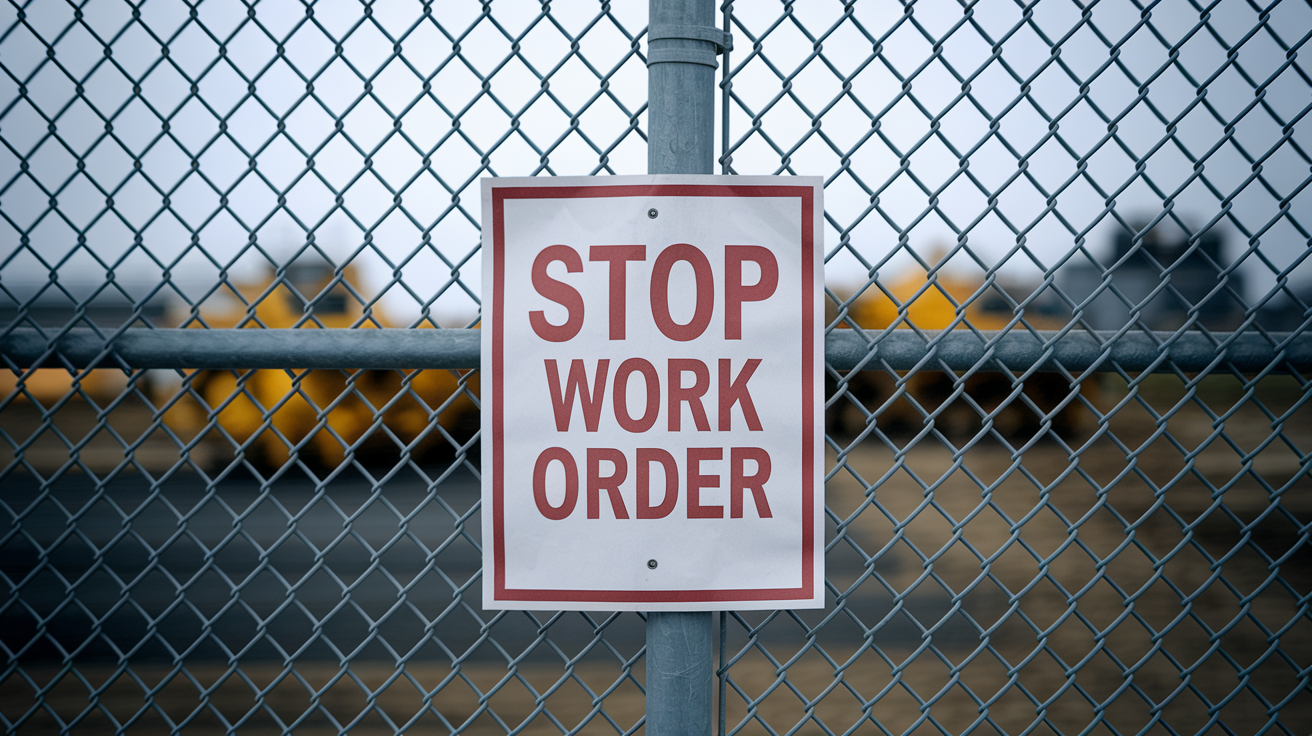
Penalties for non compliance can be severe and vary by jurisdiction, but every state treats failure to carry required workers comp as a serious violation. States enforce these requirements through labor department investigations, surprise inspections, and complaint driven audits.
Financial penalties hit immediately when states discover contractors operating without required coverage. Fines start at the state’s calculation of what you should have paid in premiums, often multiplied by a penalty factor. Back premium assessments force you to pay what you would have paid for coverage going back several years, calculated at higher penalty rates than standard premiums. Direct liability for all injury costs means you pay every medical bill, wage replacement check, rehabilitation expense, and legal fee from injured workers. Costs that can easily exceed $500,000 for serious injuries.
Specific consequences contractors face for non compliance:
- Monetary fines ranging from $1,000 to $100,000 depending on violation duration and state penalties.
- Stop work orders halting all operations until coverage is obtained and verified, resulting in lost revenue and broken contract deadlines.
- License suspension or revocation preventing legal operation and bidding on future work.
- Criminal charges in some states treating willful non compliance as misdemeanor or felony offenses.
- Personal liability for all injury costs including medical expenses exceeding $100,000, years of lost wage payments, and legal defense fees.
Contractors may be held responsible for injury costs when subcontractors lack coverage, even if you correctly classified them as independent businesses rather than employees. If a subcontractor gets hurt at your job site and can’t pay their medical bills, they can pursue claims against your business. Misclassification penalties stack on top of other violations. Classifying actual employees as independent contractors to avoid coverage results in liability for all unpaid premiums, fines for each misclassified worker, penalties for fraud, and personal liability for any injuries those workers suffered. States view misclassification as deliberate fraud rather than a paperwork error, resulting in the harshest financial penalties and potential criminal prosecution.
How to Obtain Coverage and Insurance Purchasing Options

Contractors can purchase workers compensation through insurance brokers who represent multiple carriers, directly from insurance carriers, or through online insurance platforms. Insurance brokers shop your application among their carrier partners and recommend the best combination of price and coverage. Direct carrier purchase means contacting insurers like State Farm, Travelers, or Hartford and applying through their agents. Online platforms allow instant quotes and digital applications without speaking to an agent.
The application process requires payroll estimates for the upcoming policy year, detailed business operations description including the types of construction work you perform, and claims history review showing any previous workplace injuries and workers comp claims from the past five years. Underwriting criteria include your classification codes matching the work you actually perform, estimated annual payroll broken down by employee type and job function, years in business and ownership structure, safety programs and training documentation, and prior coverage history including any policy cancellations or non renewals. Insurers use this information to assess your risk level and calculate premiums.
Policies can be purchased online in about 10 minutes through digital platforms that provide instant quotes and immediate binding. You enter basic business information, payroll estimates, and classification details. The platform generates a quote, you review coverage terms and limits, and you bind coverage with payment information. The entire application, underwriting, and purchase process happens in a single online session.
Certificates of insurance are available at no extra cost once your policy is active. Contractors need certificates to submit bids on projects where general contractors or owners require proof of coverage before contract award, obtain professional licenses since most states require workers comp verification for contractor licensing, and meet state and local laws that mandate coverage for construction work. Most businesses require certificate of insurance as a contract condition before allowing subcontractors on job sites. Request certificates through your insurance carrier’s online portal or by contacting your agent, and they’re typically delivered by email within minutes to hours.
Risk Management Strategies to Reduce Workers Comp Costs

Premium costs directly reflect your claims history and safety record through the experience modification rate (EMR) in the pricing formula. Contractors with strong safety records and few claims earn EMRs below 1.0, reducing their premiums by 10% to 40% compared to average contractors. Poor safety records and frequent claims push EMRs above 1.0, increasing premiums by similar percentages.
Experience modification rates track your actual workplace injuries against expected injuries for contractors doing similar work. Every workers comp claim increases your EMR for the next three years, raising premiums a lot. A single serious injury costing $75,000 in medical bills and lost wages can increase your annual premium by $10,000 to $20,000 for three years. The EMR formula compares your claims to industry averages. If you have fewer injuries than expected, your rate drops. More injuries than expected, and your rate climbs. This means consistent safety performance compounds over time, with each claim free year reducing your costs and each injury increasing them.
Practical risk management strategies contractors can implement immediately:
- Comprehensive safety training programs for all crew members covering fall protection, proper lifting techniques, power tool operation, and hazard recognition before they start work.
- Strict PPE enforcement on job sites requiring hard hats, safety glasses, gloves, steel toed boots, and hearing protection with documented compliance checks.
- Regular job site inspections and hazard assessments identifying unsafe conditions, damaged equipment, and risky work practices before injuries occur.
- Thorough incident documentation and investigation for every near miss and minor injury to identify root causes and prevent serious future accidents.
- Return to work programs for injured employees offering light duty assignments so workers can return to modified tasks during recovery, reducing lost wage claim costs.
- OSHA compliance and record keeping maintaining injury logs, safety data sheets, and training documentation that demonstrate proactive safety management.
Investing in safety programs pays off through long term premium savings that offset upfront costs. Construction companies face increased injury risk requiring proactive safety management rather than reactive responses after workers get hurt. A comprehensive safety program costing $5,000 annually in training, PPE, and administrative time can reduce claims by $50,000 over three years, lowering premiums by $15,000 during that period. The return on investment comes from fewer injuries, lower EMRs, reduced premiums, and avoided costs from stop work orders, OSHA fines, and injury lawsuits. Contractors who treat safety as a business investment rather than regulatory hassle consistently operate at lower total costs than competitors with poor safety records and high claims frequency.
Additional Insurance Policies Contractors Should Consider
Workers comp alone doesn’t provide complete protection for construction businesses. Construction contractors need additional policies beyond workers comp to protect against various business risks that employee injury coverage doesn’t address. Workers compensation covers medical bills and lost wages when employees get hurt, but it doesn’t protect you from property damage claims, vehicle accidents, professional errors, or equipment theft.
General liability insurance covers property damage and injuries to non employees including clients, visitors, and the public. Commercial auto insurance covers vehicles used for business including trucks, vans, and trailers hauling materials and equipment. Tools and equipment insurance protects the thousands of dollars of power tools, scaffolding, and specialized equipment you’ve invested in from theft, damage, and loss. Builder’s risk insurance covers construction projects themselves from fire, theft, vandalism, and weather damage during the building process. Surety bonds guarantee project completion and contract performance, required for most public projects and many private contracts. Professional liability coverage protects against claims that your work failed to meet industry standards or contract specifications.
| Insurance Type | What It Covers | Why Contractors Need It |
|---|---|---|
| General Liability | Property damage to client buildings, injuries to non-employees at job sites, advertising injury and personal injury claims | Required by almost every contract and many state licensing boards; protects against lawsuits from damaged property or injured third parties |
| Commercial Auto | Vehicle accidents, property damage from company trucks, injuries to other drivers, cargo and equipment being transported | Personal auto policies exclude business use; required whenever vehicles are used for contracting work including transporting crew or materials |
| Tools and Equipment | Theft of power tools, damage to owned or rented equipment, loss of specialized machinery, replacement cost for items stolen from job sites or vehicles | Construction tools represent major investment that general liability and commercial property policies often don’t adequately cover |
| Builder’s Risk | Fire damage to projects under construction, weather damage before substantial completion, theft of building materials, vandalism to unfinished structures | Protects project value during construction when standard property insurance doesn’t apply; often required by lenders and contracts |
| Surety Bonds | Guarantees project completion if contractor defaults, ensures payment to subcontractors and suppliers, promises license compliance and code adherence | Required for most public construction projects and increasingly for private commercial work; necessary for contractor licensing in many states |
Final Words
Most contractors need workers compensation insurance the moment they hire their first employee, though thresholds vary by state and trade.
Getting it right means knowing your state’s specific requirements, properly classifying workers, and verifying that subcontractors carry their own coverage.
Misclassification or hiring uninsured subs can trigger penalties, back premiums, and direct liability for injury costs.
Understanding workers compensation insurance requirements for contractors keeps you compliant, protects your crew, and prevents the kind of financial hit that derails projects. Strong safety practices and accurate payroll reporting lower your premiums over time.
Start with coverage, build in verification steps, and you’ll avoid the callbacks that cost more than the policy ever would.
FAQ
Do contractors need workers’ comp if they only hire independent contractors?
Contractors do not need workers’ comp if they only hire true independent contractors, but they face liability and penalties if they misclassify employees as contractors or hire subcontractors who lack their own coverage.
What are the three main requirements to obtain workers’ compensation?
The three main requirements to obtain workers’ compensation are having employees (meeting your state’s minimum employee threshold), providing accurate payroll estimates and business operations descriptions, and maintaining compliance with state-specific industry requirements that vary based on contractor type and risk level.
When do self-employed contractors need workers’ comp coverage?
Self-employed contractors without employees typically do not need workers’ comp coverage in most states, but they become required to carry coverage once they hire their first employee, with exact thresholds varying by state and trade classification.
How do states verify if contractors are properly classifying workers?
States verify contractor worker classification by examining control over work direction, scheduling flexibility, who provides tools and equipment, financial investment in the business, integration into business operations, and the permanency of the working relationship.
What happens if a subcontractor gets injured without their own workers’ comp?
If a subcontractor gets injured without their own workers’ comp, the hiring general contractor may be held responsible for all injury costs including medical expenses, lost wages, and legal fees at their job site.
How much does workers’ comp cost for construction contractors?
Workers’ comp costs for construction contractors average $254 per month or $3,054 annually, with final premiums calculated using classification rate times experience modification rate times annual payroll divided by $100.
What’s included in a certificate of insurance for contractors?
A certificate of insurance for contractors includes policy numbers, coverage dates, coverage limits, insurance carrier contact details, and employer liability protection information needed to submit bids, obtain licenses, and comply with contract requirements.
How do monopolistic state funds differ from competitive insurance markets?
Monopolistic state funds require contractors to purchase workers’ comp directly through the state rather than choosing private insurers, and may not include employer liability insurance, requiring separate stop gap coverage purchases from private carriers.
What injuries does workers’ comp cover for construction employees?
Workers’ comp covers medical expenses for workplace injuries like severe burns from exposed wiring, lost wages during recovery, ongoing rehabilitation, long-term disability benefits, death benefits for burial expenses, and survivor benefits to families.
Can contractors reduce their workers’ comp premiums?
Contractors can reduce their workers’ comp premiums by maintaining strong safety records, implementing comprehensive training programs, enforcing PPE requirements, conducting regular job site inspections, and improving their experience modification rate through fewer claims.
What penalties do contractors face for not carrying required workers’ comp?
Contractors face penalties including monetary fines from hundreds to thousands per violation, stop work orders halting all operations, license suspension or revocation, criminal charges in some states, and personal liability for all injury costs.
How long does it take to purchase workers’ comp coverage online?
Workers’ comp coverage can be purchased online in approximately 10 minutes, with certificates of insurance available immediately at no extra cost for submitting bids, obtaining licenses, and meeting client contract requirements.