

You just hired a contractor to fix your flood-damaged bathroom, they show up Monday, and you realize you never checked if they actually have insurance. If their worker gets hurt or they wreck your plumbing, guess who’s paying for it? A certificate of insurance is a one-page document proving your contractor carries real coverage for injuries, damage, and mistakes. It protects your property and your wallet by shifting liability to their insurance company instead of leaving you exposed. This guide breaks down what’s on the certificate, what coverage types matter, and when to ask for one before work starts.
Core Definition and Purpose of Contractor Insurance Certificates

A certificate of insurance (COI) is a one page document your contractor’s insurance company puts out to prove they’ve got active coverage. It follows ACORD standards, which are just guidelines from a nonprofit that keep things consistent. You’ll get it as a PDF, hard copy, or digital file. Every COI shows the important stuff: what kinds of insurance they carry (general liability, workers’ comp, commercial auto), the policy numbers, how much coverage they have, when it starts and ends, the contractor’s business name, who insures them, and anyone else covered under the policy. The whole point? It’s proof you can share with clients, property owners, or general contractors before any work kicks off.
Contractors have to provide COIs because you need to protect yourself financially before letting them touch your property. You’re asking for these documents to make sure there’s enough coverage if someone gets hurt or something gets damaged during the job, to confirm the contractor actually runs a legit business with real insurance, and to check off contract requirements that spell out insurance minimums. Usually you can’t even bid on a job without submitting proof of insurance. No valid COI means they won’t get considered for the work.
COIs give you several layers of protection. Financial protection comes first. The document confirms their coverage limits can actually pay for property damage and injury claims if things go sideways during the project. It shields you legally by moving risk over to the contractor’s policy instead of leaving you exposed. The COI lets you verify policies are active right now, not expired six months ago. And it confirms coverage amounts actually match what the project needs based on scope and risk level. This is basic risk management. If a worker gets hurt, equipment tears up your property, or the finished work fails down the line, the contractor’s insurance handles it instead of coming after your assets.
Essential Information Included on Contractor Insurance Certificates

Every certificate follows the same format, which makes reviewing and comparing documents from different contractors easier. The ACORD form is what you’ll see most often, with specific fields that have to be filled out to make the certificate valid.
Each piece of info serves a verification purpose. It lets you and your legal team confirm coverage details directly with the insurance carrier if you need to. Accuracy matters because if what’s on the certificate doesn’t match what the insurance company has on file, your protection disappears when you try to file a claim.
Here’s what shows up on every contractor COI:
- Named insured: The contractor’s legal business name exactly how it appears on their insurance policy, including any DBA names
- Insurance carrier contact information: Name, address, and phone number of the company providing coverage, so you can verify policy details directly
- Types of coverage: Specific policies the contractor carries like general liability, workers’ comp, commercial auto, and umbrella policies, with each one listed separately
- Policy numbers: Unique ID numbers for each policy, which you need to verify coverage directly with the carrier
- Coverage limits and amounts: Maximum dollar amounts the insurance pays per occurrence and in total, shown separately for each coverage type
- Effective and expiration dates: When coverage starts and when it ends, defining the valid coverage window
- Additional insured parties: Names of people or entities (like you as the property owner) who are also protected under the contractor’s policy through special endorsements
- Certificate holder information: Name and address of whoever’s receiving the certificate as proof of coverage, usually the property owner or general contractor hiring the work
The COI creates a paper trail documenting exactly what insurance protection exists when work starts. If any of the information turns out to be wrong or the insurance company has no record of those policy numbers, the certificate is worthless and you have zero protection.
Primary Insurance Coverage Types on Contractor Certificates
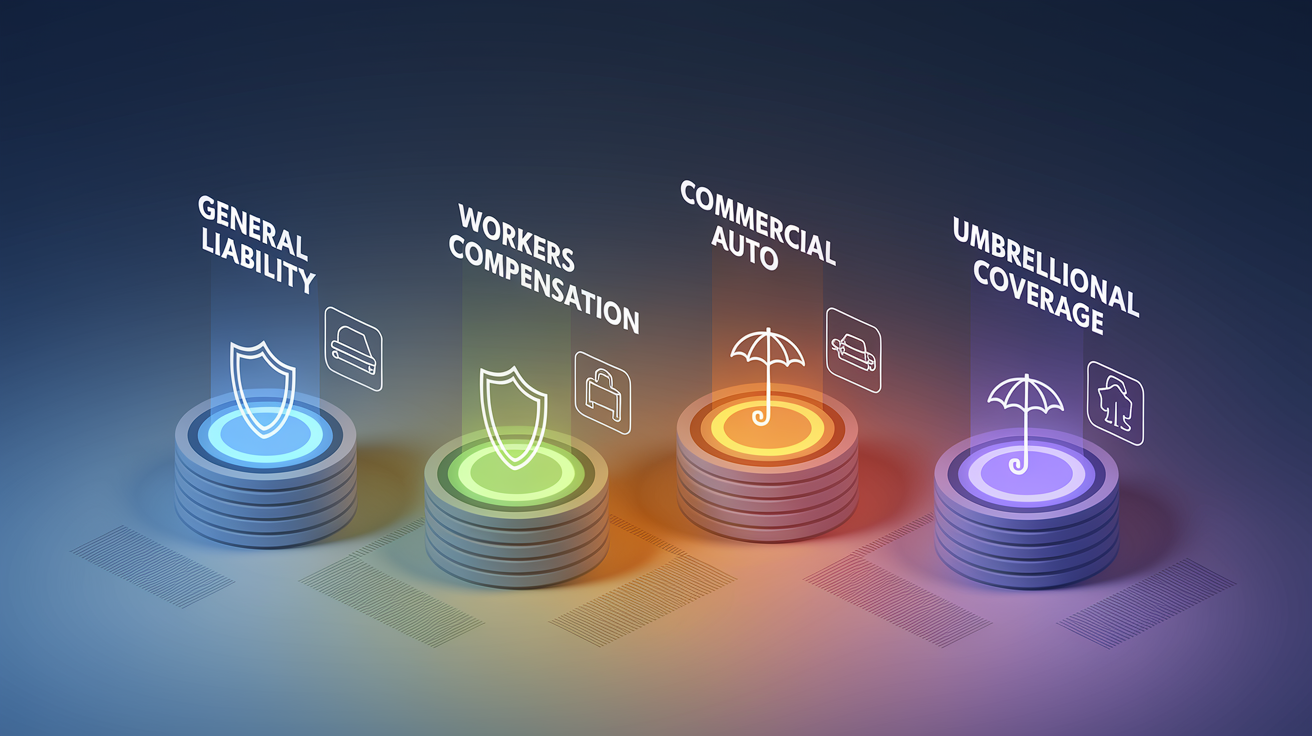
Different coverage types protect against specific risks that come up during construction and repair work. The COI lists each one separately so you can confirm protection exists for the most common liability scenarios.
General Liability Insurance
General liability covers contractors and property owners against claims of bodily injury, property damage, and advertising injury during or after the work wraps up. If a contractor’s employee accidentally damages a wall, breaks a window, or causes water damage while working, general liability covers repair costs. If someone visiting the property trips over the contractor’s tools and gets injured, this coverage pays medical expenses, legal fees if they sue, and any settlements or judgments. Most policies include completed operations coverage too, which protects against claims that pop up after the job’s finished, like a deck that collapses six months after installation.
Workers’ Compensation Coverage
Workers’ comp covers medical expenses and lost wages if the contractor’s employees get injured or sick because of their job. This is legally required in most states for any business with employees. If a worker falls off a ladder, cuts themselves with a power tool, or develops a repetitive stress injury, workers’ comp pays for ER visits, hospital stays, surgery, physical therapy, and part of their wages while they recover. Without this coverage, an injured worker can sue you directly, making you financially responsible for medical bills and lost income.
Commercial Auto Insurance
Commercial auto covers damages and liabilities from accidents involving business vehicles. This includes trucks, vans, and trailers the contractor uses to haul tools, materials, and equipment to your site. If the contractor backs their truck into your garage door, commercial auto pays for repairs. If they cause a car accident while driving to your property and injure someone, this coverage handles medical expenses, vehicle repairs for other parties, and legal fees. Personal auto insurance won’t cover accidents during business use, so contractors need separate commercial policies.
Additional Coverage Options
Umbrella policies provide extra liability protection above general liability, workers’ comp, and auto policy limits, typically adding $1 million to $5 million in coverage. Professional liability (also called errors and omissions) protects against claims of negligence, mistakes in professional services, and failure to deliver promised results. Builder’s risk covers buildings under construction against damage from fire, storms, theft, and vandalism. Inland marine protects the contractor’s tools and equipment while in transit or at the job site. Pollution liability handles claims related to environmental contamination, mold growth, lead paint exposure, or asbestos disturbance.
Coverage requirements aren’t one size fits all. They change based on project type, size, location, and the specific risks involved. Small residential repairs might only need basic coverage, while commercial projects or complex renovations require higher limits and additional policy types. Many property owners specify minimum coverage amounts in their contracts. Commonly it’s $1 million per occurrence and $2 million aggregate for general liability, though larger projects often require $2 million per occurrence or umbrella policies that bring total protection to $5 million or more. Workers’ comp minimums are set by state law and vary by location. If a contractor’s coverage falls short of your project requirements, you can request they increase their limits or add specific coverage types before work begins.
| Coverage Type | Typical Minimum Requirement | What It Covers |
|---|---|---|
| General Liability | $1 million per occurrence, $2 million aggregate | Bodily injury, property damage, completed operations claims, legal fees and settlements |
| Workers’ Compensation | State-mandated amounts (varies by location) | Employee injuries and illnesses, medical expenses, lost wages, disability benefits |
| Commercial Auto | $1 million combined single limit | Vehicle accidents, property damage to other vehicles, medical expenses for injured parties |
| Umbrella Policy | $1 million to $5 million (when required) | Excess liability coverage above general liability, workers’ comp, and auto policy limits |
When Contractors Need to Provide Insurance Certificates

Certificates of insurance are standard requirements throughout nearly every stage of a contractor’s business operations. Most property owners and businesses won’t even consider hiring a contractor until they’ve reviewed valid proof of coverage.
Timing matters because projects can’t move forward without proper documentation in place. Contractors who keep current certificates ready and accessible avoid delays and show they run professional operations.
Here are the six most common situations where contractors must provide COIs:
- Bidding on construction projects: Before you accept a bid or proposal, you need proof of insurance to confirm the contractor carries adequate coverage for the scope of work involved
- Applying for or renewing business licenses: Many states and municipalities require proof of active insurance coverage as a condition of maintaining a valid contractor’s license
- Obtaining building permits: Local building departments often request COIs before issuing permits, especially for projects involving structural work, electrical, plumbing, or HVAC systems
- Entering commercial job sites: Property managers, building owners, and general contractors require COIs from every contractor and subcontractor who’ll be working on their property
- Working with subcontractors or vendors: General contractors request COIs from every sub they hire to verify coverage exists and protect themselves from liability gaps
- Signing contracts with property owners: Most written agreements include an insurance clause requiring the contractor to provide a current certificate before work begins, with you listed as certificate holder and often as additional insured
Having certificates ready before they’re requested speeds up the hiring process and contract execution. Contractors who delay providing proof of insurance or can’t produce valid documentation create immediate red flags about their professionalism and legitimacy. Property owners who move forward without verifying coverage expose themselves to serious financial and legal risks.
Additional Insured Status on Contractor Certificates
Additional insured is an endorsement that extends the contractor’s insurance coverage to protect non-policyholders, typically you as the property owner or the general contractor hiring the work.
When you’re listed as an additional insured on a contractor’s general liability policy, you’re also protected if a claim comes from the contractor’s work. If the contractor’s employee causes property damage or someone gets injured during the project and files a lawsuit, the contractor’s insurance policy defends both the contractor and you. This means you don’t have to file a claim against your own homeowner’s insurance or pay for legal defense out of pocket.
Additional insured status is commonly required on residential renovations, commercial construction projects, and any situation where you want direct protection under the contractor’s insurance. Many contracts specify that you must be named as additional insured before work begins. Some require “primary and non-contributory” endorsements, which means the contractor’s insurance pays first before any other policies get tapped. Waiver of subrogation is another common requirement, preventing the insurance company from suing you to recover money paid on a claim.
You need to understand the difference between certificate holder and additional insured. Certificate holder is simply the person or entity that receives the COI document as proof the contractor has coverage. Being listed as certificate holder doesn’t provide any insurance protection. It’s just administrative. Additional insured status actually extends coverage protection to you through a policy endorsement. You should confirm you’re listed as additional insured when required, not just as certificate holder, and verify this directly with the insurance carrier.
Requesting and Verifying Contractor Insurance Certificates

Request certificates of insurance early in the contractor selection process, ideally before you review bids or have serious discussions about hiring. Make the request in writing, either through email or as part of your request for proposal.
Legitimate contractors expect this request and have current certificates ready to provide. Any hesitation, excuses, or delays in producing insurance documentation should immediately raise concerns about whether the contractor actually carries coverage. For more guidance on evaluating contractors, see Questions to Ask Before Hiring a Contractor.
Follow these five steps to request a certificate properly:
- Specify your insurance requirements in writing: Include minimum coverage amounts, required policy types (general liability, workers’ comp, commercial auto), and whether you need to be listed as additional insured
- Request the COI before signing contracts: Make it clear that no agreement will be finalized and no work will begin until you receive and verify valid insurance documentation
- Provide your information as certificate holder: Give the contractor your full legal name and mailing address exactly as you want it to appear on the certificate
- Set a reasonable deadline for delivery: Allow 48 to 72 hours for traditional insurance companies, though digital first insurers can provide certificates instantly
- Confirm you’ll need to be listed as additional insured if required: Make sure the contractor understands this endorsement must be added to their policy, not just mentioned on the certificate
Fake or expired certificates pose serious financial risks. A fraudulent document gives you a false sense of protection when none actually exists. If something goes wrong on the job and you discover the certificate was invalid, you’ll be personally responsible for damages, injuries, and legal fees. The only reliable way to confirm authenticity is direct carrier verification. Contact the insurance company using the phone number on the certificate and ask them to verify the policy details match what’s shown on the document. Document all your verification requests in writing and keep copies in your project files. For detailed verification procedures, see How to Verify Contractor Licenses and Insurance.
Take these verification steps and watch for common red flags:
- Contact the insurance carrier directly using contact information from the COI, verify policy numbers match active coverage, and confirm the contractor’s business name matches exactly what appears on the policy
- Confirm effective dates cover your entire project timeline, check that coverage amounts meet your minimum requirements, and ask about any exclusions that might affect your project
- Verify you’re listed as additional insured if your contract requires it, and request written confirmation from the insurer that the endorsement is active on the policy
- Watch for poor document quality, obvious alterations, inconsistent fonts, or information that looks cut and pasted from different sources
- Be wary of generic email addresses (Gmail, Yahoo) instead of official insurance company email domains, and suspicious or incomplete insurer contact information
- Note any reluctance to provide direct carrier contact information, refusal to allow you to verify coverage independently, or claims that “their agent will call you”
- Recognize pressure to start work immediately before verification is complete, certificates issued by the contractor themselves rather than the insurance company, or missing signature lines and ACORD logos
- Identify coverage amounts that seem too perfect or suspiciously round numbers, expired or missing expiration dates, and any hesitation or defensive reactions when you ask verification questions
Any resistance to verification should immediately stop the hiring process. The reality is that some contractors present fraudulent or altered certificates because they either let their coverage lapse, never had insurance to begin with, or can’t afford proper coverage. Spotting these red flags protects you from taking on massive liability exposure. If a contractor refuses to let you verify their insurance or gets defensive about the request, walk away and find someone who operates legitimately.
Risks and Consequences of Hiring Uninsured Contractors

Working with a contractor who lacks valid insurance coverage exposes you to financial and legal risks that far outweigh any money you might save on the project.
The financial consequences show up fast when something goes wrong. If the contractor’s worker falls off your roof and breaks their leg, you could be personally liable for medical expenses, lost wages, disability benefits, and legal fees if they sue. If the contractor damages your foundation while digging, breaks a water line that floods your basement, or causes a fire that spreads to your neighbor’s property, you’re responsible for all repair costs and damages. These claims easily run into six figures. $150,000 in property damage from a single mistake, $200,000 in medical bills from a serious injury, or $500,000 if structural damage compromises your home’s safety.
Your homeowner’s insurance likely won’t help. Most policies exclude or limit coverage for damages caused by contractors you hired, especially if you didn’t verify they carried proper insurance before starting work. The insurance company may deny the claim entirely, arguing you assumed the risk by hiring an uninsured contractor.
The legal liability extends beyond just property damage and injuries. If a subcontractor’s employee gets hurt on your property and the contractor lacks workers’ comp, the injured worker can sue you directly as the property owner. You become responsible for their medical treatment, rehabilitation, lost income, and potentially permanent disability payments. If someone visiting your property (a neighbor, delivery person, or inspector) gets injured because of hazards the contractor created, you face personal injury lawsuits that can drag on for years and cost hundreds of thousands in legal defense even if you eventually win. For more information on insurance requirements, see Insurance Requirements for Home Renovation.
Some property owners are tempted to hire cheaper contractors who don’t carry insurance, believing they’ll save money on the project. The math doesn’t work. You might save $2,000 to $5,000 on labor costs, but you’re accepting potential losses of $100,000 to $500,000 or more if anything goes wrong. Even on small projects, a single accident can wipe out any savings many times over.
The risk simply isn’t justified. Legitimate contractors carry proper insurance and provide valid certificates without hesitation. If you’re comparing bids and one contractor is significantly cheaper than the others, lack of insurance is often the reason. Those savings disappear the moment you become personally liable for damages the contractor causes.
How Contractors Obtain and Share Insurance Certificates

Contractors request certificates of insurance from their insurance carriers or brokers whenever they need to provide proof of coverage to a client, property owner, or general contractor.
Delivery methods and timeframes vary significantly depending on which insurance company the contractor uses. Traditional insurers often make the process slow and expensive, while digital first providers offer instant access at no additional cost.
Here are the five most common methods contractors use to obtain and share certificates:
- Contacting insurance agent or broker by phone: The contractor calls their agent, provides certificate holder information and any additional insured requirements, then waits for the document to be created and sent, which can take days or weeks
- Requesting through online insurance account portals: Some insurers allow contractors to log into their account and generate certificates themselves by filling out required fields and downloading a PDF
- Using mobile insurance apps for instant digital certificates: Digital first insurance companies provide apps that let contractors create and share certificates immediately from their phone or tablet, 24/7 without waiting
- Customizing certificates for specific projects: Contractors can request project specific certificates that include details about the particular work being performed, special endorsements required, or higher coverage limits purchased just for that job
- Sharing via email, text, or PDF links: Once generated, certificates can be sent electronically to property owners and saved to the contractor’s device for future reference
Traditional insurance companies often charge $7 to $15 per certificate and require contractors to call during business hours and wait several business days for the document to arrive by mail or email. This creates project delays when contractors need to provide proof of coverage quickly to start work or submit a bid. Some insurers limit how many free certificates they’ll issue per year, then charge fees for additional requests. For guidance on insurance best practices, see Best Insurance Practices for Small Contractors.
Modern digital insurance providers have eliminated these barriers. Companies like NEXT Insurance offer instant certificate access through their website or mobile app at no additional cost, allowing contractors to generate and share certificates within seconds. This eliminates waiting periods, removes per-certificate fees, and gives contractors 24/7 access to documentation even on weekends and holidays. Contractors can add additional insureds themselves without calling an agent or waiting for approval, share certificates via email or text message directly from their phone, and keep digital copies organized by project in the app. Property owners benefit because they receive proof of coverage immediately, don’t have to wait days for contractors to “get back to them” with documentation, and can start projects on schedule without administrative delays.
Certificate Expiration and Renewal Requirements for Ongoing Projects

Certificates of insurance are only valid during the specific policy period shown on the document. Once the contractor’s insurance policy expires or renews, any previously issued certificates become outdated and no longer provide proof of current coverage.
This matters most on long term projects that span several months or extend past the policy expiration date shown on the original certificate. When a contractor’s insurance policy renews, the policy numbers usually stay the same but the effective dates change to reflect the new coverage period. If the contractor switches insurance companies or lets their coverage lapse entirely, the old certificate becomes worthless. Work completed during a coverage gap isn’t protected. If something goes wrong during that period, neither the contractor nor you have insurance coverage to fall back on.
You’re responsible for tracking certificate expiration dates and requesting updated documentation before coverage lapses. Add the expiration date to your calendar with a reminder 30 days in advance. Contact the contractor in writing to request a renewal certificate showing the new policy period. Verify the new certificate directly with the insurance carrier just like you did with the original. Policy numbers might change, coverage amounts could be different, and in some cases contractors switch insurers or drop certain coverage types during renewal. Don’t assume coverage continues automatically without verification.
If the contractor’s coverage lapses during your project or they fail to provide an updated certificate, stop all work immediately until new valid documentation is in place. Allowing work to continue without current proof of insurance exposes you to the same risks as hiring an uninsured contractor from the start. The contractor may promise their renewal is “in process” or claim their agent is “working on it,” but those reassurances don’t protect you if an accident happens before the new policy is active. Make it clear in your contract that work must stop if coverage lapses and can only resume once you receive and verify a new valid certificate showing continuous coverage through project completion.
Final Words
A certificate of insurance from a contractor is your financial safety net before work starts.
It proves active coverage exists, protects you from liability claims, and confirms the contractor operates a legitimate business.
Request the COI early, verify it directly with the insurance carrier, and never skip this step to save time. If a contractor resists providing documentation or pushes you to start without verification, walk away.
The few minutes spent confirming valid coverage can prevent tens of thousands in out-of-pocket costs if something goes wrong on your project.
FAQ
What is a certificate of insurance for contractors?
A certificate of insurance for contractors is a standardized document issued by an insurance company or broker proving active insurance coverage is in place. The COI displays policy types like general liability and workers’ compensation, coverage limits, effective dates, policy numbers, insurer names, and any additional insureds. Property owners and clients require this document before work begins to verify the contractor carries necessary coverage protecting against liabilities, property damage, and injuries.
Where do I get my insurance certificate?
You get your insurance certificate from the contractor’s insurance company or broker, not from the contractor directly. Request the COI early in the hiring process and specify that you need to be listed as the certificate holder or additional insured. Always verify the certificate’s authenticity by contacting the insurance carrier directly using the contact information shown on the document.
How much does it cost to get a COI?
Getting a COI costs nothing for the property owner requesting it. Some insurance companies charge contractors $7 to $15 per certificate and require waiting periods, while digital-first insurance providers offer instant access at no additional cost through online accounts or mobile apps. Any fees are the contractor’s responsibility, not yours.
How do you get a certificate of insurance?
You get a certificate of insurance by requesting it from your contractor before work begins. Specify your insurance requirements in writing, provide your information as the certificate holder, indicate if you need additional insured status, and set a reasonable deadline for delivery. Once received, verify authenticity by contacting the insurance carrier directly to confirm the policy is active and coverage amounts meet your project requirements.
What information appears on a contractor’s COI?
A contractor’s COI displays the insured party name, insurance carrier contact information, types of coverage, policy numbers, coverage limits and amounts, effective and expiration dates, additional insured parties, and certificate holder information. The standardized ACORD format ensures all critical details are included for verification. Accuracy and completeness of this information is essential for confirming adequate protection exists.
Can I verify if a contractor’s insurance certificate is real?
Yes, you can verify if a contractor’s insurance certificate is real by contacting the insurance carrier directly using contact information from the COI itself. Verify policy numbers match active coverage, confirm effective dates cover your project timeline, and check that coverage amounts meet your requirements. Poor document quality, generic email addresses, or contractor resistance to verification are immediate red flags.
What happens if a contractor’s insurance expires during my project?
If a contractor’s insurance expires during your project, any previously issued COI becomes invalid and places both you and the contractor at significant risk. Work should stop immediately until the contractor provides an updated certificate showing renewed coverage. Track expiration dates yourself and request updated documentation before policies lapse to maintain continuous protection throughout the project.
Why do I need to be listed as additional insured?
You need to be listed as additional insured because it extends the contractor’s insurance coverage protections directly to you as the property owner. This endorsement protects you under the contractor’s policy for claims arising from their work, providing an additional layer of liability protection beyond just being the certificate holder who receives the document.