

A single injury claim can cost more than most contractors earn in six months, and you’re liable whether the accident was your fault or not. That’s the reality of running a contracting business without understanding what your liability insurance actually covers. The policy protects you from third-party bodily injury and property damage claims, pays your legal defense even when accusations are groundless, and covers completed work that fails months after you finish. But it won’t cover your crew, your tools, or claims that fall outside specific coverage areas most contractors don’t know exist.
Core Protection Areas in Contractor Liability Insurance

Contractor liability insurance covers you when someone gets hurt or property gets damaged because of your work. Simple as that. When accidents happen on your job sites, this policy handles the costs so you don’t end up bankrupt from one bad day.
The coverage breaks down into a few distinct areas:
- Bodily injury coverage pays medical bills when clients, pedestrians, or delivery drivers get hurt on or near your job sites
- Property damage coverage handles the cost when you damage client property or neighboring buildings during your work
- Legal defense costs cover attorney fees, court expenses, and settlements on top of policy limits (even for bogus claims that can still cost tens of thousands to defend)
- Medical expenses for anyone hurt at your job sites, covering immediate treatment without anyone needing to file a lawsuit
- Settlement costs and court judgments pay what you’re legally required to pay after covered claims
This only applies to third party claims. It protects you against claims from customers, pedestrians, visitors, anyone who isn’t your employee. It won’t cover injuries to your own crew or damage to your own property. Legal defense gets covered even when claims turn out to be groundless, which matters because defending yourself against a frivolous lawsuit can easily hit $30,000 in attorney fees alone.
Bodily Injury Coverage: Real World Claim Scenarios and Costs

A homeowner checks on her kitchen renovation and slips on sawdust scattered across the concrete subfloor. She breaks her hip. Surgery, titanium pins, weeks of physical therapy, months of recovery. The claim reaches $85,000 total. That’s $45,000 in medical treatment, $25,000 in lost wages from three months off work, and $15,000 for pain and suffering. Without coverage, that single incident bankrupts most small contracting businesses.
A delivery driver drops off materials at a residential site when a hammer falls from scaffolding two stories up, hitting him in the head. Emergency room visit, overnight hospitalization, CT scans, neurological follow ups. Medical expenses total $120,000, and legal defense adds another $35,000 even though the contractor followed safety protocols. The claim drags on for eighteen months before settling.
Here’s a worse one. A pedestrian walking past a commercial renovation gets hurt when scaffolding partially collapses onto the sidewalk. Multiple fractures, back injury, two surgeries, extensive physical therapy. Claims like this can exceed $500,000 when long term disability and permanent injury come into play.
Bodily injury claims typically include emergency medical treatment, hospital stays ranging from overnight observation to weeks of intensive care, surgical procedures and specialist visits, rehabilitation and physical therapy that stretches for months, lost income compensation, and pain and suffering awards that vary by location and injury severity. Coverage applies both on site during active construction and off site when incidents relate to your work, like injury from materials you transported to a disposal site.
Property Damage Claims: Financial Impact of Construction Incidents

Property damage coverage protects you when your operations damage someone else’s property. That might be the client’s building, a neighbor’s fence, or underground utilities nobody knew existed.
During excavation for a foundation addition, a backhoe operator gets too close to the property line and cracks the neighbor’s foundation wall. The damage extends through two basement walls and compromises structural integrity. Repair costs hit $45,000 for foundation specialists to stabilize and repair the walls, plus $8,000 in structural engineering assessments, plus $3,000 for temporary support structures during repairs.
Another common scenario: a plumber ruptures the main water line during a bathroom renovation, flooding the finished basement below before anyone notices. Water destroys the home theater system, saturates drywall and insulation, warps hardwood floors in three rooms, and ruins custom furniture. Replacement and restoration costs total $62,000, including water extraction, mold remediation, and reconstruction.
Equipment damage creates expensive claims too. Heavy floor sanders scratch newly installed hardwood throughout a 3,000 square foot home after a worker forgets to check for protruding nails. Complete refinishing runs $18,000. Same project, a crew member backs into the kitchen island with a material cart, cracking face frames and doors on $12,000 worth of custom cabinetry that must be replaced because the stain can’t be matched.
Coverage includes debris removal costs (typically $2,000 to $8,000 per incident), emergency repairs to prevent additional damage, and temporary protection measures like tarps, boarding, and emergency water extraction. The policy covers both customer property where you’re working and adjacent properties affected by your construction activities.
Completed Operations and Products Liability Coverage

Completed operations coverage protects you from claims that pop up after you finish and leave the job site.
You finish a deck project, collect final payment, and move on to the next job. Eight months later, the deck collapses during a family barbecue because the ledger board attachment didn’t meet code. Three people end up hospitalized. The claim comes back to you even though the project seemed finished long ago.
Faulty electrical work provides another example. Improper wire connections in a panel upgrade cause an electrical fire six months after you complete the job, destroying half the home. Poorly sealed roof flashing allows water infiltration that goes unnoticed for a year until ceiling damage becomes visible, by which time mold growth requires $40,000 in remediation and reconstruction.
Products liability coverage protects against defects in materials or products you supply and install. Custom cabinetry you built fails when drawer slides break under normal use, causing a heavy drawer to fall and injure a homeowner’s foot. Broken bones, $35,000 claim. You install an HVAC unit that has a manufacturing defect causing refrigerant to leak, damaging flooring and furniture while creating a health hazard. Even though the defect originated with the manufacturer, claims often name you as the installing contractor.
The timeframe for completed operations coverage extends for claims made within the policy period for work completed previously. If you finish a project in March and your policy runs through December, you’re covered for claims made through December about that March project. This makes renewal timing important.
This coverage proves particularly important for contractors performing home improvement projects where multiple trades interact, roofing projects where leaks may not appear immediately, HVAC installations where equipment performance issues emerge over time, and structural work where settlement or failure might not become apparent for months. Some contractors mistakenly believe their responsibility ends when they cash the final check, but legal liability can extend for years depending on the claim and jurisdiction.
Personal and Advertising Injury Protection

Personal and advertising injury coverage protects you from non physical harm claims. Reputation damage and intellectual property issues that don’t involve anyone getting physically hurt or property getting damaged. This coverage area surprises many contractors who assume their liability policy only handles construction accidents.
The policy covers several specific claim types: libel and slander when you make false statements that damage someone’s reputation, false advertising when marketing materials contain misleading claims, copyright infringement when you use protected images or content without permission, wrongful eviction if you improperly remove a tenant during a property renovation, and malicious prosecution if you wrongfully have someone arrested or bring false legal charges.
Here are some contractor specific examples. A remodeling contractor uses professional photographs downloaded from the internet in his website gallery, not realizing they’re copyrighted. The photographer discovers the unauthorized use and files a copyright infringement claim seeking $15,000 in damages.
A roofing contractor posts a negative review claiming a competitor uses substandard materials and cuts corners, without evidence to support the claims. The competitor sues for slander. Even though the case eventually gets dismissed, legal defense costs hit $22,000.
A general contractor accuses a supplier of breach of contract and files a police report claiming theft of materials, but it turns out the materials were delivered to a different job site. The supplier files a malicious prosecution claim.
This coverage matters for contractors who advertise services online, maintain social media accounts, make claims about their work quality compared to competitors, use images or testimonials in marketing materials, and maintain business reputations in competitive markets. A single copyright infringement claim can cost more than most contractors pay for an entire year of general liability coverage.
Understanding Policy Limits and Coverage Amounts

Per occurrence limits represent the maximum amount the insurance company will pay for a single claim event, regardless of how many people get injured or what gets damaged. If your per occurrence limit is $1 million and a scaffolding collapse injures three people with combined claims of $1.4 million, the policy pays up to the $1 million limit and you’re responsible for the remaining $400,000.
Aggregate limits represent the total maximum payment for all claims during the policy period, typically one year. With a $2 million general aggregate, the insurer will pay up to $2 million total for all covered claims that year. Once you hit the aggregate limit, you’re on your own for any additional claims until the policy renews.
Most contractors carry $1 million per occurrence and $2 million aggregate limits as their baseline coverage structure.
Upgrading coverage proves surprisingly affordable. Moving from $1 million to $2 million aggregate limits typically costs less than $100 annually, sometimes as little as $50 depending on your trade and loss history. Contract requirements often dictate minimum coverage amounts, with many commercial property owners and general contractors requiring $2 million aggregate before they’ll approve a subcontractor.
Premium costs vary based on several factors: contractor classification by trade, total annual payroll, amount spent on subcontractors, gross receipts and revenue, geographical location and local claim frequency, and prior claim history.
| Coverage Type | Typical Limit | What It Covers |
|---|---|---|
| Per Occurrence | $1,000,000 | Maximum payment for a single claim event |
| General Aggregate | $2,000,000 | Total payment for all claims during policy period |
| Products/Completed Operations Aggregate | $2,000,000 | Total for all products and completed work claims |
| Personal/Advertising Injury | $1,000,000 | Maximum for reputation and advertising claims |
Common Exclusions in Contractor Liability Insurance

Understanding what your policy doesn’t cover is as important as knowing what it does, because assuming you’re protected when you’re not leaves dangerous gaps in your risk management.
Workers’ compensation exclusions mean employee injuries require a separate workers’ comp policy. General liability won’t pay for your own crew members who get hurt.
Automobile liability isn’t covered, so business vehicle accidents need commercial auto insurance separate from general liability.
Professional liability for design errors, engineering mistakes, architectural decisions, or consulting advice requires professional liability insurance.
Pollution liability covering chemical spills, fuel tank leaks, asbestos disturbance, lead paint contamination, or air quality issues needs separate pollution coverage.
Intentional acts and criminal behavior are never covered. Deliberately damaging property or intentionally injuring someone voids coverage.
Employment practices claims involving wrongful termination, discrimination, sexual harassment, or hostile workplace require EPLI coverage.
Asbestos exposure and related claims are excluded from most general liability policies due to the hazardous nature and expensive long term health effects.
Cyber liability and data breaches involving stolen customer information, ransomware attacks, or privacy violations need separate cyber insurance.
Contractors often need multiple insurance policies working together for comprehensive protection. A typical contractor package might include general liability for third party accidents, commercial auto for vehicle incidents, workers’ compensation for employee injuries, professional liability if providing design services, and pollution coverage if disturbing contaminated soil or handling hazardous materials. Contract requirements frequently mandate these additional coverage types beyond just general liability, and failing to maintain proper coverage can result in contract termination or personal liability when claims arise.
Contractual Requirements and Additional Insured Status

Construction contracts typically require you carry specific minimum insurance coverage levels before work can begin. The requirements protect all parties involved, not just the contractor.
Project owners, general contractors, and property managers regularly require subcontractors and trade contractors to name them as additional insureds on the contractor’s policy.
Additional insured status extends your liability policy protection to project owners, general contractors, property managers, or other stakeholders listed on the certificate of insurance. If a project owner gets named in a lawsuit related to your work, your insurance defends and covers the project owner up to policy limits.
A certificate of insurance serves as the official proof document showing coverage details, policy limits, effective dates, policy number, and named insured parties. You provide certificates to prove you meet contractual insurance requirements.
Waiver of subrogation clauses prevent the insurance company from seeking reimbursement from project owners or other entities after paying claims. Here’s how it works without a waiver: your insurer pays a $50,000 property damage claim, then turns around and sues the project owner to recover that money, claiming the owner’s negligence contributed to the damage. With a waiver of subrogation in place, the insurer agrees not to pursue the project owner for reimbursement, maintaining business relationships and meeting contract terms.
Meeting insurance requirements is often mandatory for securing contracts and remaining competitive in bidding processes. Many contractors lose project opportunities because they can’t provide adequate insurance or refuse to add required parties as additional insureds. General contractors reviewing bids eliminate subcontractors who don’t meet insurance requirements before considering price or qualifications. Commercial property owners won’t allow contractors on site without proof of coverage naming them as additional insureds.
Vendor requirements and client protection standards vary by project size, with larger commercial projects typically requiring higher limits and more specific endorsements than small residential jobs.
Who Needs Coverage: Trade Specific Applications
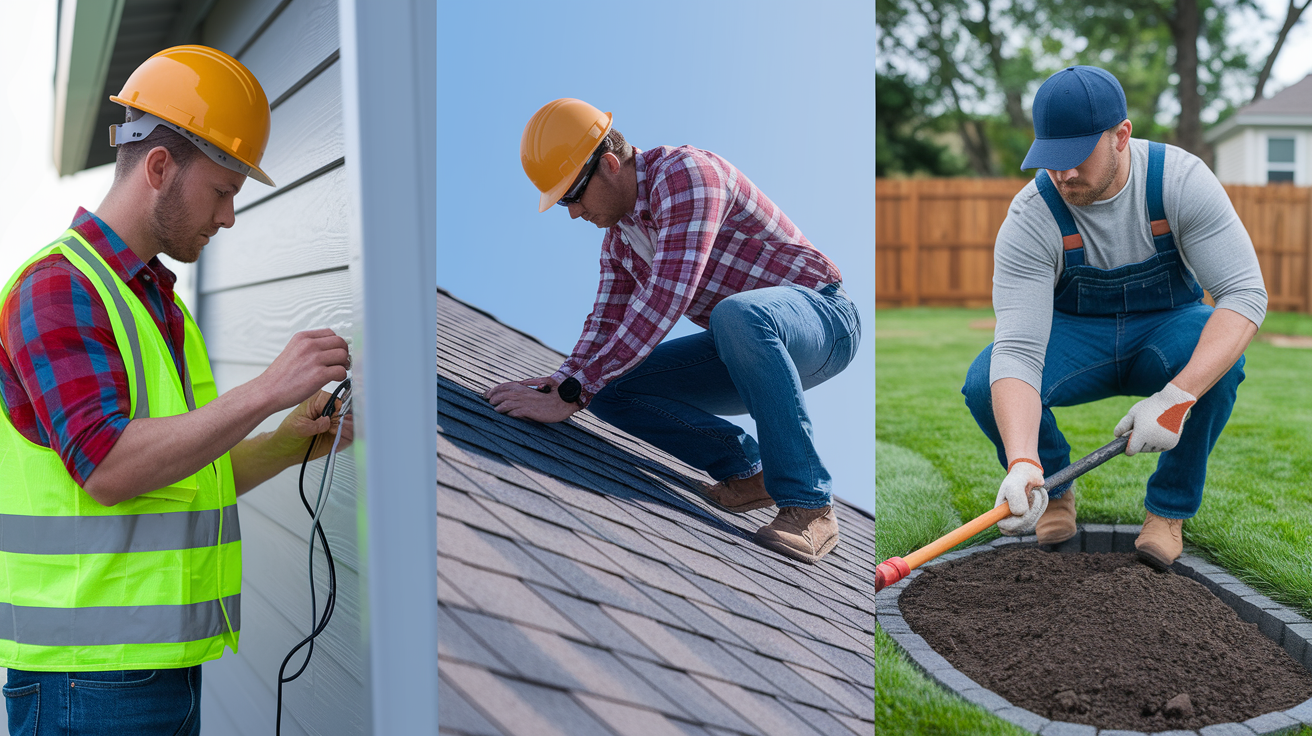
Virtually all contractors working on client property need liability insurance to protect against the financial consequences of accidents and damage claims. Some states legally require minimum coverage levels for contractors to maintain their licenses, with requirements varying by trade classification and project type. Even sole proprietors working alone face significant risk, because one serious injury claim can consume years of profit and threaten personal assets without proper coverage.
Mechanical and Systems Contractors
Electricians, plumbers, and HVAC contractors face distinct risks from the systems they install and service.
Electrical work carries particular exposure because faulty wiring can cause fires months after installation, with claims routinely exceeding $200,000 when structures burn. A residential electrician improperly connects circuit breakers in a panel upgrade, creating an overload condition that smolders inside the wall for weeks before igniting. The resulting house fire destroys most of the structure and several neighboring units in a townhome complex, generating a $650,000 claim.
Plumbers deal with water damage risks where a single burst pipe can flood multiple floors. A plumbing contractor replaces galvanized pipes with PEX in a three story building but fails to properly secure a connection. The fitting separates during pressure testing while the crew is at lunch, flooding all three floors for forty minutes before discovery. Restoration costs hit $75,000 for water extraction, drywall replacement, flooring repairs, and mold prevention treatment.
HVAC contractors face carbon monoxide exposure claims when improper installation creates dangerous conditions. A heating contractor installs a new furnace but fails to properly vent combustion gases, resulting in three family members hospitalized with carbon monoxide poisoning. Medical claims and the lawsuit that follows total $180,000. Refrigerant leaks create both property damage and bodily injury exposure when chemicals damage finishes or create respiratory problems.
Structural and Finishing Contractors
General contractors, roofing contractors, painting contractors, and flooring specialists handle work where mistakes become immediately visible or cause progressive damage.
Roofing claims frequently involve leaks that go undetected until interior damage appears. A roofer completes a shingle replacement but fails to properly seal flashing around a chimney. Months later, persistent leaks damage interior ceilings, walls, and the homeowner’s furniture collection, resulting in a $40,000 claim for repairs and belongings.
Painting contractors deal with overspray damage that extends beyond the work area. A crew spraying exterior trim on a windy day allows paint mist to drift onto three vehicles parked nearby, requiring professional detailing and in some cases paint correction that totals $15,000.
Flooring specialists scratch or gouge finished floors with equipment or dropped materials. A hardwood refinishing contractor fails to properly pad equipment wheels, leaving scratch patterns across 2,000 square feet of maple flooring throughout a home, requiring complete refinishing at $22,000.
Structural demolition creates debris hazards and accidental damage to elements meant to be preserved. A demolition contractor removing a wall for an open concept remodel fails to identify a supporting beam, causing a ceiling sag that requires emergency shoring and structural repairs costing $95,000. Falling debris from demolition work injures a pedestrian passing by, generating medical claims and lost wage compensation.
Exterior and Site Work Contractors
Landscaping professionals, excavation contractors, and demolition specialists work in conditions where underground utilities and neighboring property create elevated risk.
Striking underground utilities during excavation creates expensive emergency repairs. An excavation contractor digging a foundation hits an unmarked gas line, requiring utility company emergency response, temporary resident relocation, street closure, and expedited repairs exceeding $50,000.
Tree removal services face falling limb and equipment damage risks where miscalculated cuts or rigging failures cause tree sections to fall on structures, vehicles, or people.
Heavy equipment operation near structures creates foundation crack and settlement risks. A site work contractor operates a loaded dump truck too close to a home’s foundation, causing soil compression and settling that cracks the foundation wall and requires expensive underpinning to stabilize, totaling $30,000. Improper driveway grading during excavation causes water to sheet toward a house, creating basement flooding during the next storm.
Erosion and sediment control failures during site work damage neighboring properties when heavy rain washes soil and debris onto adjacent lots, covering lawns, clogging drainage systems, and requiring extensive cleanup. A site contractor fails to install silt fencing before a weekend storm, resulting in six inches of sediment washing onto three neighboring properties, with cleanup and restoration costs of $28,000 split among the affected owners.
Differences Between General Liability and Specialized Contractor Policies

Commercial general liability serves as the standard broad coverage for contractor operations, protecting against third party bodily injury and property damage claims arising from construction activities. This foundational coverage handles most day to day risks you face on job sites and from completed work, but it specifically covers claims from third parties, not damage to your own property or equipment.
General liability protects you from lawsuits by customers, pedestrians, and other parties who suffer injury or property damage, but it won’t pay to replace your own stolen tools or damaged materials. That distinction matters because contractors sometimes assume their policy covers everything related to their business operations. If someone breaks into your truck and steals $8,000 in power tools, general liability doesn’t cover the loss.
Builders risk insurance fills that gap by covering your own property and materials during construction. While general liability pays when you damage someone else’s property, builders risk pays when your materials get stolen, vandalized, or damaged by weather during a project. A framing contractor has lumber delivered to a job site on Friday, and weekend vandals burn the pile, destroying $12,000 in materials. Builders risk covers that loss, not general liability.
Inland marine insurance covers your tools and equipment during transport and at job sites. Your cargo trailer gets broken into overnight at a motel parking lot during an out of town project, and thieves take $15,000 in tools and equipment. Inland marine insurance handles that claim.
Professional liability, also called errors and omissions insurance, covers design mistakes, engineering errors, and consulting advice that causes financial loss to clients. A design build contractor creates plans for an addition that violate setback requirements, forcing the client to demolish and rebuild the structure after the city denies the certificate of occupancy. Professional liability covers the resulting financial loss, while general liability does not because no bodily injury or property damage occurred, just economic loss from the mistake.
Comprehensive protection requires multiple policy types working together, with general liability as the foundation but not sufficient alone for complete contractor protection. Most contractors need at least three policies: general liability for third party claims, commercial auto for vehicle incidents, and workers’ compensation for employee injuries.
Cost Factors and Premium Considerations
Contractor liability insurance costs vary widely based on multiple business factors that insurers evaluate to determine risk exposure. Understanding these factors helps you estimate your premium costs and identify ways to potentially reduce rates through risk management improvements.
Typical annual premiums range from $500 to $3,000 for small to mid sized contractors, though costs can reach $10,000 or more for large operations with significant payrolls and high risk trades. A sole proprietor handyman with $75,000 in annual revenue might pay $600 annually for $1 million coverage, while a roofing company with fifteen employees and $2 million in revenue might pay $4,500 for the same limits.
Type of contractor work creates the biggest premium variation because higher risk trades pay more. Roofers and demolition contractors pay significantly higher rates than interior painters or finish carpenters due to increased injury and damage frequency.
Annual gross receipts and revenue directly impact premiums because higher revenue suggests more projects and greater exposure to potential claims.
Payroll size and number of employees affects cost since more workers create more opportunities for third party accidents and liability events.
Amount paid to subcontractors annually factors into premium calculations because you’re often liable for subcontractor accidents and damage.
Geographic location and state regulations influence rates because claim frequency, jury awards, and litigation costs vary significantly by region.
Claims history and risk management practices determine eligibility and pricing, with contractors maintaining clean loss histories earning lower rates while those with frequent claims face premium increases or coverage denial.
Increasing coverage from $1 million to $2 million aggregate limits typically costs under $100 annually, making higher limits an affordable upgrade that meets more contract requirements. In rare cases, premium increases can exceed $500 when significant aggregate limit jumps are requested or when your risk profile suggests higher claim likelihood.
Industry standards and state minimums may dictate minimum required coverage levels, with some municipalities requiring contractors to carry at least $500,000 per occurrence for license renewal while others mandate $1 million or more for specific trade classifications.
How to Obtain Coverage and Certificate of Insurance
You can obtain coverage through independent insurance agents who represent multiple carriers, brokers who specialize in construction insurance, or online platforms that offer instant quotes and policy binding. Working with an agent or broker familiar with contractor insurance helps identify coverage gaps and endorsements specific to your trade.
Coverage can begin within 24 hours once the application is approved and premium payment processes. Many online platforms offer same day coverage for contractors who need immediate proof of insurance to start a project.
The application process requires information about your business operations, annual revenue, payroll details, subcontractor expenses, prior claims history, and the types of work you perform.
A certificate of insurance serves as the official proof document showing policy details, coverage limits, effective dates, policy number, insured parties, and additional insureds named on the policy. Certificates don’t alter the underlying policy terms but provide verification that coverage exists.
You need certificates when signing construction contracts with property owners or general contractors, securing lease agreements for office or shop space, applying for business loans or lines of credit, and bidding on commercial or government projects where proof of insurance is a bid requirement.
You should request certificates naming specific additional insured parties as required by contracts before starting work. Most insurers provide certificates within hours of request at no additional charge. The certificate goes to the requesting party, documenting that coverage exists and meets contractual requirements.
This matters because starting work without providing required proof of insurance can result in contract breach, work stoppage, or personal liability if incidents occur. Asset protection and contract requirement compliance depend on maintaining continuous coverage and providing certificates promptly when requested by clients, general contractors, or property owners.
Final Words
Contractor liability insurance covers the third-party bodily injury and property damage claims that come with every job you take on. It pays for medical bills, legal defense, and settlement costs when accidents happen, whether that’s a broken hip from a slip-and-fall or a cracked foundation from heavy equipment.
Understanding what does contractor liability insurance cover means knowing both the protection it provides and the gaps it leaves. Most contractors need $1 million per occurrence and $2 million aggregate to meet contract requirements and protect their business from claims that can easily hit six figures.
Get your coverage in place before you start the next project. It’s not optional when contracts, clients, and your financial security are on the line.
FAQ
How much does a $1,000,000 liability insurance policy cost?
A $1,000,000 liability insurance policy typically costs between $500 and $3,000 annually for contractors. The premium depends on your trade type, annual revenue, payroll size, subcontractor expenses, location, and claims history. Higher-risk work like roofing or electrical costs more than lower-risk trades like painting.
What is contractor’s liability insurance?
Contractor’s liability insurance is financial protection against third-party claims for bodily injury and property damage arising from your construction operations. It covers medical expenses, legal defense costs, and settlements when clients, pedestrians, or neighboring properties are injured or damaged during your work. Coverage applies both on-site and off-site for incidents related to contractor activities.
What isn’t covered by liability insurance?
Liability insurance doesn’t cover employee injuries (requires workers compensation), business vehicle accidents (needs commercial auto), professional design errors (needs professional liability), pollution incidents, intentional acts, employment discrimination claims, asbestos exposure, or cyber breaches. Contractor’s own tools, equipment, and materials also require separate inland marine or builders risk coverage.
What does $100k/$300k/$100k mean?
The $100k/$300k/$100k format typically refers to auto insurance split limits, not contractor liability insurance. Contractor general liability uses per-occurrence and aggregate limits instead, like $1 million per occurrence and $2 million aggregate. Per-occurrence covers one claim event, while aggregate caps total payouts for all claims during the policy period.