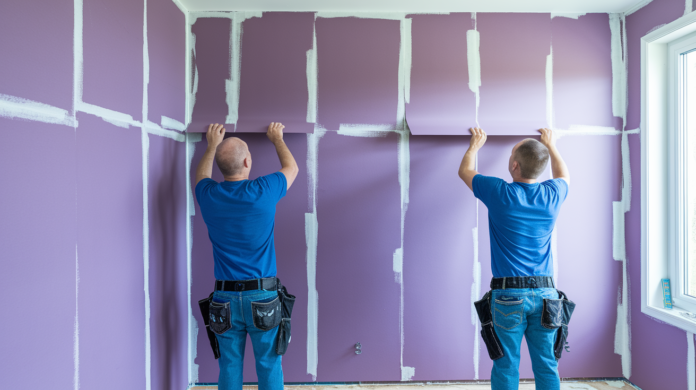

Regular drywall in a bathroom is a mold farm waiting to happen, yet builders still install it in high-moisture spots every day. The difference between standard gypsum board and moisture-resistant variants comes down to what mold needs to survive: organic material and trapped water. Moisture-resistant drywall uses fiberglass facing or wax-coated paper instead of plain paper, cutting off the food source and slowing water absorption. This guide breaks down the three main types, where each one actually works, and how to install them so they don’t fail in two years.
Water and Mold-Resistant Gypsum Board Products Explained
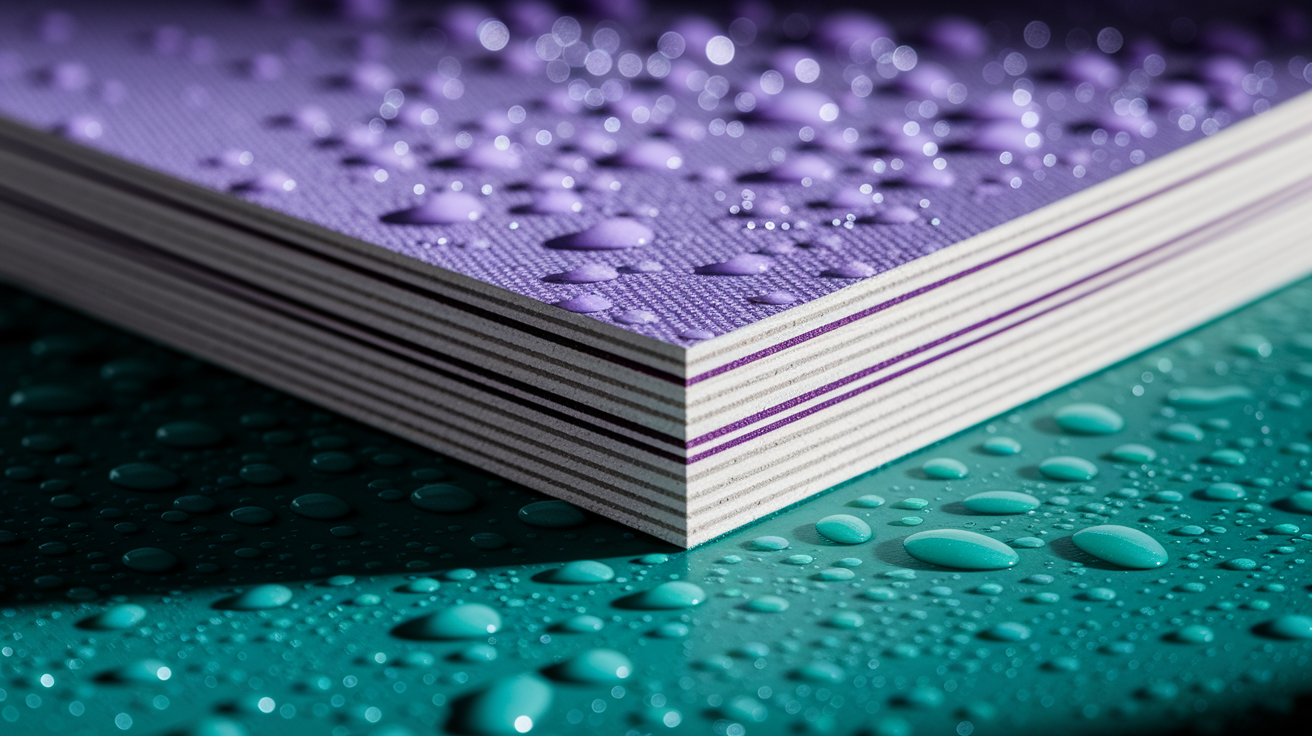
Moisture and mold-resistant drywall breaks down into three main types: purple board with fiberglass facing, green board with wax-coated paper, and paperless variants. They all share that same gypsum core (calcium sulfate dihydrate mixed with water), but the facing materials? That’s where things get different. This stuff swaps out the standard paper you’d find on regular drywall for non-organic materials that won’t let mold spores latch on and start growing.
You’ve got two main facing types here. Fiberglass mesh and wax-coated paper. The fiberglass mesh is completely non-organic, which means mold can’t get a foothold. Literally nowhere to grab. Wax-coated paper puts a moisture barrier over thicker paper stock, though underneath it’s still organic material.
These products work by pushing moisture away instead of soaking it up. Water hits the surface and beads up or runs off. Without moisture getting through, those mold spores that land on the surface can’t create the damp environment they need to take root and spread. The non-organic facing cuts off the food source mold depends on.
Most manufacturers now make combined mold and moisture-resistant products in single panels. Makes material selection simpler and the two properties work together. That said, don’t expect completely waterproof or mold-proof drywall. It doesn’t exist. These products resist moisture and slow down mold, but they’re not built for constant water exposure or sitting underwater.
Comparing Product Types: Performance and Limitations

Knowing the differences between product types helps you pick the right material for each spot in your project.
Green board uses wax-embedded paper and gives you moisture resistance only on the front surface. The back? Still untreated standard paper facing. This one-sided protection means moisture can still get in from behind or through cut edges. Bigger issue: green board still has organic paper materials on both sides that can feed mold growth once the wax barrier gets compromised. The wax coating slows water absorption but doesn’t stop it completely, and it doesn’t give you any mold resistance beyond delaying moisture for a bit.
Purple board and other fiberglass-faced products do a better job preventing mold. The fiberglass facing is entirely non-organic on both sides, removing what mold needs to survive. When moisture contacts the surface, it can’t penetrate as easily. Even if it does, the facing material won’t support mold growth. These products usually show less than 5% water absorption and hit the highest scores on ASTM D3273 and ASTM G21 mold tests. The fiberglass mesh also adds dimensional stability, cutting down on warping or sagging when conditions get damp.
Cement board is the highest-performance option for direct water contact. It’s designed for tile backing in showers and tub surrounds where water hits the wall every day. Cement board has zero organic materials and handles submersion better than any gypsum-based product. Tradeoff is weight, cost, and tougher installation. For most residential moisture control work, fiberglass-faced gypsum board gives you enough protection without the headaches cement board brings.
| Product Type | Facing Material | Moisture Resistance | Mold Resistance | Best Application |
|---|---|---|---|---|
| Standard Drywall | Paper on both sides | None | None | Interior walls and ceilings in dry areas |
| Green Board | Wax-coated paper (front only) | Moderate (front surface) | Low (still contains organic paper) | Areas with occasional moisture exposure |
| Purple Board/Fiberglass-Faced | Fiberglass mesh both sides | High (less than 5% absorption) | High (non-organic facing) | Bathrooms, kitchens, basements, laundry rooms |
| Cement Board | Cement and aggregate | Very high (designed for wet areas) | Very high (completely inorganic) | Shower walls, tub surrounds, direct water contact |
High Humidity Areas Where Moisture-Resistant Drywall is Essential
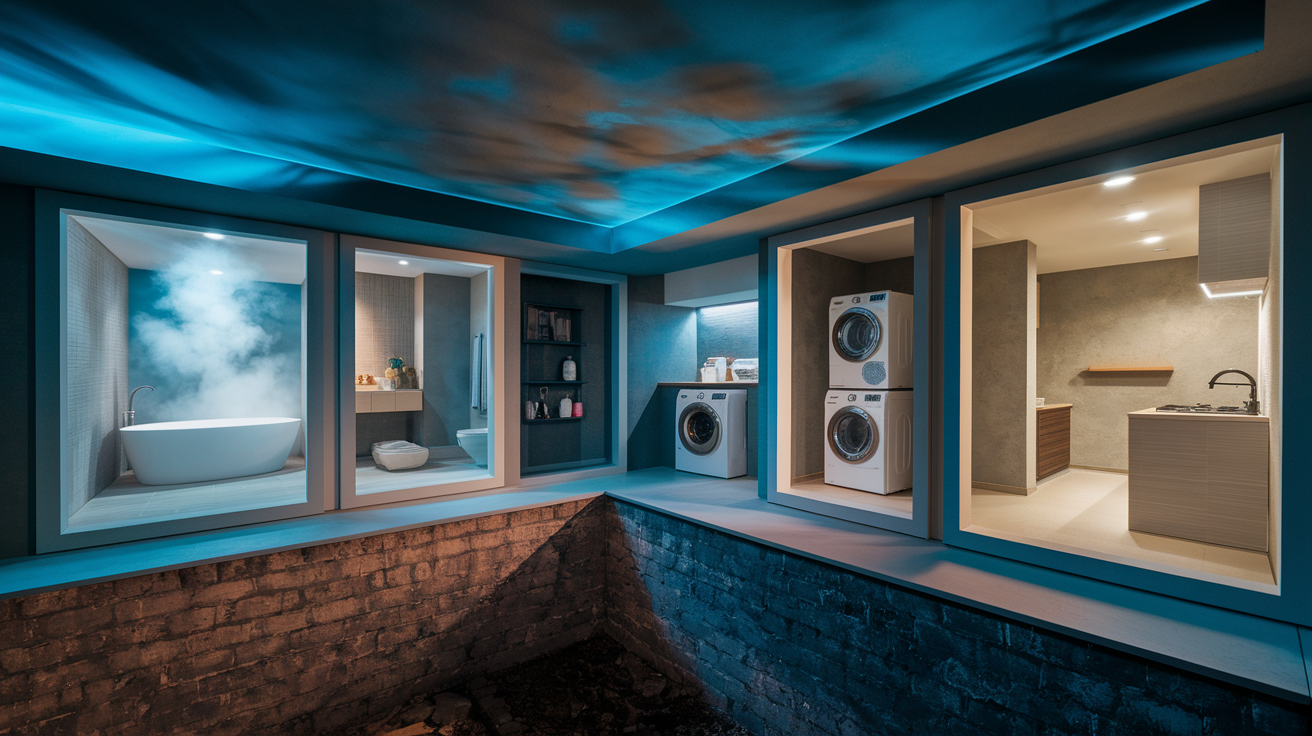
You don’t need moisture-resistant drywall throughout your entire home. Target the high-moisture areas and you’ll keep costs reasonable while protecting the vulnerable spaces.
Cost-effectiveness comes from identifying specific rooms and wall sections where humidity, condensation, or water exposure create actual risk. Installing moisture-resistant drywall only in these spots limits your material cost increase to 30 to 50 percent for those areas, not the whole house.
Here are seven locations where moisture-resistant drywall should go:
Bathrooms: Showers, baths, and sinks pump out constant high humidity that saturates air and condenses on cool surfaces. Steam from hot showers is the main culprit, especially in bathrooms without exhaust fans.
Basements: Ground moisture seeps through foundation walls even with decent waterproofing. Poor ventilation and cooler temperatures create damp conditions year-round. Any water intrusion from heavy rain makes it worse.
Laundry rooms: Washing machines and dryers generate serious steam and humidity with every load. Dryer vents that aren’t sealed right or that dump inside the space compound the problem.
Kitchens: Cooking steam rises from pots and pans, dishwashers release moisture during drying cycles, water splashes near sinks. The wall section behind the sink and around the stove top sees the most exposure.
Garages: Temperature swings between inside and outside create condensation. Vehicles coming in from rain or snow bring moisture inside. Concrete slabs can wick ground moisture up through the floor.
Attics: Temperature shifts between seasons cause condensation on cooler surfaces. Roof leaks might go unnoticed for months. Inadequate ventilation traps humid air from the living space below.
Exterior wall cavities: Water that gets past siding, flashing, or windows enters wall cavities and contacts the back of the drywall. These walls are your first line of defense against exterior moisture coming in.
Pay attention to areas around water-using appliances and condensation-producing fixtures like air conditioners, refrigerators, water heaters, and washing machines. Even small leaks or drips can create localized moisture issues. Proper ventilation stays critical alongside material selection. Moisture-resistant drywall buys you time and reduces risk, but it can’t overcome poor airflow or weak exhaust systems.
Installation Guidelines and Finishing Techniques
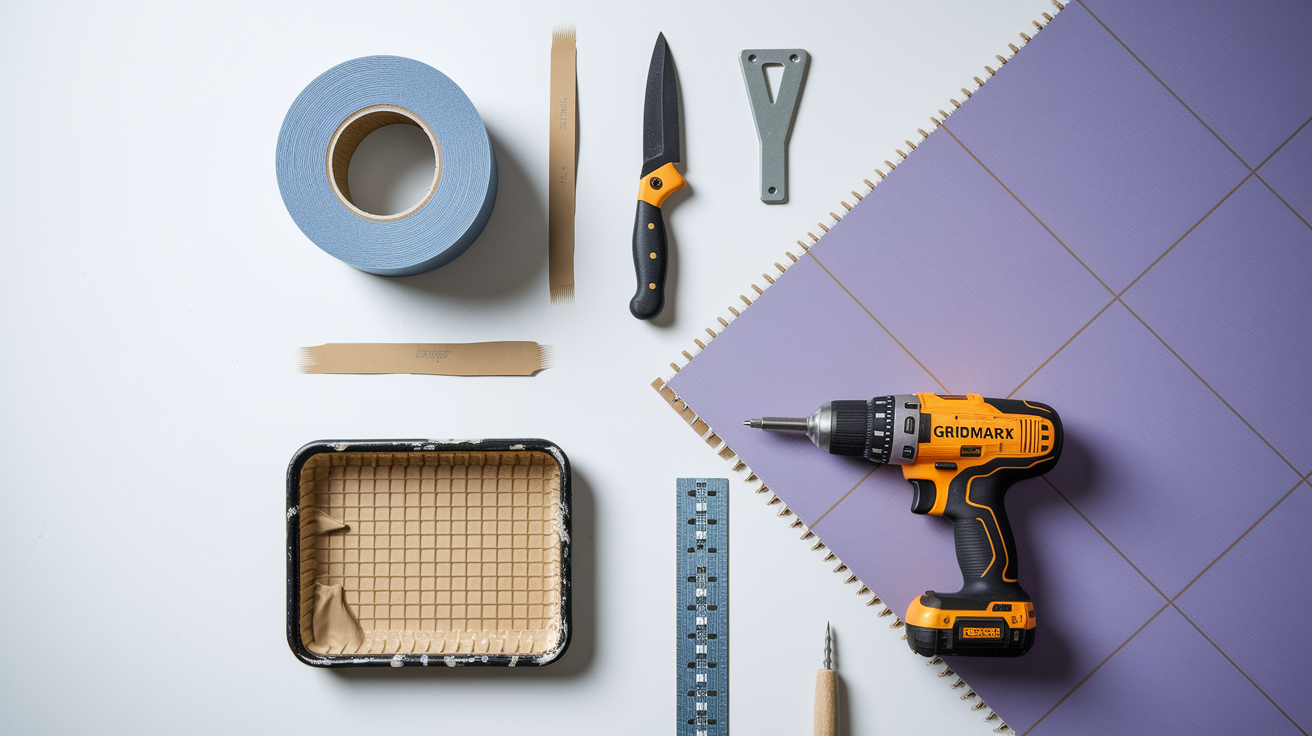
The installation process looks nearly identical to standard drywall, with some important differences in taping and finishing.
Installation Process and Fastening
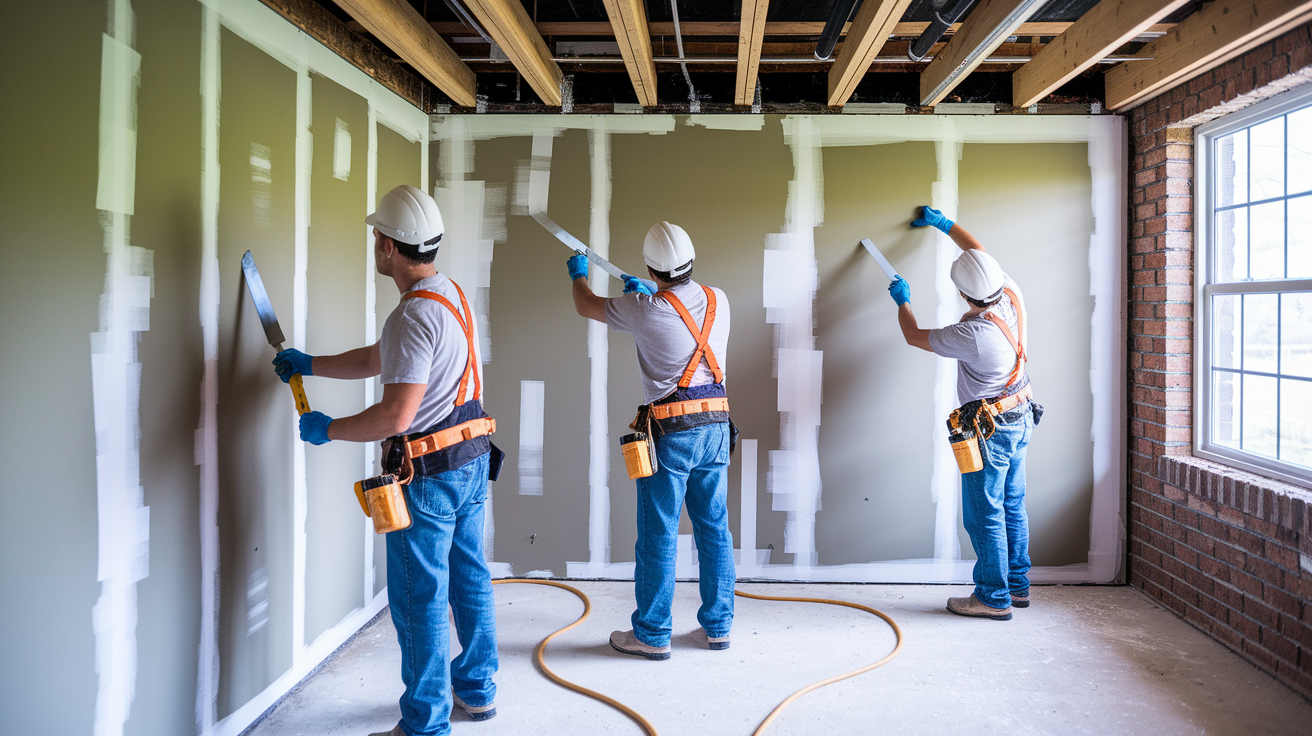
Installation follows the same basic steps. Measure the panel, score the face with a utility knife, snap it along the score line, cut through the back facing, attach to studs with screws or nails. Stud spacing stays at 16 or 24 inches on center depending on your framing. Screw placement follows standard patterns, usually 12 inches apart on walls and 8 inches on ceilings, with fasteners at least three-eighths inch from panel edges.
The critical difference shows up at the joints. Use fiberglass mesh tape instead of paper tape for all seams. Paper tape is organic and can support mold growth if it gets damp behind the joint compound. Fiberglass mesh tape stays inert even when wet. Some installers like self-adhesive mesh tape for speed. Others use standard mesh with a thin coat of joint compound to embed it.
Apply joint compound in the standard three-coat method. First coat embeds the tape, second coat feathers out 8 to 10 inches on each side of the seam, third coat extends even wider for a smooth transition. Let each coat dry completely before sanding and applying the next. Drying time matters more in high-humidity areas, so don’t rush it.
Some products like PURPLE drywall have GridMarX guide marks printed on the panels. These marks show exactly where studs are located and where to place fasteners for best holding strength. The guides improve accuracy for professionals working fast and DIYers new to drywall installation. If you’re working with a product that has these marks, use them. They cut down on mistakes and callbacks.
Priming, Painting, and Seam Sealing
Priming moisture-resistant drywall requires a primer rated for high-humidity environments. Standard drywall primer won’t give you adequate protection. Look for primers labeled “mold-resistant” or “moisture-resistant” that create a vapor barrier between the drywall and the finish paint. These primers usually contain mildewcides and form a tougher film than standard products.
Paint compatibility matters in high-moisture areas. Use semi-gloss or satin finish paints rather than flat. Glossier finishes resist water better and clean easier when condensation or splashes happen. In shower areas not protected by tile, use paint with waterproof additives or bathroom-specific paint formulated to handle direct water contact.
Joint compound selection depends on your facing material. For fiberglass-faced products, standard all-purpose joint compound works fine. Some manufacturers recommend their specific compound formulations for best adhesion to fiberglass mesh, so check product literature. Avoid lightweight compounds in high-moisture areas. They’re more porous and can absorb water more readily than standard or topping compounds.
Seam sealing best practices include checking that all joints are fully covered with compound and that no gaps exist where tape meets panel edges. Inside corners need adequate compound coverage to prevent moisture from wicking along the seam line. Outside corners benefit from bullnose or vinyl bead protection in high-traffic areas where impact damage could expose the gypsum core.
Professional installation makes sense for larger projects or when moisture control is critical. Complex ceiling work, large basement finishing, or bathroom remodels with tile backing benefit from experienced crews who understand proper sequencing and moisture management. DIY installation works fine for simple wall replacement or small laundry room projects where layout is straightforward and there’s room to correct mistakes.
Building Codes and Moisture Barrier Requirements
Building codes address moisture-resistant drywall through testing standards and application requirements that vary by jurisdiction.
ASTM D3273 measures a product’s resistance to mold growth under specific temperature and humidity conditions. The test exposes samples to mold spores in a controlled environment and rates growth on a scale of 0 to 10, with 10 being no growth. Premium products like PURPLE XP achieve a rating of 10. ASTM G21 provides similar testing specifically for fungal resistance. Products meeting the highest scores on both tests demonstrate proven performance against mold under lab conditions that simulate real-world moisture exposure.
Water absorption rates get measured and reported as a percentage of the panel’s dry weight. High-performance moisture-resistant drywall features less than 5% water absorption when tested according to ASTM standards. Standard drywall typically absorbs 10% or more. Lower absorption means less water penetrates the panel during exposure, reducing the risk of core degradation and mold growth. When comparing products, ask for the specific absorption rate rather than relying on general “moisture-resistant” claims.
Moisture barriers or vapor retarders are required in addition to moisture-resistant drywall in many climate zones. Cold climates typically require vapor retarders on the warm-in-winter side of exterior walls to prevent moisture-laden interior air from condensing inside wall cavities. In hot-humid climates, vapor retarders may be required on the exterior side instead. Your local building code specifies the requirement based on climate zone maps. Moisture-resistant drywall isn’t a vapor retarder by itself unless it carries a specific perm rating that qualifies it as such.
Type X fire-rated drywall is available in moisture-resistant versions for applications requiring both fire protection and moisture control. These panels contain additional glass fibers in the gypsum core for fire resistance while maintaining moisture and mold resistance in the facing materials. Typical applications include garage walls adjacent to living spaces, walls separating dwelling units in multifamily buildings, and any rated assembly in a moisture-prone location.
Inspection requirements focus on proper installation and material selection. Inspectors verify that moisture-resistant drywall is used in code-required locations, that fastener spacing meets standards, and that joints are properly taped and finished. In some jurisdictions, you’ll need to show material compliance by providing product literature or keeping labels available for inspection. Requirements vary by jurisdiction and climate zone, so confirm local rules before starting work.
Preventing Mold Through Ventilation and Humidity Control
Moisture-resistant drywall alone can’t solve all moisture problems. It’s one component of a bigger system.
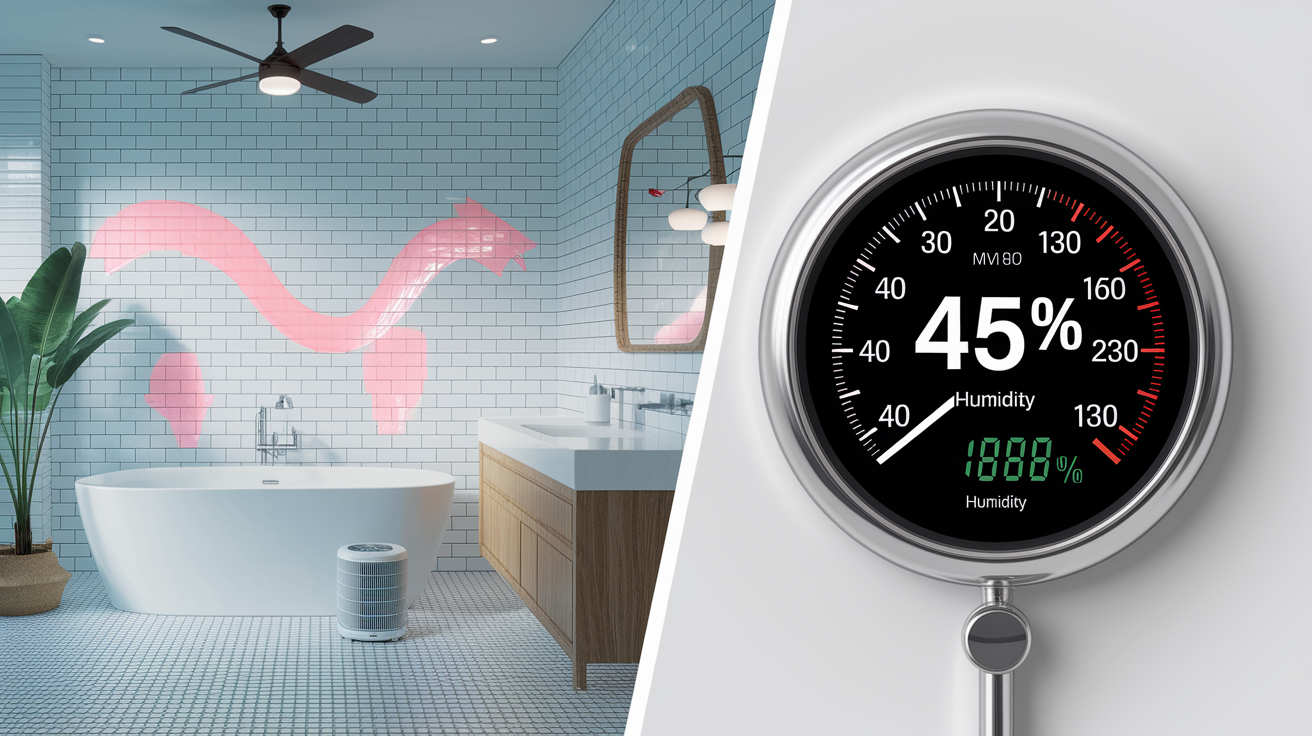
Material selection must be combined with environmental controls that manage humidity levels and air movement. Drywall that resists moisture buys you time and reduces risk, but it can’t overcome continuous high humidity or standing water. The target indoor humidity level for preventing mold growth is 30 to 50 percent. Above 60 percent, mold spores activate and begin growing on any available surface, moisture-resistant or not.
Five ventilation and humidity control strategies work alongside moisture-resistant drywall:
Exhaust fans: Install them in bathrooms, kitchens, and laundry rooms, sized to move the recommended cubic feet per minute (CFM) for the room size. Run bathroom fans during showers and for 20 minutes after. Range hoods should vent outside, not recirculate.
Dehumidifiers: Use them in basements and other below-grade spaces where ground moisture and poor airflow create persistent dampness. Size the unit to the square footage and empty or drain it regularly.
Air circulation: Keep interior doors open when possible and use fans to move air between rooms. Stagnant air allows moisture to concentrate in corners and behind furniture where it condenses on cool surfaces.
Condensation management: Insulate cold water pipes to prevent surface condensation. Repair leaking fixtures immediately. Redirect exterior drainage away from foundation walls to reduce moisture infiltration.
Proper HVAC design: Make sure your heating and cooling system is sized correctly and that ductwork doesn’t leak. Oversized AC units short-cycle and don’t remove enough humidity. Undersized systems run constantly and can’t keep up with moisture loads during humid weather.
An integrated approach to moisture management combines moisture-resistant building materials with active humidity control and proper ventilation. This combination reduces respiratory issues and allergies from mold exposure by preventing spores from finding the damp conditions they need to grow. You protect structural integrity by keeping wood framing, subfloors, and other building components dry. And you prevent costly mold remediation, which typically runs several thousand dollars for even modest cleanup projects. Moisture-resistant drywall is part of the defense, not the entire solution.
Cost Analysis and Long-Term Investment Value
Moisture-resistant drywall costs 30 to 50 percent more than standard drywall sheets. A 4×8 sheet of half-inch standard drywall might run $12 to $15, while the same size in moisture-resistant costs $16 to $22.
Targeted use in high-moisture areas limits the overall project cost increase. If you’re finishing a 1,000 square foot basement and only use moisture-resistant drywall on exterior walls and around the utility area (maybe 400 square feet of wall coverage), your material cost increase is 30 to 50 percent on those specific sheets, not the entire drywall order. The rest of the basement can use standard drywall, keeping costs down.
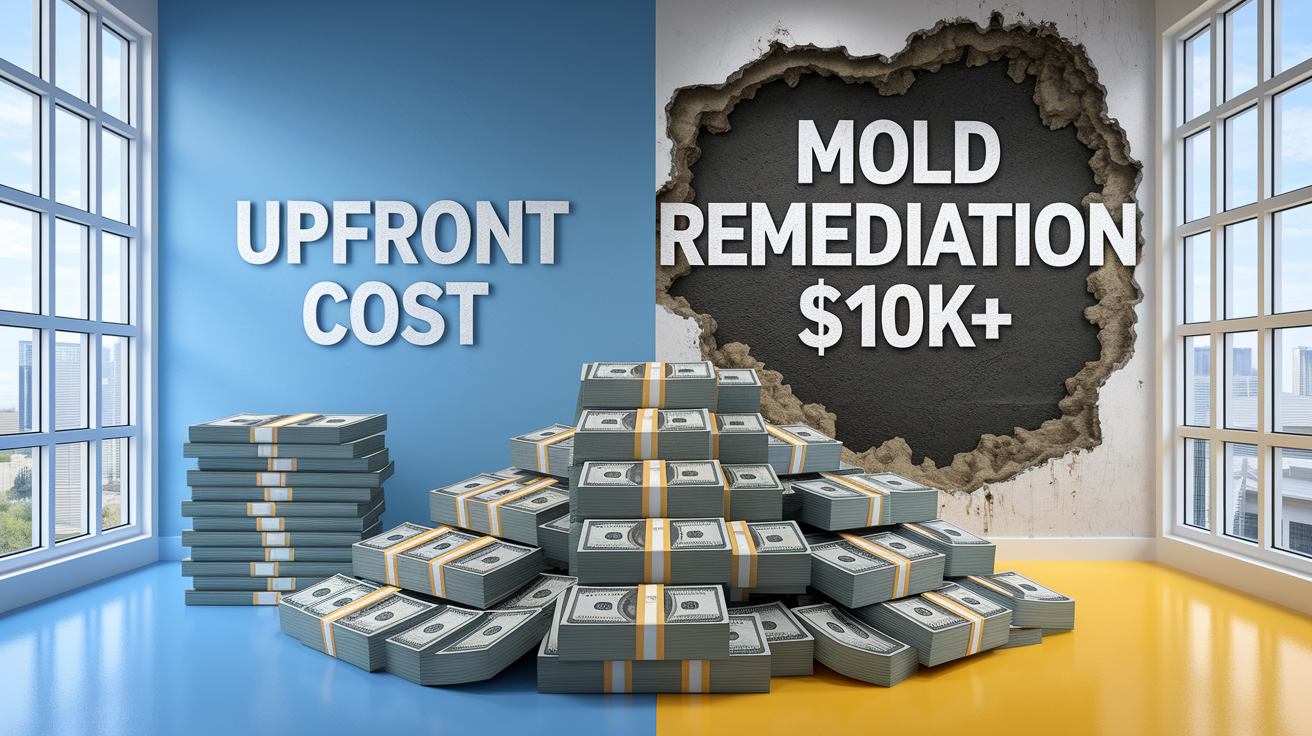
Long-term savings from preventing mold remediation justify the upfront investment. Professional mold cleanup costs $2,000 to $6,000 for a typical bathroom or small basement area. Extensive contamination can push costs to $10,000 or more when structural components need replacement. Compared to those numbers, spending an extra $200 to $500 on moisture-resistant drywall for a bathroom renovation is cheap insurance.
Beyond direct remediation costs, consider potential expenses for structural damage, health issues, and property value loss. Water-damaged framing requires replacement, not just cleaning. Health problems from mold exposure can lead to medical bills and missed work. Real estate transactions fall through or sell prices drop when home inspections reveal mold problems. Warranty coverage differs between standard and moisture-resistant products, with many manufacturers offering extended warranties on premium moisture-resistant lines. Expected lifespan in high-humidity environments is significantly longer for moisture-resistant products. Standard drywall might show mold growth or deterioration within 5 to 10 years in a damp basement, while moisture-resistant drywall can last 20 to 30 years in the same conditions without problems.
Interior Wall and Ceiling Applications for Different Panel Thicknesses
Standard half-inch panels work for most wall applications in residential construction. This thickness provides adequate strength for vertical installation, accepts screws or nails reliably, and spans typical 16-inch stud spacing without sagging or flexing. Half-inch moisture-resistant drywall follows the same application guidelines as standard material. Use it on bathroom walls, kitchen backsplash areas, laundry room walls, and basement perimeter walls where moisture exposure is likely.
Five-eighths inch panels are recommended for ceilings and areas requiring greater strength or fire resistance. The extra thickness reduces sagging on ceiling joists spaced at 24 inches, provides better sound dampening, and adds thermal mass that helps with temperature stability. In moisture-prone applications, five-eighths inch moisture-resistant drywall works well for bathroom ceilings where steam accumulates, basement ceilings in crawl spaces with ground moisture above, and garage ceilings where temperature swings cause condensation. The thicker panel also meets Type X fire rating requirements when formulated with additional glass fibers.
Residential versus commercial applications differ mainly in the scale of installation and specific code requirements. Residential projects typically use moisture-resistant drywall in bathrooms, kitchens, laundries, and basements. Commercial applications expand to locker rooms, restaurant kitchens, commercial laundries, indoor pool areas, and any space with industrial moisture sources. Commercial installations often require Type X fire rating in addition to moisture resistance, and may specify five-eighths inch panels throughout for durability.
When moisture control is critical in both walls and ceilings within the same space, use moisture-resistant products on all surfaces. A basement bathroom needs it on walls and ceiling. A residential laundry room benefits from moisture-resistant ceiling panels even if walls are standard drywall, because steam rises and condenses on the ceiling first.
Maintenance, Repair, and Replacement of Mold-Resistant Panels
Routine cleaning methods that won’t compromise moisture resistance include wiping surfaces with a damp cloth and mild detergent. Avoid abrasive cleaners that can scratch the facing material and create microscopic gaps where moisture can penetrate.
Inspection practices should include checking for early moisture damage signs every few months in high-risk areas. Look for discoloration, water staining, soft spots, or bubbling paint. Feel along the bottom edge of walls where water from floor flooding would soak in first. Check behind and under sinks, around tub surrounds, and along basement perimeter walls after heavy rain.
Minor repair procedures for small damage areas work the same as standard drywall. Cut out the damaged section in a rectangular shape, install backing support between studs if needed, cut a patch piece to fit, secure it with screws, tape and finish the seams with joint compound. Use moisture-resistant drywall for the patch material even if the repair is small, to maintain the moisture protection in that area.
Replacement indicators include visible mold growth, extensive water staining, structural compromise like crumbling or delaminating gypsum core, or a musty smell that persists after cleaning. If moisture has soaked through the facing and saturated the gypsum core, replacement is necessary. You can’t dry out a waterlogged panel enough to restore its strength and mold resistance. Even moisture-resistant drywall has limits.
Severe or prolonged water exposure will eventually fail even the best moisture-resistant drywall. Flooding that submerges panels for hours, continuous leaks from plumbing failures, or roof leaks that drip for weeks will saturate the material. When that happens, remove and replace the affected sections promptly to prevent mold spread.
Address underlying moisture sources before repair or replacement. If you replace water-damaged drywall without fixing the leak, sealing the foundation crack, or improving ventilation, the new material will fail just as fast. Find the source, fix it, verify the area is dry, then repair or replace the drywall.
Brand Options and Where to Purchase Specialized Drywall Products
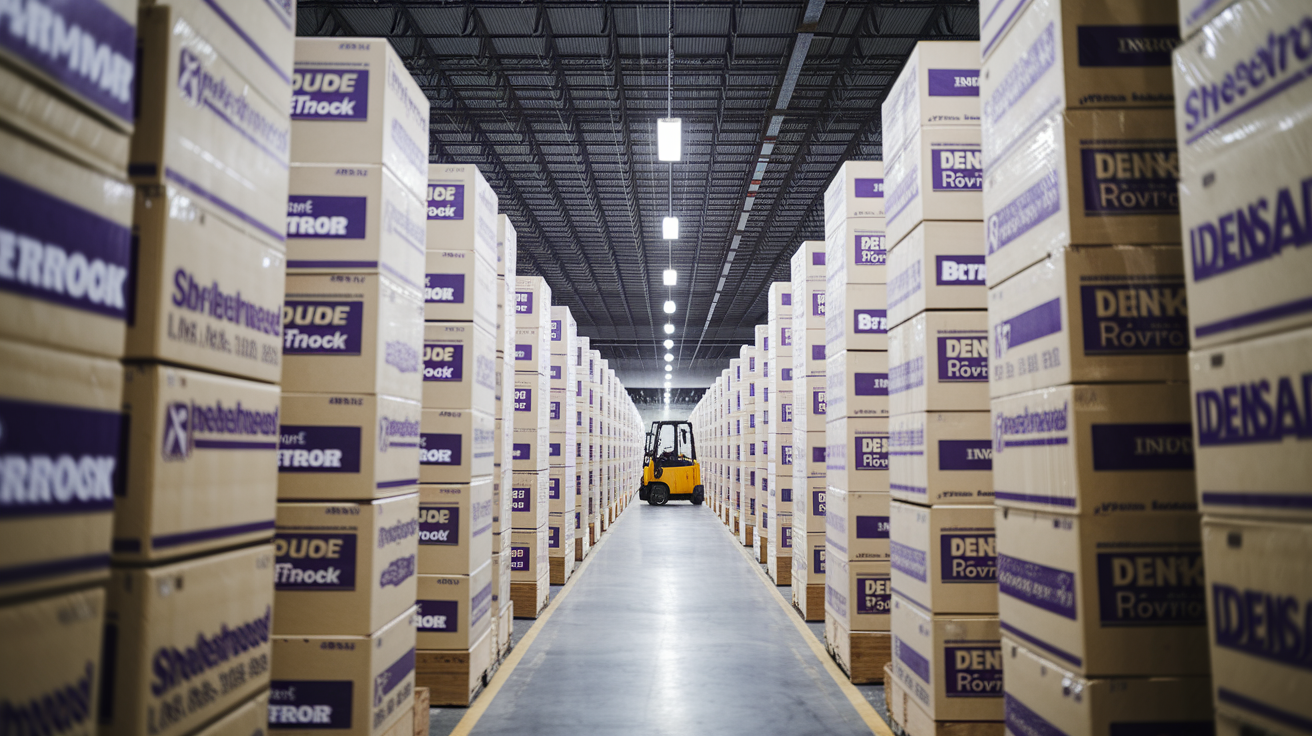
Major manufacturers of moisture and mold-resistant drywall include National Gypsum, USG (United States Gypsum), CertainTeed, and Georgia-Pacific.
National Gypsum’s PURPLE line with SPORGARD technology provides extra mold-inhibiting properties beyond basic moisture resistance. SPORGARD is a registered trademark of LANXESS Deutschland GmbH, Germany, and refers to specific antimicrobial additives embedded in the gypsum core and facing materials. PURPLE XP achieves less than 5% water absorption and the highest possible scores on ASTM D3273 and ASTM G21 mold tests. Gold Bond Building Products manufactures PURPLE XP and other specialized gypsum boards distributed through National Gypsum Company. Custom builder Holley Homes in Mobile, Alabama has used PURPLE XP in all wet locations (utility rooms, bathrooms, and master bathrooms) after completing thousands of projects over 25 years.
Proprietary technologies differentiate premium products from basic moisture-resistant offerings. National Gypsum’s SPORGARD provides long-term mold inhibition through chemical additives, not just a physical moisture barrier. USG’s Sheetrock Brand Mold Tough panels use similar antimicrobial technology. CertainTeed’s M2Tech moisture and mold-resistant panels focus on fiberglass facing with enhanced core formulation. Georgia-Pacific’s DensArmor Plus combines fiberglass mats on both sides with a moisture-resistant core. These technologies go beyond the baseline of “wax-coated paper” to provide measurable performance improvements in moisture resistance, mold inhibition, and long-term durability. Contractor preferences are based on real-world performance from builders like Holley Homes who have decades of experience in high-humidity coastal environments.
Where to purchase moisture and mold-resistant drywall products:
Big-box home improvement stores (Home Depot, Lowe’s, Menards): Carry major brands like PURPLE XP, USG Sheetrock Mold Tough, and some CertainTeed products. Pricing is competitive but selection may be limited to the most popular panel sizes and thicknesses. Good for small residential projects where you can pick up a few sheets yourself.
Specialized building supply yards: Stock a wider range of brands, panel sizes, and thicknesses. Staff typically has more technical knowledge and can recommend products for specific applications. Pricing may be slightly higher but product availability is better. Best for larger projects or when you need specialty sizes like five-eighths inch or non-standard lengths.
Direct from distributors: National Gypsum and other manufacturers sell through authorized distributors who deliver to job sites. This is the most cost-effective option for whole-house or commercial projects where you’re buying 50 or more sheets. Requires advance ordering and scheduling delivery, so plan ahead.
Online retailers: Amazon, Build.com, and manufacturer websites sell moisture-resistant drywall with delivery. Convenient for comparing products and pricing, but shipping costs on heavy panels can be high. Best for remote locations where local supply is limited, or when you need to verify exact product specifications before purchasing locally.
Contractor supply houses: Offer contractor pricing and accounts for professionals, but many will sell to homeowners at slightly higher retail rates. Carry professional-grade products and often stock items like fiberglass mesh tape, moisture-resistant joint compound, and specialty primers alongside the drywall. Good for one-stop shopping when you need all the materials for a moisture-resistant drywall installation.
Final Words
Moisture and mold resistant drywall isn’t a magic shield against every water problem, but it’s a smart first defense in bathrooms, basements, laundry rooms, and other humid spaces.
Pair purple board or paperless variants with proper ventilation, humidity control, and quick response to leaks. That combination prevents the mold growth, structural damage, and costly remediation that standard drywall invites in wet areas.
The upfront cost premium pays off when you’re not tearing out soggy walls two years later. Install it where moisture shows up, finish it with fiberglass tape and compatible primers, and you’ve built a more durable home that breathes easier.
FAQ
Can mold resistant drywall get wet?
Mold resistant drywall can get wet temporarily, but it’s designed to repel moisture rather than absorb it like standard drywall. The fiberglass or wax-coated facing prevents water from soaking into the gypsum core quickly, giving you time to dry it out. If the panel stays wet for days or experiences repeated soaking, even mold-resistant products will eventually fail and support mold growth.
Don’t confuse moisture resistance with waterproofing. These panels slow down water absorption and prevent mold spores from latching onto the surface, but they’re not meant for direct, continuous water contact like a shower enclosure. If you’ve got a leak or flooding, dry the area within 24 to 48 hours to avoid problems.
Is there a mold resistant drywall?
Mold resistant drywall exists and uses non-organic facing materials like fiberglass mesh or wax-coated paper instead of standard paper to prevent mold spore attachment. The gypsum core is the same calcium sulfate compound as regular drywall, but the facing won’t feed mold growth. Products like purple board with fiberglass facing perform better than older green board options that still contain some organic materials.
Most manufacturers now combine moisture and mold resistance in the same product since the two problems usually show up together in bathrooms, basements, and laundry rooms. No drywall is completely mold-proof, though. If you trap moisture behind the wall or skip ventilation, mold will eventually find a way to grow somewhere in the assembly.
Is moisture resistant drywall worth it?
Moisture resistant drywall is worth it in high-humidity areas like bathrooms, basements, and laundry rooms where the upfront cost premium of 30 to 50 percent prevents expensive mold remediation later. You don’t need it throughout the entire home, just where water vapor and condensation are constant problems. The investment pays off by protecting structural integrity and avoiding health issues from mold exposure.
If you’re working on a rental turnover, basement finish, or bathroom remodel, moisture-resistant panels reduce callback risk and extend the life of your work. Standard drywall in a steamy bathroom will eventually fail, usually starting at the seams and around fixtures where water gets trapped.
What is the best waterproof drywall for showers?
The best waterproof material for shower walls is cement board, not drywall, because true waterproof drywall doesn’t exist and gypsum-based products shouldn’t face direct water spray. Cement board provides a solid substrate for tile and waterproofing membranes in wet areas like tub surrounds and shower enclosures. Even purple board with fiberglass facing isn’t rated for constant direct water contact.
For areas around the shower but outside the wet zone, like bathroom ceilings and walls away from the spray, purple board or other fiberglass-faced moisture-resistant drywall works fine. Just make sure you’re pairing it with proper ventilation, exhaust fans, and surface finishes that shed water instead of absorbing it.