

You’re about to hand someone a check and the keys to your house, but have you actually confirmed they’re insured? Most homeowners skip this step or accept a piece of paper without verifying it’s real. That’s a mistake that can cost you everything if a worker gets hurt or your property gets damaged. Verifying contractor insurance takes 30 minutes and protects you from years of financial liability. Here’s the exact process to check coverage before you sign anything or let work start.
Step-by-Step Insurance Verification Process for Contractors

Verifying contractor insurance protects you from financial liability if someone gets hurt on your property or if work goes wrong. Without proof of coverage, you’re on the hook for medical bills, legal costs, and repairs. The verification process takes about 30 minutes but can save you from years of financial problems.
Here’s the exact process:
1. Request certificate of insurance from contractor
Ask for the certificate before you discuss contract details or make any commitments. A legitimate contractor has this document ready and will provide it within 24 to 48 hours. If the contractor hesitates, delays, or says their insurance is “being updated,” walk away.
2. Review the COI document for completeness
The certificate of insurance, usually an Acord form, shows the contractor’s coverage at a glance. Check these elements:
- Contractor name matching their business entity exactly
- Current expiration date showing coverage extends beyond your project completion
- Insurance provider contact information you can verify independently
- Policy number for each coverage type listed
- Coverage limits showing both per occurrence and aggregate amounts
- Certificate holder designation with your name or address
- Additional insured status endorsements if you requested this protection
- Cancellation notice provisions stating how you’ll be notified if coverage lapses
Any missing information means the certificate’s incomplete. Don’t accept explanations like “that section doesn’t apply” or “we’ll add that later.”
3. Note the insurance provider contact information and policy number from the certificate
Write down the insurance company name, the policy number for each coverage type, and the agent or company contact listed on the form. You’ll need this for the next step, but don’t use the phone number printed on the certificate yet.
4. Call the insurance company directly using the number from their official website
Search for the insurance company online and use the customer service number from their official website, not the number on the COI. This prevents you from calling a fake number set up to confirm a fraudulent certificate. If the company listed doesn’t exist or has no website presence, the certificate’s likely fake.
5. Verify active policy status and coverage amounts
When you reach the insurance company, ask these questions:
- Is this policy currently active with no lapses in coverage?
- What are the exact coverage limits for general liability and any other policies listed?
- What’s the policy expiration date, and are there any pending cancellations?
- Is [your name/address] listed as additional insured or certificate holder on this policy?
- Are there any coverage gaps, exclusions, or restrictions I should know about?
Write down the date you called, the representative’s name, and any confirmation number they provide. If the representative can’t find the policy, won’t verify information without contractor authorization, or gives you details that don’t match the certificate, the coverage’s questionable.
6. Request to be named as certificate holder or additional insured
If you’re not already listed, ask the contractor to add you. The contractor calls their insurance agent, requests the endorsement, and the insurance company issues an updated certificate showing your protected status. This takes one to three business days. Verify the endorsement was actually added by calling the insurance company again after you receive the updated certificate.
Direct carrier confirmation is the only reliable verification method. Contractors can create realistic certificates using templates, alter dates on expired policies, or list insurance companies that went out of business. A phone call to the actual insurance company cuts through all of that. For adequate protection, general liability coverage should be at least $1 million per occurrence with $2 million aggregate for most home repairs and renovation projects. Smaller jobs might accept $500,000, but larger construction work often requires $2 million per occurrence. Check the expiration date carefully. If the policy expires before your project ends, require proof of renewal before that date or the contractor works uninsured on your property for part of the job.
Essential Insurance Coverage Types Contractors Must Carry

Every contractor working on your property should carry at least two types of insurance: general liability and workers compensation. These coverages protect you from different risks, and both matter whether you’re hiring someone for a $500 repair or a $50,000 remodel.
General Liability Insurance
General liability coverage pays when the contractor or their crew damages your property or injures someone during the work. If a plumber cracks your tile floor, a painter spills chemicals that ruin your hardwood, or a worker knocks a ladder through your window, general liability handles the repair costs. The coverage also protects you if a contractor’s work causes injury to someone else, like a guest who trips over materials left in your walkway.
Most policies cover property damage and bodily injury up to the policy limits. The contractor files the claim, but the money goes toward fixing what broke or paying medical bills. Without this coverage, the contractor would need to pay out of pocket, and most don’t have the cash reserves to cover serious damage.
Workers Compensation Insurance
Workers compensation covers medical bills and lost wages if a contractor’s employee gets hurt on your property. If a worker falls off a roof, cuts themselves on a saw, or suffers a back injury moving materials, workers comp pays for treatment and recovery time.
This coverage’s required by law in most states for any contractor with employees. If a contractor works solo with no crew, they may not need workers comp. But if they hire anyone, even part time help, coverage is mandatory. Without it, an injured worker can sue you directly as the property owner, claiming you provided an unsafe work environment. A single injury lawsuit can cost more than your house is worth.
Additional Coverage Considerations
Depending on the project scope, verify the contractor carries commercial auto insurance if they’re transporting materials or equipment in company vehicles. An accident during a supply run could involve your project if the contractor lacks proper coverage.
Professional liability insurance, sometimes called errors and omissions coverage, matters for contractors doing design work or engineering services. If their plan contains mistakes that cause structural problems, this coverage pays for corrections.
Large contractors sometimes carry umbrella policies that add extra coverage beyond their primary policy limits. For big renovation projects or construction work, an umbrella policy gives you another layer of protection if claims exceed the general liability limits.
Minimum Coverage Amounts and Policy Limits Requirements
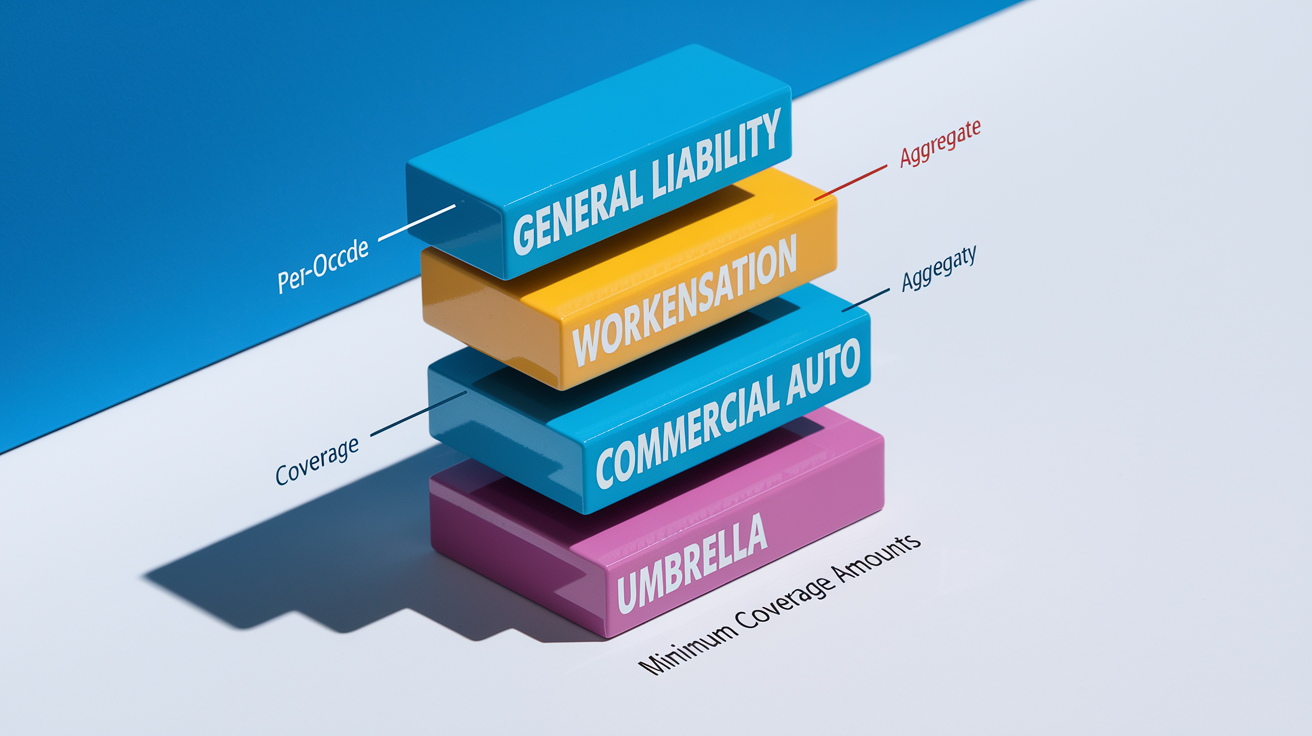
Insurance policies include two types of limits: per occurrence and aggregate. The per occurrence limit is the maximum the insurance company pays for a single incident. One accident, one injury, or one day of property damage. The aggregate limit is the total amount the insurance company pays for all claims during the policy period, usually one year.
If a contractor has $1 million per occurrence and $2 million aggregate coverage, one accident could cost up to $1 million. Multiple smaller accidents throughout the year could total $2 million before the coverage runs out. Once the aggregate limit’s reached, the contractor works uninsured until the policy renews.
| Coverage Type | Minimum Recommended Amount | What It Covers |
|---|---|---|
| General Liability | $1 million per occurrence / $2 million aggregate | Property damage, bodily injury, personal injury claims from construction work |
| Workers Compensation | State required minimum (varies) | Medical expenses, lost wages, disability benefits for injured employees |
| Commercial Auto | $1 million combined single limit | Vehicle accidents involving contractor trucks or equipment during project work |
| Umbrella Policy | $1 to 5 million additional coverage | Excess liability beyond primary policy limits for major claims |
State requirements set the floor for minimum coverage, but project size and scope determine what you should actually require. A contractor replacing a water heater might get by with $500,000 coverage if that meets your state minimum and the risk is limited. A contractor doing structural repairs, addition work, or anything involving multiple subcontractors should carry at least $2 million per occurrence because the chances of serious damage or injury go up.
Larger projects mean more workers on site, more time for something to go wrong, and bigger financial exposure if the worst happens. If you’re doing a whole house renovation or construction work that takes months, require higher limits. A contractor working on a $100,000 project with only $500,000 in coverage gives you thin protection. One major injury claim could max out the policy and leave you holding the rest of the liability.
Additional Insured Status and Certificate Holder Designation

Being named on a contractor’s insurance policy gives you direct protection, but the type of designation matters. Certificate holder status means you get a copy of the insurance certificate and notification if the policy gets cancelled. Additional insured status gives you broader protection by extending the contractor’s liability coverage to you as if you were also insured under their policy.
Here’s what additional insured status provides:
- Direct claim filing ability. You can contact the insurance company yourself without going through the contractor.
- Protection from contractor’s negligence even if the contractor won’t cooperate with the claim.
- Coverage without relying on contractor cooperation if they disappear, go out of business, or refuse to file.
- Automatic notification of policy cancellation or non renewal, giving you time to stop work before coverage lapses.
- Extended liability protection if someone sues both you and the contractor, defending you in court under the contractor’s policy.
Request additional insured status before you sign the contract and make it a requirement in writing. Some contractors include this automatically, others charge a small fee to add the endorsement, and a few will push back claiming it’s unnecessary. It’s not unnecessary. If the contractor damages your neighbor’s property, starts a fire that spreads, or causes an injury that leads to a lawsuit naming multiple parties, additional insured status means the contractor’s insurance company defends you too.
Once the contractor says they’ve added you, call the insurance company to confirm the endorsement’s active and appears in their system. An updated certificate should list you under the additional insured section, but certificates can be altered. Phone confirmation from the actual insurance company is proof the protection’s real and enforceable if something goes wrong.
Bonded Contractor Status and Bond Verification
A contractor bond is a three party agreement between the contractor, a surety company, and you. If the contractor fails to meet their obligations, you file a claim against the bond, and the surety company investigates. If your claim’s valid, the surety pays you up to the bond amount, then goes after the contractor to recover the money.
Bonding differs from insurance in what it covers and who it protects. Insurance covers accidents, injuries, and damage during the work. Bonds cover the contractor’s failure to do the work correctly, completely, or according to the contract terms.
Bonds protect homeowners in these situations:
- Incomplete work. The contractor abandons the project before finishing.
- Substandard workmanship. The contractor cuts corners, ignores building codes, or does sloppy work that needs redoing.
- Unpaid subcontractors creating liens. The contractor doesn’t pay their subs or suppliers, and they file liens against your property.
- Property damage during construction. The contractor damages your house and won’t pay for repairs.
- Failure to obtain required permits. The contractor skips permits, leaving you responsible for code violations and fines.
To verify a contractor’s bond, request the bond number and the surety company name. Contact the surety company directly, not through the contractor, and confirm the bond’s active, covers the bond amount stated, and applies to residential projects or your specific type of work. Some bonds only cover commercial work, and some have exclusions for certain project types.
A bonded contractor usually takes their reputation more seriously because surety companies investigate thoroughly before issuing bonds. Contractors with complaint histories, financial problems, or past claim activity struggle to get bonded, so bond status works as a screening tool for reliability.
Licensed Contractor Verification and State Licensing Board Resources

Most states require contractors to hold active licenses for certain types of work, and getting licensed often requires proof of insurance. When you verify a contractor’s license, you’re indirectly confirming they had valid insurance at the time the license was issued. But licenses can stay active after insurance lapses, so treat license verification as a complementary step, not a replacement for direct insurance verification.
Follow these steps to verify contractor licensing:
- Request the contractor’s license number before you discuss project details or pricing.
- Identify the appropriate state licensing board or Division of Consumer Affairs that regulates contractors in your area.
- Use online verification tools when available. Most states offer searchable databases showing license status, expiration dates, and complaint history.
- Confirm the license is active and not expired, suspended, or revoked.
- Check for disciplinary actions or complaints filed against the contractor, which appear in the public record.
- Verify the license matches the contractor’s business entity name exactly. If the license shows “John Smith DBA Smith Construction” but the contractor hands you a card for “Smith Renovation LLC,” those are different entities with different insurance.
Licensing requirements vary widely. Some states require extensive testing, bonding, and insurance proof before issuing licenses. Others have minimal requirements or don’t regulate contractors at all for certain trades. In states with strict licensing, a valid license means the contractor met insurance requirements at least once. In states with loose rules, licensing tells you almost nothing about insurance status.
Registered contractors differ from licensed contractors in protections offered. Registration usually means the contractor paid a fee and submitted basic paperwork but didn’t pass competency exams or demonstrate insurance coverage to the same level licensed contractors must meet. If your state distinguishes between licensed and registered, require a license for any significant work.
Red Flags and Fraudulent Insurance Documents to Avoid

Fake certificates of insurance are common because they’re easy to create and many property owners don’t verify them. Contractors download Acord form templates, fill in realistic information, and hand over documents that seem legitimate. Without a verification phone call, you’d never know the insurance doesn’t exist.
Watch for these warning signs:
- Contractor reluctant to provide COI, claiming “it’s at the office” or “my agent is handling it” for days.
- Certificate appears altered or unprofessional. Font changes, misaligned text, smudged printing, or sections that look whited out and retyped.
- Insurance company name is unfamiliar or unsearchable. No website, no online presence, no results when you search the company name plus “insurance.”
- Policy dates seem suspicious or perpetually “renewing soon.” If you ask in March and they say it renews in April, then April comes and they say May, the policy doesn’t exist.
- Contact information on certificate doesn’t match insurer’s official details. Phone number goes to voicemail with a generic greeting, address is a residential house.
- Contractor pressures you to skip verification, claiming “everyone accepts my certificate” or “you’re wasting time.”
- Coverage amounts are unusually low, like $100,000 general liability for a contractor doing major renovation work.
- Certificate is provided as a photo texted from their phone instead of an official document emailed from the insurance agency.
For more comprehensive credential verification beyond just insurance checks, review standard contractor screening procedures.
Hiring an uninsured contractor exposes you to serious liability. If a worker gets hurt, you could face a lawsuit claiming you provided an unsafe workplace or failed to verify the contractor was properly insured. If the contractor damages your house or a neighbor’s property, you pay for repairs yourself or file a claim against your own homeowner policy, raising your premiums. If faulty work causes future problems (mold from improper flashing, electrical fires from code violations, structural damage from unlicensed repairs), you have no insurance company to pursue for compensation. The contractor likely doesn’t have enough personal assets to cover the damage, leaving you with financial losses and dangerous conditions.
Online Verification Tools and Third Party Services

Many states provide online databases where you can search contractor license numbers, view insurance status at the time of licensing, and see complaint histories. These tools give you a starting point for verification, but they have limitations.
State sponsored verification resources include:
- State licensing board online portals that show active licenses, expiration dates, and disciplinary actions.
- Department of Insurance databases that sometimes list active commercial policies by business name.
- Third party verification platforms that aggregate licensing and insurance data from multiple sources.
- Better Business Bureau contractor profiles showing complaint history, resolution records, and accreditation status.
- Professional association membership directories that confirm members meet ongoing insurance requirements to maintain standing.
Online tools are helpful for initial screening. You can eliminate contractors with expired licenses, serious complaints, or suspended credentials before wasting time on phone calls and interviews. But databases don’t always show real time insurance status. A contractor’s license profile might list insurance that was valid when they applied two years ago but lapsed last month. Database updates lag by weeks or months depending on the state system.
Phone confirmation remains the gold standard because you’re talking directly to the insurance company that would pay claims if something goes wrong. The representative accesses the actual policy file, sees current status, confirms coverage amounts, and verifies any endorsements like additional insured status. Online tools can’t tell you if a policy’s cancelled but still showing active in a database that hasn’t refreshed, or if the contractor recently changed insurance companies and the old policy you found online is no longer valid. A phone call catches those gaps.
Documentation and Written Verification Requests

Create a verification file for each contractor you hire, even for small jobs. If a dispute happens months or years later (maybe hidden damage appears, or an injury claim gets filed after work is complete), your documentation proves you did your due diligence verifying coverage and protects you from claims that you hired an uninsured contractor knowingly.
Collect and maintain these documents:
- Original certificate of insurance with all coverage types, policy numbers, and expiration dates clearly shown.
- Written confirmation from insurance company including the date you called, representative name, and any reference number they provided.
- Contractor license copy showing the license number, issue date, and expiration date.
- Bond certification if applicable, with surety company contact information and bond amount.
- Verification checklist with dates and contacts for each phone call you made during the verification process.
- Signed statement from contractor affirming coverage accuracy and agreeing to notify you of any changes.
- Contract clause requiring maintained coverage throughout project with specific language about stopping work if coverage lapses.
Require contractors to notify you immediately if their insurance gets cancelled, non renewed, or changed to a different carrier during your project. Make this a contract term. Add language allowing you to verify coverage remains active at any time by requesting updated certificates or calling the insurance company directly. If the contractor can’t provide proof of continued coverage within 48 hours of your request, you have the right to stop work and hire someone else without penalty.
Written verification protects both sides. The contractor knows exactly what coverage you require. You have proof the contractor agreed to maintain that coverage. If something goes wrong and insurance becomes an issue, your file shows you acted responsibly and required proper coverage from the start.
Insurance Coverage for Subcontractors and Project Teams

General contractors often hire subcontractors for specialized work. Plumbing contractors handle the water lines, electrical contractors rough in the wiring, roofing contractors replace shingles, and HVAC contractors install the mechanicals. Each subcontractor creates separate liability exposure, and not all general contractor policies automatically cover subcontractor work.
Some general liability policies exclude claims arising from subcontractor negligence. If a subcontractor floods your basement or causes a fire, the general contractor’s insurance might deny the claim, leaving you to pursue the subcontractor directly. Many subcontractors are small operations with minimal insurance or none at all.
Here’s how to verify subcontractor coverage:
- Confirm the general contractor’s policy covers subcontractor work. Ask the insurance company directly if subcontractor liability is included or excluded.
- Request certificates from each subcontractor working on site before they start. No exceptions, even for “just a day or two” of work.
- Verify subcontractors carry both general liability and workers compensation with coverage amounts similar to what you required from the general contractor.
- Ensure your additional insured status extends to subcontractor policies, protecting you if a subcontractor’s work causes damage or injury.
Add contract language making the general contractor responsible for maintaining proof of all subcontractor insurance and covering any gaps. If a subcontractor shows up uninsured, the general contractor either sends them home until they provide proof of coverage or accepts liability for any claims involving that subcontractor’s work. This puts responsibility on the general contractor to police their subs, which protects you from becoming the insurance enforcer on your own project.
Subcontractor insurance gaps are one of the most common ways property owners end up exposed to liability despite hiring a “fully insured” contractor. The general contractor assumes the subs are covered. The subs figure the general’s insurance will handle it. Meanwhile, nobody’s actually insured for the work being done, and you’re the one holding the liability when something goes wrong.
Backup Protection Through Your Own Insurance Policies
Even with a fully insured contractor, your own homeowner policy provides backup coverage if the contractor’s insurance denies a claim, coverage is insufficient, or the contractor disappears before resolving damage.
| Your Insurance Type | What It Covers | When You Need It |
|---|---|---|
| Homeowner’s Liability | Injury or damage claims when contractor insurance won’t pay or doesn’t exist | Any time contractors work on your property, especially for projects lasting weeks or months |
| Builder’s Risk | Property damage during construction including theft, vandalism, fire, and weather damage to materials and work in progress | Major renovation projects, additions, or new construction where your home’s value increases significantly |
| Umbrella Policy | Additional liability coverage beyond homeowner policy limits for major lawsuits or injury claims | High risk projects with multiple contractors, extensive demolition, or structural work |
Your homeowner policy might cover contractor accidents or damage even when the contractor’s insurance denies the claim because of a policy exclusion, coverage dispute, or lapsed premium payment. Review your policy limits before starting renovation projects or construction work to confirm you have adequate protection. Standard homeowner liability coverage is often $100,000 to $300,000. Enough for most small incidents, but not enough if a serious injury happens and the contractor has no insurance to share the cost.
For projects that significantly increase your home’s value or involve months of construction work, talk to your insurance agent about increasing dwelling coverage temporarily or adding a builder’s risk policy. Builder’s risk covers the project itself during construction, paying for damage from theft, fire, weather, vandalism, and other risks that your standard homeowner policy might not cover while the house is torn apart. Understanding how water damage claims work helps you know when to file against your policy versus the contractor’s coverage.
Notify your insurance company before major home improvement projects start. Some policies require advance notice for construction work, and failing to notify can void coverage if something goes wrong. Your agent might recommend a policy endorsement, increased limits, or builder’s risk coverage depending on project scope and timeline. This conversation takes ten minutes and protects you from discovering gaps in coverage after a claim happens.
Final Words
Before you sign any contract, take the time to verify contractor insurance using the direct carrier confirmation method. Call the insurance company yourself, confirm active coverage and policy limits, and document everything.
Request to be named as an additional insured or certificate holder for maximum protection.
Don’t skip these steps. Proper verification protects you from liability if accidents happen, work goes wrong, or contractor coverage turns out to be expired or fraudulent.
You’ll know the coverage is real, the policy is active, and you’re protected throughout the project.
FAQ
How do you verify a company is insured?
You verify a company is insured by requesting a certificate of insurance (COI), then calling the insurance carrier directly using the phone number from their official website to confirm the policy is active, covers the contractor’s work, and matches the details on the certificate.
How to verify insurance coverage?
You verify insurance coverage by obtaining a certificate of insurance from the contractor, reviewing it for complete information including policy numbers and expiration dates, and then contacting the insurance company directly to confirm current policy status, coverage limits, and that no cancellations are pending.
What do I need to verify a subcontractor?
You need to verify a subcontractor by requesting their certificate of insurance showing general liability and workers compensation, confirming the policy is active through direct carrier contact, checking that coverage limits meet your project requirements, and ensuring the general contractor’s policy also covers subcontractor work or requires separate coverage.
How to check insurance status online?
You check insurance status online through state licensing board portals, Department of Insurance databases, or contractor lookup tools provided by your state, but phone verification with the carrier remains more reliable because online systems may not reflect real-time policy changes, lapses, or cancellations.
What information should be on a certificate of insurance?
A certificate of insurance should show the contractor’s business name matching their legal entity, current policy expiration dates, insurance provider contact information, policy numbers for each coverage type, per occurrence and aggregate coverage limits, certificate holder designation, additional insured endorsements, and cancellation notice provisions.
What is the difference between certificate holder and additional insured?
The difference between certificate holder and additional insured is that certificate holders only receive notice of policy changes or cancellations, while additional insured status provides direct liability protection, allows you to file claims without contractor cooperation, and extends coverage to you for the contractor’s negligence.
What are minimum insurance coverage amounts for contractors?
Minimum insurance coverage amounts for contractors typically include at least $1 million per occurrence for general liability, state-required workers compensation limits, and $1 million for commercial auto if vehicles are used, though larger renovation projects may require higher limits based on project scope and contractual requirements.
What is the difference between bonded and insured contractors?
The difference between bonded and insured contractors is that insurance covers liability for accidents and property damage during work, while bonding protects you financially if the contractor fails to complete work, does substandard workmanship, doesn’t pay subcontractors, or fails to obtain required permits.
How do you verify a contractor bond?
You verify a contractor bond by requesting the bond number and surety company name from the contractor, then contacting the surety company directly to confirm the bond is active, verify the bond amount covers your project scope, and check that the bond type matches your protection needs.
Why should you verify contractor insurance before signing a contract?
You should verify contractor insurance before signing a contract because it protects you from liability if workers are injured on your property, ensures coverage for property damage during construction, confirms the contractor is legitimate and qualified, and prevents financial responsibility for accidents or incomplete work.
Can I rely on the phone number printed on a certificate of insurance?
You cannot rely on the phone number printed on a certificate of insurance because fraudulent certificates often include fake contact information that connects to accomplices who will falsely confirm coverage, so always use the insurance company’s official website to find their real contact number.
What are red flags for fake insurance certificates?
Red flags for fake insurance certificates include contractors reluctant to provide documentation, certificates that appear altered or unprofessional, unfamiliar insurance company names, suspicious or constantly “renewing” policy dates, contact details that don’t match official insurer information, pressure to skip verification, unusually low coverage amounts, and certificates provided as photos instead of official documents.
Do general contractors need to verify subcontractor insurance?
General contractors need to verify subcontractor insurance because their own policy may not cover claims from subcontractor work, leaving you exposed to liability if a plumber, electrician, or other specialist causes damage or injury without proper coverage, making both parties responsible for verification.
Should I notify my homeowner insurance about contractor work?
You should notify your homeowner insurance about contractor work, especially for major renovation projects or additions, because your policy may need increased dwelling coverage or a builder’s risk policy, and informing your carrier ensures backup protection if contractor coverage proves insufficient or denied.