

Ever hired a contractor who swore they had “full coverage,” only to realize later their insurance wouldn’t actually protect you? Most property owners glance at insurance certificates and assume they’re covered. But a certificate that looks legitimate can still leave you completely exposed if you don’t know what you’re checking. The difference between adequate coverage and a six-figure lawsuit often comes down to three or four specific fields that take less than two minutes to verify once you know where to look.
Essential Certificate Fields: A Quick-Reference Adequacy Checklist

A certificate of insurance is basically a snapshot that proves a policy exists and is active right now. It’s not the actual policy. Think of it more like a summary that hits the key points: coverage details, limits, policy dates, all in a standard format. This matters because the certificate itself doesn’t cover anything. It just confirms someone bought coverage.
The ACORD 25 form is what everyone uses. Insurers, agents, businesses across the country all rely on this same template, which makes things easier. Once you know how to read one ACORD 25, you can read all of them.
Before you get into the weeds examining every field, run through this quick checklist to catch problems that disqualify the certificate immediately:
-
Verify your name or business appears as certificate holder. If you’re not listed, this certificate wasn’t issued for your project. It won’t protect you.
-
Confirm the named insured matches the contractor’s legal business name exactly. “Joe’s Construction” and “Joseph Smith DBA Joe’s Construction” aren’t the same entity when it comes to insurance.
-
Check all policy effective dates extend at least 30 days past project completion. Coverage that expires mid-project leaves you exposed during the most critical phase.
-
Confirm coverage types match your contract requirements. Missing workers comp or commercial auto when your contract requires them? That’s an immediate red flag.
-
Verify limits meet or exceed the minimums in your agreement. A $500,000 general liability policy when you required $1,000,000 means the contractor isn’t compliant.
-
Look for required endorsements in the description section. Additional insured status, waiver of subrogation, primary coverage language should all appear if you specified them.
Once these adequacy checks pass, you can dig into individual certificate fields. A certificate that fails any item here needs correction before work starts. There’s no point analyzing policy numbers and insurer ratings if the basic coverage structure doesn’t meet your needs.
And remember, this certificate shows evidence of coverage at one specific point in time. It’s not ironclad proof of current coverage. Policies can get canceled the day after a certificate gets issued, which is why you still need to verify directly with the insurer for contractors working on your property more than a few days.
Essential Insurance Coverage Types on Contractor Certificates
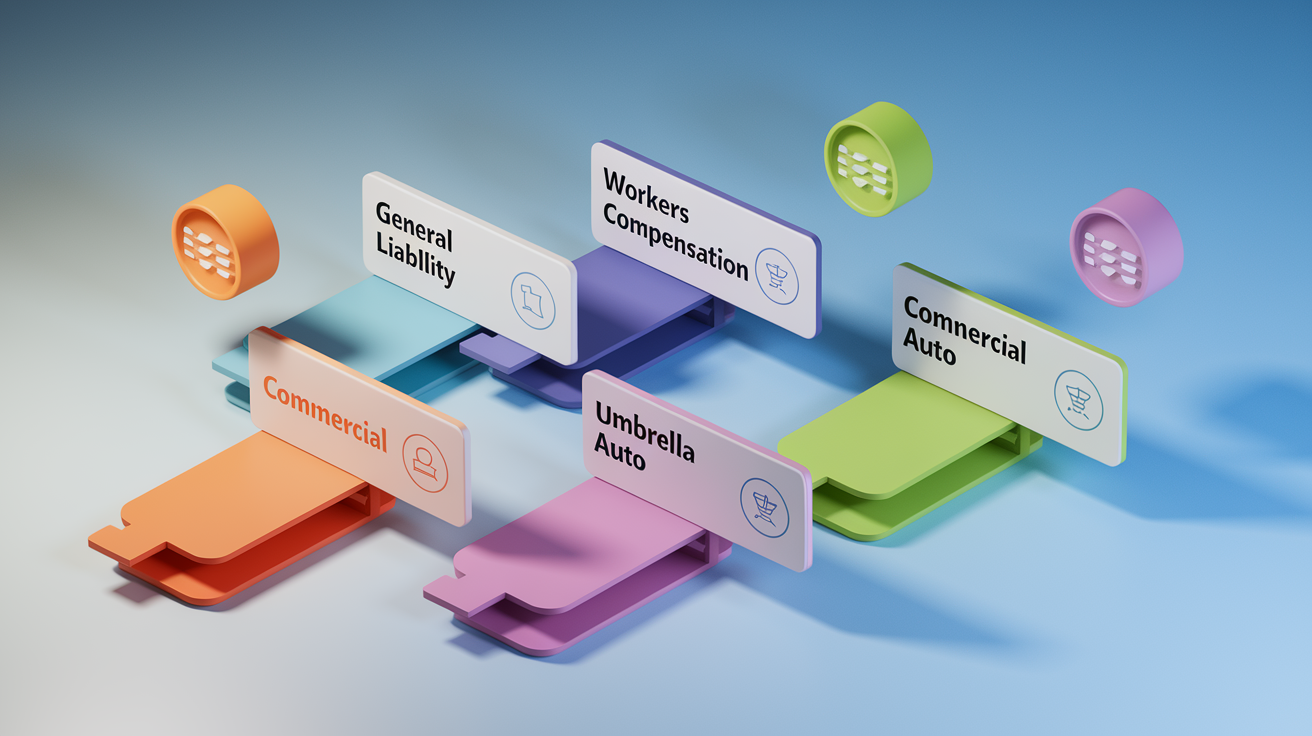
Contractors usually carry multiple coverage types on one certificate. Each policy protects against different categories of risk. Understanding what each one does helps you figure out if the contractor has appropriate protection for the work they’re doing on your property.
General Liability Coverage
General liability protects against third-party bodily injury and property damage during the contractor’s work. If the contractor’s equipment damages your siding, if someone trips over materials and breaks an arm, if the contractor hits an underground utility that floods your neighbor’s basement, general liability responds to these claims.
This coverage typically includes both “bodily injury” and “property damage” protection, with separate limits for each or a combined single limit. It also includes “completed operations” coverage, which protects against problems that show up after the contractor finishes. Like a retaining wall that collapses six months later because of bad construction.
Workers Compensation Insurance
Workers comp covers medical expenses and lost wages when the contractor’s employees get injured on the job. If a worker falls off a ladder on your property, breaks a leg, can’t work for three months, workers comp pays the medical bills and replaces part of the lost income.
State law requires workers comp for most businesses with employees, though requirements vary. Some states let sole proprietors exclude themselves. Contractors without employees might not need this coverage. But if they hire helpers, even occasionally, workers comp becomes mandatory in most places. Penalties for operating without required workers comp include fines, stop-work orders, and personal liability for employee injuries.
Commercial Auto Liability
Commercial auto covers accidents involving the contractor’s work vehicles and equipment. This includes pickup trucks hauling materials, trailers with tools and supplies, mobile equipment like excavators or concrete mixers that travel on public roads.
Commercial auto differs a lot from personal auto insurance. Personal policies specifically exclude coverage when vehicles get used for business purposes. So a contractor who only carries personal insurance on their truck has zero coverage if they cause an accident while driving to your job site with materials. Always verify commercial auto coverage. Accepting a personal auto policy leaves you exposed if the contractor causes property damage or injuries during work-related driving.
Umbrella and Excess Liability
Umbrella or excess liability policies provide an additional layer that kicks in after primary policies reach their limits. If a general liability policy has a $1,000,000 limit and a claim costs $2,500,000, the umbrella policy covers the remaining $1,500,000 (assuming the umbrella limit is enough).
High-risk construction projects benefit from umbrella coverage. Especially those involving excavation, structural modifications, or multi-story work. The extra protection reduces the chance that a catastrophic claim will exhaust all available coverage and leave you pursuing compensation from the contractor’s personal assets.
Never accept personal insurance policies when commercial coverage is appropriate. Personal policies contain business-use exclusions that deny coverage the moment an incident occurs during commercial activities. A contractor might genuinely believe their personal auto or homeowner’s policy provides coverage. But that belief doesn’t change the policy exclusions that eliminate protection for business-related claims.
Understanding Coverage Limits and Aggregate Amounts on Insurance Certificates

Coverage limits define how much the insurance company will pay for claims. Two key figures appear on most certificates: the “per occurrence” limit and the “aggregate” limit. The per occurrence limit is the maximum the insurer pays for any single incident or claim. If a contractor’s work causes a fire that damages your home, and the policy has a $1,000,000 per occurrence limit, that single incident can’t trigger more than $1,000,000 in coverage, no matter what the actual damage costs.
The aggregate limit is the total maximum the insurer will pay for all claims combined during the policy period, usually one year. A contractor might have a $2,000,000 general aggregate, meaning once they’ve used up $2,000,000 across multiple claims during the year, the policy provides no more coverage until renewal. This aggregate can get exhausted through several smaller incidents. For instance, five separate $400,000 claims that individually stay below the per occurrence limit but collectively exhaust the aggregate. Once the aggregate is depleted, the contractor basically operates uninsured for the rest of the policy period.
When you’re evaluating if limits are sufficient, compare the contractor’s coverage against both your own insurance limits and the project’s risk profile. If your homeowner’s policy carries $1,000,000 in liability coverage, a contractor with only $500,000 creates a gap that exposes you to claims your contractor can’t cover. Consider the worst realistic scenario for your project. A structural collapse, major fire, injury resulting in permanent disability. Verify the contractor’s limits could handle that scale of loss. For high-risk projects, you might require the contractor to purchase additional coverage rather than proceeding with insufficient limits.
| Coverage Type | Typical Per Occurrence Limit | Typical Aggregate Limit |
|---|---|---|
| General Liability | $1,000,000 | $2,000,000 |
| Commercial Auto | $1,000,000 combined single limit | No aggregate (per occurrence only) |
| Workers Compensation | Statutory limits (varies by state) | Varies by state |
| Umbrella | $1,000,000–$5,000,000 | Same as per occurrence |
Red flags include limits that fall below industry standards for the contractor’s trade, coverage amounts lower than what your contract specified, or aggregate limits that seem low relative to the contractor’s annual volume of work. A busy contractor with a $2,000,000 aggregate who takes on dozens of projects each year may exhaust that aggregate well before your project begins. Leaving you with a contractor who appears insured but actually has no remaining coverage capacity.
Critical Certificate Endorsements: Additional Insured, Waiver of Subrogation, and Primary Coverage

Endorsements modify the base insurance policy to extend or alter coverage in specific ways. These modifications should be documented in the certificate’s description section or special provisions box. The certificate itself doesn’t create or change coverage. It only reflects endorsements that have been added to the actual policy.
Additional Insured Status
Being named as an additional insured on the contractor’s policy extends the policy’s coverage to protect you directly, not just the contractor. If someone sues both you and the contractor for an injury or damage that occurred during the contractor’s work, additional insured status means the contractor’s insurance company must defend you and pay covered claims on your behalf.
This status provides two critical benefits. You receive direct notification if the policy is canceled or lapses, protecting you from contractors who let coverage expire mid-project. And you have direct access to coverage without having to prove the contractor was negligent first. To verify additional insured status, check the description section for language like “Certificate holder is included as additional insured when required by written contract” or specific mention of your name or project address. Blanket additional insured endorsements automatically cover anyone the contractor agrees to add by contract. Specific additional insured endorsements name you individually. Both work, though specific is slightly stronger.
Waiver of Subrogation
Subrogation is the insurance company’s right to recover money from third parties who caused a loss. If the contractor’s insurer pays a claim, they can then sue anyone else who contributed to that loss to get their money back. A waiver of subrogation removes this right, preventing the contractor’s insurance company from suing you to recover claim costs.
Without this waiver, you could face a lawsuit from the contractor’s insurer even when the contractor’s policy paid the initial claim. Say the contractor’s employee gets injured and workers comp pays benefits. The insurer might sue you claiming your negligent property maintenance contributed to the injury. The waiver of subrogation blocks this scenario. Check for language like “Waiver of subrogation in favor of certificate holder when required by written contract” in the description section.
Primary and Non-Contributory Language
This endorsement establishes that the contractor’s insurance must pay claims first, before your own insurance has to contribute anything. Without primary and non-contributory language, both insurance companies might argue about which policy should respond. Potentially delaying claim payment or forcing your policy to share costs even though the contractor caused the loss.
The “primary” part means the contractor’s policy pays first. The “non-contributory” part means your policy doesn’t have to chip in even if the contractor’s limits aren’t enough to cover the full claim. Together, these terms prevent disputes about which policy bears responsibility and keep claims from affecting your own insurance. Look for explicit language stating “Contractor’s insurance is primary and non-contributory to any insurance carried by certificate holder” in the special provisions section.
These three endorsements don’t appear automatically. They must be specifically requested in your contract with the contractor and explicitly added to the insurance policy through formal endorsement. The certificate won’t show them unless they’ve actually been added. So missing language in the description section means you don’t have these protections, even if your contract required them. Always verify the endorsements appear on the certificate and follow up with the insurer if they’re absent.
Red Flags, Warning Signs, and Common Certificate Mistakes

Certificates can be altered, falsified, or contain errors that expose property owners to significant liability when coverage proves invalid or insufficient. Both intentional fraud and honest contractor mistakes create the same problem. You think the contractor has insurance, but when an incident occurs, no coverage exists. Policies can be canceled the day after a certificate is issued, which means even a legitimate certificate represents only a moment in time, not ongoing protection.
Watch for these red flags and common mistakes that indicate a problematic certificate:
-
Expired or soon-to-expire policies. Coverage that ends before your project completes leaves you unprotected during final phases when completed operations claims often emerge.
-
Coverage that has already lapsed when the certificate is submitted. A contractor handing you a certificate dated three months ago may be showing you their old coverage while operating uninsured today.
-
Mismatched business names or addresses between the certificate and contractor. “John Smith” listed as named insured when you hired “Smith Construction LLC” means the individual has coverage, not the business entity performing your work.
-
Suspiciously low coverage limits below industry standards. General liability under $500,000 or workers comp at minimum statutory levels for a contractor running multiple crews suggests financial distress or cut-rate coverage.
-
Missing required endorsements. No mention of additional insured status, waiver of subrogation, or primary coverage when your contract required these endorsements means the contractor isn’t compliant.
-
Poor quality or altered document appearance suggesting tampering. Misaligned text, inconsistent fonts, white-out marks, or blurry sections indicate possible falsification.
-
Excluded operations that match the project scope. Language excluding roofing work, excavation, or mold remediation when that’s exactly what you hired the contractor to perform.
-
Certificates issued more than 30 days before project start. May indicate the contractor is reusing an old certificate rather than requesting a current one specific to your project.
-
Wrong policy numbers or expiration dates. Mismatched or transposed numbers suggest rushed paperwork or deliberate attempts to obscure lapsed policies.
-
Insufficient coverage amounts for project requirements. Limits that fall short of your contract specifications mean the contractor hasn’t obtained adequate insurance.
These issues create real consequences that go beyond paperwork problems. If the contractor causes an injury or property damage and their insurance proves invalid, you become the liable party that the injured person or property owner pursues for compensation. Without valid contractor insurance backing up the work, your own insurance becomes the first line of defense. Potentially leading to increased premiums, coverage disputes, and out-of-pocket costs that should have been the contractor’s responsibility. Don’t rely solely on the certificate document. Verification directly with the insurance company remains the only reliable way to confirm current, valid coverage.
Verifying Certificate Authenticity and Insurance Compliance

Receiving a certificate doesn’t guarantee the coverage it describes actually exists and remains in force. Policies can be canceled immediately after a certificate is issued. The document in your hand might represent coverage that’s already been terminated. Verification matters because relying on an invalid certificate creates the same liability exposure as hiring an uninsured contractor.
To verify certificate accuracy and current coverage status, contact the insurer directly using a phone number from an independent source. Never use contact information printed on the certificate itself, as fraudulent certificates often include fake phone numbers. Call the insurance company listed on the certificate, provide the policy numbers shown, and confirm the following. Policies are currently active and in good standing. Effective dates match what appears on the certificate. Coverage types and limits align with the certificate’s representations. The named insured matches your contractor’s legal business name. No coverage gaps or cancellations have occurred. Then request written confirmation of specific endorsements including additional insured status, waiver of subrogation, and primary and non-contributory language. Ask about any exclusions relevant to your project, such as excluded operations or property limitations.
Check the insurer’s financial rating through A.M. Best or similar rating services to ensure they have the financial strength to actually pay claims if needed. Look for ratings of A- (Excellent) or higher, which indicates superior ability to meet ongoing insurance obligations. An unknown or poorly-rated insurance company might technically provide coverage, but that coverage becomes worthless if the company can’t pay claims or goes out of business during your project. This rating check takes five minutes and can prevent scenarios where valid coverage becomes uncollectible coverage due to insurer insolvency.
For long-term projects spanning months or crossing policy renewal dates, ongoing monitoring prevents coverage lapses from going undetected. Set renewal reminders 30 to 45 days before the contractor’s policies expire so you can request updated certificates before old coverage terminates. Require contractors to provide updated certificates before old ones expire, ideally with at least a week of overlap to prevent gaps. Maintain a certificate tracking system for projects involving multiple contractors or multiple work phases. A simple spreadsheet with contractor names, policy expiration dates, and certificate receipt dates prevents lapses from slipping through administrative cracks. Verify coverage hasn’t been canceled mid-project by periodically calling the insurer for active status confirmation, especially for contractors working on your property for extended periods.
When doubts exist about whether specific situations or work falls within the coverage scope, request the full policy declarations page rather than relying solely on the summary certificate. The declarations page provides more detail about covered operations, exclusions, endorsements, and conditions. The certificate offers a helpful overview. But it’s not a substitute for the actual policy document when questions arise about coverage interpretation or scope limitations.
Certificate Holder Requirements and Contractual Insurance Obligations

The certificate holder is the party requesting proof of insurance. Typically the property owner, general contractor, or project manager who needs verification that the contractor carries adequate coverage. You should require being named as certificate holder whenever you’re hiring a contractor to work on your property, manage subcontractors, or perform services that create potential liability exposure.
Before work begins, spell out insurance requirements clearly in your written contract to eliminate ambiguity and establish expectations. Specify minimum coverage types including general liability, workers compensation, commercial auto, and any specialized coverage the project requires such as pollution liability or builder’s risk. Set minimum coverage limits for each policy type, typically matching or exceeding your own liability limits. Require endorsements including additional insured status for you (the certificate holder), waiver of subrogation in your favor, primary and non-contributory language, and 30-day advance written notice of cancellation or non-renewal. Establish a certificate delivery deadline, requiring the contractor to provide the certificate at least 7 to 10 days before work starts so you have time for verification. Include subcontractor insurance requirements, stating that any subcontractors the contractor hires must carry equivalent coverage and that you must receive certificates for all subcontractors. Making these requirements explicit in the contract gives you enforceable terms if the contractor shows up with inadequate coverage.
Industry-specific standards and state requirements often mandate certain coverage levels or types beyond what you might consider necessary. Many states set minimum workers compensation requirements that vary based on the number of employees, payroll, and industry classification. Municipal building codes sometimes require specific liability limits for permit issuance. Professional licensing boards may mandate coverage minimums as a condition of maintaining contractor licenses. Check your state’s contractor licensing requirements and consult with your own insurance agent or attorney to determine appropriate coverage requirements for your project. What seems like adequate coverage in one jurisdiction might fall short of legal minimums in another. For more guidance on contractor selection and vetting, see our contractor vetting and hiring best practices.
Description of Operations and Coverage Scope Limitations

The “Description of Operations/Locations/Vehicles” section on the certificate provides critical detail about what work, locations, or equipment the policy actually covers. Generic certificates without project-specific details offer no confirmation that your particular job falls within the contractor’s coverage scope. This field should specifically mention your project address or describe work that matches what you’re hiring the contractor to perform. Providing evidence that the insurer knows about this project and has agreed to cover it.
Exclusions that appear in this description section can negate coverage even when appropriate policy types and limits exist. A general liability policy might exclude “roofing operations,” “work below grade,” or “asbestos remediation.” Which means if that’s exactly what you hired the contractor to do, the policy won’t respond to claims arising from that work. Read this section carefully to identify any exclusions, limitations, or conditions that conflict with your project scope. Coverage appears to exist based on the policy types listed. But hidden exclusions in the fine print eliminate protection for the specific work being performed.
| What to Check | Why It Matters | Action Required |
|---|---|---|
| Project address appears in description | Confirms this specific location is covered | Request policy amendment if your address is missing |
| Scope of work matches your project | Ensures the activities you’re hiring for are covered | Verify with insurer if work description is unclear or generic |
| No conflicting exclusions listed | Prevents coverage denial when claims arise from excluded work | Require separate policy or cancel contract if critical work is excluded |
| Specific equipment or methods included | Coverage applies to specialized tools or techniques the contractor will use | Require endorsement adding specialized equipment if needed |
When the description section is too vague, too generic, or raises questions about whether your project falls within covered operations, don’t guess. Request the full policy declarations page or schedule of operations from the contractor. Or contact the insurer directly to confirm coverage scope. A certificate that lists all the right coverage types but excludes the specific work you’re hiring for provides zero protection when problems occur.
Cancellation Provisions, Policy Changes, and Coverage Continuity

Certificates typically include a cancellation clause stating something like “Should any of the above described policies be cancelled before expiration date thereof, such insurer will endeavor to mail 10 days written notice to the certificate holder.” The word “endeavor” is critical here. It means the insurance company will try to notify you, but makes no guarantee. This weak language offers minimal protection since insurers can claim they attempted notice even if you never receive it.
Standard cancellation notice periods range from 10 to 30 days depending on the reason for cancellation. Non-payment of premium typically triggers shorter notice periods (10 days). Voluntary cancellation or non-renewal usually requires 30 days notice. Even these longer periods provide limited protection, since 30 days can pass quickly on construction projects. And you might not discover the lapse until after work is completed. Strengthen your protection by requiring contractual notification directly from the contractor. Your written contract should state that the contractor must notify you immediately if any insurance is canceled, lapses, or changes in a way that reduces coverage. Additional insured status provides even better protection since it triggers direct notice from the insurer to you, bypassing reliance on the contractor’s memory or honesty.
If you receive cancellation notice or discover a policy has lapsed during your project, stop work immediately. Don’t allow the contractor to continue until they provide proof of replacement coverage that meets your original requirements. Document the gap in writing, including when you discovered the lapse, when work stopped, and when replacement coverage was verified. Assess whether any work was performed during the coverage gap, as you may have liability exposure for incidents that occurred while the contractor operated uninsured. If significant work happened during a gap period, consult with your own insurance agent and attorney about potential exposure and mitigation steps.
Proactive coverage continuity management prevents surprises that require emergency work stoppages. Track policy expiration dates for all contractors on ongoing projects, setting calendar reminders 30 days before renewal dates. Request updated certificates before old policies expire, asking contractors to provide renewal certificates at least two weeks before expiration so you can verify continuous coverage. Verify that new policies maintain the same endorsements and coverage levels. Renewal doesn’t automatically carry forward additional insured status or other endorsements unless the contractor specifically requests them again. For long-term projects, establish a certificate tracking system using a spreadsheet or project management software to monitor multiple contractors and subcontractors simultaneously. Coverage lapses mid-project create immediate liability exposure that requires work stoppage until valid insurance is restored.
Industry-Specific Certificate Considerations for Construction Projects

Construction and renovation projects often require additional specialized coverage beyond the basic general liability, workers compensation, and commercial auto policies that most contractors carry. The project’s nature, scope, and specific risks determine which additional coverages should appear on the certificate.
Determine who’s responsible for builder’s risk insurance, which covers the structure itself during construction against risks like fire, theft, vandalism, and weather damage. Builder’s risk typically runs from construction start until the project is substantially complete and the owner occupies the building. This coverage can be purchased by either the property owner or the general contractor. Your construction contract should clearly state who carries this responsibility. If the contractor is responsible for builder’s risk, verify it appears on their certificate with limits sufficient to cover the full project value. If you’re purchasing builder’s risk as the owner, obtain your own policy and verify that contractor certificates show they understand this coverage exists separately.
Inland marine coverage protects the contractor’s tools, equipment, and materials at job sites, during transit, and in storage. This coverage addresses contractor property, not your building, but it matters because contractors without inland marine may stop work or file delay claims when their equipment is stolen or damaged. Verify inland marine coverage especially for contractors bringing valuable specialized equipment to your site. If a $50,000 excavator is stolen from your property, you want the contractor’s insurance to replace it quickly rather than facing project delays while they rent replacements or make insurance claims.
Pollution and environmental liability becomes critical for projects involving asbestos abatement, lead paint removal, mold remediation, underground storage tank removal, or excavation work where soil contamination might be encountered. Standard general liability policies exclude pollution-related claims. Meaning a contractor who disturbs contaminated soil or improperly handles hazardous materials has no coverage for cleanup costs or third-party exposure claims unless they carry specific pollution liability coverage. For any project with potential environmental exposure, require pollution liability coverage with limits appropriate to the contamination risk. Minimum $1,000,000 for minor exposure potential, higher limits for known contamination or extensive remediation work.
Some jurisdictions require payment and performance bonds in addition to insurance, particularly for public works projects or larger private construction. These bonds protect you if the contractor fails to complete the work or doesn’t pay subcontractors and suppliers. Bonds are separate from insurance and require separate verification through the surety company. If your project requires bonding, request bond certificates separately from insurance certificates. For additional guidance on insurance and compliance requirements for construction projects, see understanding construction insurance requirements.
Final Words
Learning how to read contractor insurance certificate protects you before work starts and throughout the project.
Verify the certificate holder name matches yours exactly. Confirm coverage types, limits, and dates meet your contract requirements. Check for required endorsements in the description section.
But don’t stop there. Call the insurance company directly using a number you look up yourself, not one printed on the certificate. Policies get canceled the day after certificates are issued more often than you’d think.
Set reminders before expiration dates. Track renewals. Request updated certificates before old ones lapse.
A little verification work now prevents major liability exposure later.
FAQ
How do you read a certificate of insurance?
Reading a certificate of insurance starts with verifying your name appears as the certificate holder, confirming the named insured matches the contractor’s legal business name, checking that all policy dates extend beyond your project completion, and confirming coverage types and limits meet your contract requirements.
What does 100, 300, 50 mean on insurance documents?
The numbers 100, 300, 50 on insurance documents typically represent coverage limits in thousands of dollars: $100,000 per person for bodily injury, $300,000 per accident for total bodily injury, and $50,000 per accident for property damage in auto liability policies.
What is the insurance class code for a general contractor?
The insurance class code for a general contractor varies by specific trade and operations, but commonly falls within codes 91340-91590 for commercial construction and 91343 for residential construction, with exact classification determined by the type of work performed and materials used.
How do you read insurance paperwork for contractors?
Reading insurance paperwork for contractors involves checking the ACORD 25 form’s key sections: verify the certificate holder name matches yours, confirm all coverage types are listed with adequate limits, check policy effective and expiration dates cover your project timeline, and look for required endorsements in the description section.
What appears in the named insured section of a certificate?
The named insured section shows the contractor’s legal business name exactly as registered with the insurance company, including any DBA (doing business as) names, and should match the contractor’s business license and your contract documents precisely.
What is the difference between certificate holder and named insured?
The certificate holder is the party requesting proof of insurance (you, the property owner or general contractor), while the named insured is the contractor whose insurance coverage is being documented and who pays the premiums for the policies listed.
What is the ACORD 25 form used for?
The ACORD 25 form is the standardized certificate of insurance template used across the insurance industry to document a contractor’s active coverage, including policy numbers, limits, effective dates, coverage types, and special endorsements in a consistent format.
How long should policy dates extend beyond project completion?
Policy dates should extend at least 30 days beyond your project completion date to cover any final inspections, punch list work, and immediate warranty issues that arise after the main work is finished.
What endorsements should appear on a contractor’s certificate?
Required endorsements include additional insured status for the certificate holder, waiver of subrogation protecting you from being sued by the contractor’s insurer, and primary and non-contributory language ensuring the contractor’s insurance pays claims first before your policy.
What are red flags on a certificate of insurance?
Red flags include expired or soon-to-expire policies, mismatched business names, suspiciously low coverage limits, missing required endorsements, poor document quality suggesting tampering, wrong policy numbers or dates, and certificates issued more than 30 days before project start.
How do you verify a certificate of insurance is real?
Verify a certificate by calling the insurance company directly using a phone number from an independent source (never from the certificate itself), confirm the policy numbers and active status, verify effective dates match the certificate, and request written confirmation of endorsements.
What happens if a contractor’s insurance lapses during a project?
If insurance lapses during a project, halt work immediately, require proof of replacement coverage before resuming, document the coverage gap in writing, and assess liability exposure for any work performed while the policy was inactive.
What coverage limits should a general contractor carry?
General contractors should typically carry minimum limits of $1 million per occurrence and $2 million aggregate for general liability, $1 million for commercial auto, statutory workers compensation, and consider $1-5 million umbrella coverage for high-risk projects.
What is the description of operations section on a COI?
The description of operations section specifies what work activities, locations, or vehicles are covered under the policy, and should specifically mention your project address or scope of work to confirm the coverage applies to your job.