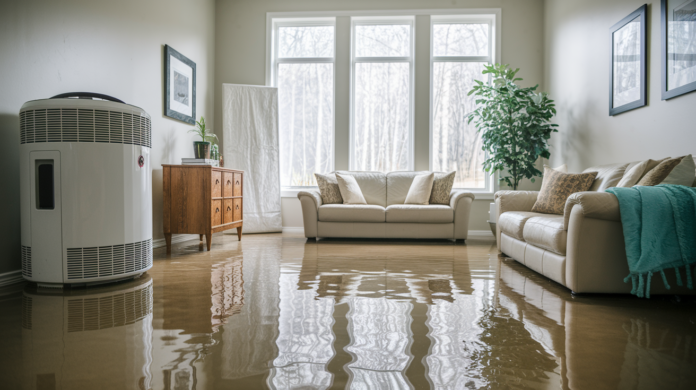

Most homeowners expect a flooded house to dry in a few days, but that timeline only works if everything goes right. The real answer depends on water category, what your house is made of, and whether you’re using fans from the garage or industrial equipment that moves ten times the air. A clean water leak in one room might dry in three days with professional gear, while sewage backup affecting your basement can take two weeks of decontamination and drying before it’s safe to rebuild. Here’s how to figure out where your situation falls and what actually has to happen before the house is ready.
Typical Drying Timeframe for a Flooded House
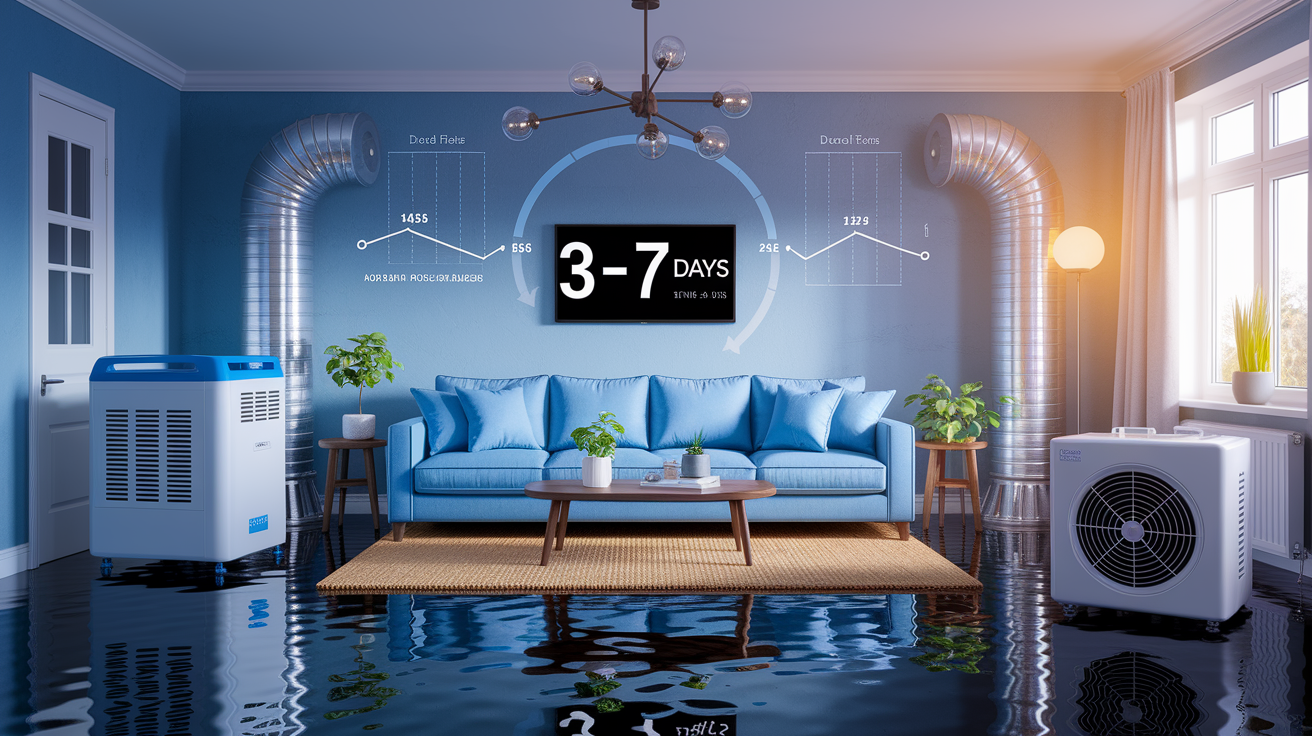
Most flooded houses take 3 to 7 days to dry completely when professionals use industrial equipment. This standard range applies to typical residential flooding scenarios with prompt response and appropriate equipment deployment.
The severity of flooding determines where your house falls in that timeline. A small bathroom overflow affecting 100 square feet might dry in 1 to 2 days with proper ventilation and dehumidifiers. Moderate damage from a burst pipe spreading through multiple rooms typically needs 3 to 5 days of continuous drying. Severe flooding from storm surges, sewage backup, or basement flooding requires 7 to 14 days or longer for complete drying and disinfection.
Starting the drying process within 24 to 48 hours of water intrusion significantly reduces the overall timeline. Water keeps spreading through porous materials every hour it sits, turning a manageable 3 day project into a 10 day project requiring extensive demolition if you wait.
Water Categories That Affect House Drying Duration
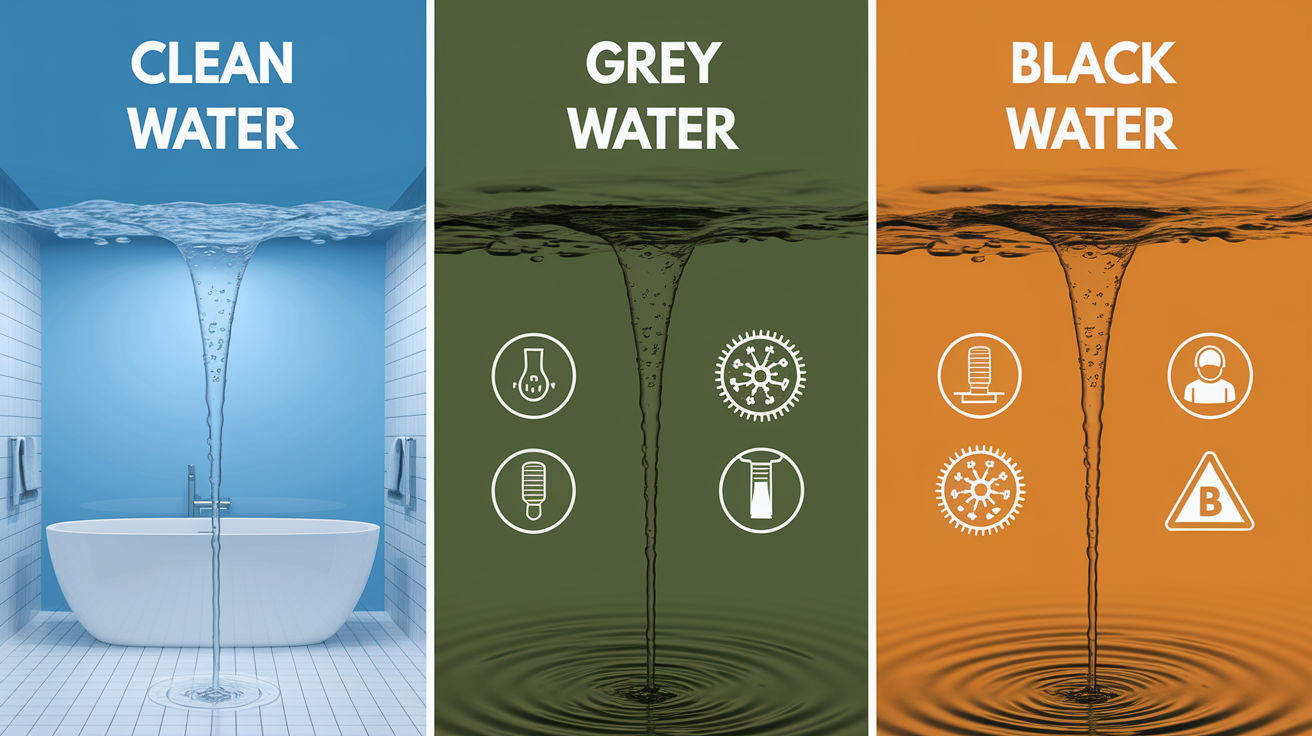
Water damage classification determines both the drying methods required and the overall timeline due to safety protocols and decontamination requirements.
Category 1: Clean Water Sources
Category 1 water comes from sanitary sources like broken water supply lines, overflowing bathtubs, and rainwater that hasn’t contacted contaminated surfaces. This is the cleanest water type and dries fastest because it requires no special decontamination procedures. A house affected by Category 1 water typically dries in 3 to 5 days with standard industrial equipment. The straightforward approach focuses on moisture removal without antimicrobial treatment, which keeps the timeline short.
Category 2: Grey Water Contamination
Category 2 greywater contains chemicals and bacteria from sources like washing machine discharge, dishwasher leaks, or toilet overflow without feces. This contamination level accelerates mold growth and requires decontamination steps that add 1 to 2 days to the basic drying timeline. Technicians must apply antimicrobial treatments to affected surfaces and materials before and after drying. The contamination doesn’t just affect timeline, it determines which materials can be saved and which require replacement for safety reasons.
Category 3: Black Water Hazards
Category 3 blackwater includes sewage backup and outdoor floodwater carrying soil, debris, and dangerous pathogens. This water presents the greatest health hazard and requires the longest restoration timeline, typically 7 to 14 days minimum. Extensive antimicrobial treatment, specialized protective equipment for workers, and careful disposal of contaminated materials all extend the process. Materials like drywall, insulation, and carpet almost always require removal rather than drying because the contamination risk outweighs salvage value. The safety protocols aren’t optional, they directly determine how long your house remains uninhabitable.
Building Materials and Their Impact on Flood Drying Time
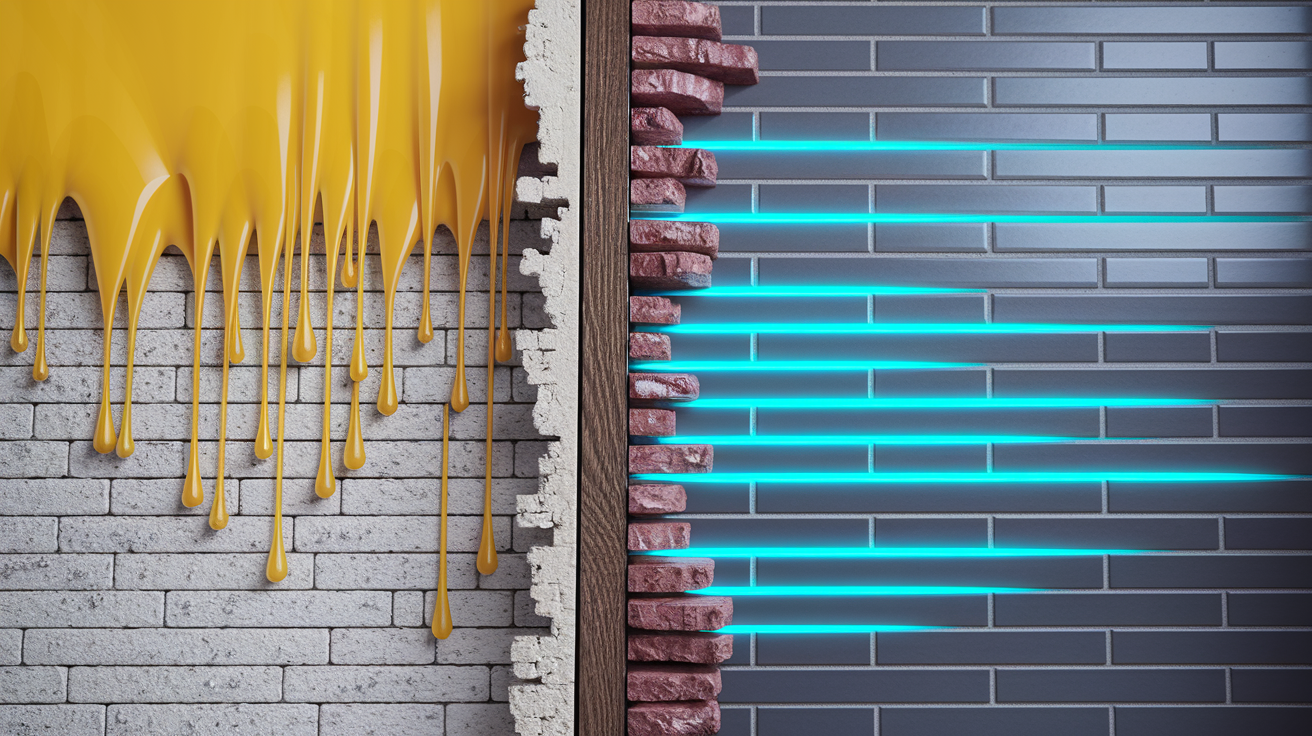
Porous materials like carpets, drywall, wood, and insulation absorb water readily and hold moisture deep within their structure. Non-porous materials like tile, metal, and plastic resist water absorption and dry quickly on the surface, but they can trap moisture underneath where problems develop unseen.
Material composition ranks as one of the primary factors determining whether your house dries in days or weeks. Two identical rooms flooded with the same amount of water will have completely different timelines if one has hardwood floors and the other has ceramic tile.
Here are specific drying timeframes for common building materials:
Hardwood flooring requires 7 to 10 days with proper equipment and dehumidification, and cupping or warping often appears before moisture levels normalize. Drywall needs 3 to 5 days for surface drying but 7 or more days for complete interior drying where moisture penetrates the gypsum core. Concrete takes 10 to 14 days depending on thickness and saturation level, with moisture moving slowly through dense material. Carpet with padding dries in 2 to 3 days with professional equipment, though padding often requires replacement because it compresses and harbors bacteria. Wall insulation varies widely, but fiberglass and cellulose types often require removal rather than drying because they lose effectiveness when saturated. Tile and non-porous surfaces dry in 1 to 2 days on the surface, but you must monitor the substrate underneath for trapped moisture.
Materials feel dry to the touch long before reaching safe internal moisture levels. Wood framing should measure below 15 percent moisture content and drywall below 12 percent before any reconstruction work proceeds. If it feels dry but meters show elevated readings, it isn’t ready.
Environmental Conditions That Extend House Drying

Optimal drying temperatures range from 70 to 90 degrees Fahrenheit because warm air holds more moisture and accelerates evaporation rates. Cooler conditions slow evaporation significantly, potentially extending drying timelines by 30 to 40 percent compared to ideal conditions. A house that would dry in 5 days at 80 degrees might take 7 days at 60 degrees using identical equipment.
Relative humidity determines how much moisture air can absorb from wet materials. High ambient humidity prevents proper drying because saturated air can’t accept additional water vapor. Industrial dehumidifiers work constantly to pull moisture from the air and maintain low humidity levels around 30 to 50 percent, creating the gradient that pulls moisture from materials.
Seasonal variations create predictable challenges. Summer conditions from June through August provide the fastest drying at 3 to 5 days for moderate damage because warm temperatures and lower humidity work in your favor. Winter flooding creates the worst conditions with cold temperatures slowing evaporation, frozen ground preventing drainage, and high indoor humidity from heating systems. Spring and fall shoulder seasons bring high outdoor humidity that makes dehumidification harder.
Opening windows only helps when outdoor humidity is lower than indoor humidity. Many homeowners open windows thinking fresh air speeds drying, but introducing 80 percent humidity air into a space you’re trying to dry at 40 percent humidity makes the problem worse. Check humidity levels before ventilating, and close windows when conditions don’t support moisture removal.
Professional Drying Equipment and Systematic Restoration

Commercial air movers push 2,000 to 3,000 cubic feet of air per minute across wet surfaces, far exceeding consumer box fans that move 1,000 CFM on high speed. Industrial dehumidifiers remove 100 to 200 pints of water per day compared to 30 to 50 pints for consumer models you can rent at hardware stores.
The capacity difference determines timeline. Consumer equipment handles small localized incidents but lacks the power to dry significant flooding before secondary damage develops.
Professionals follow a systematic restoration process. Initial assessment using moisture meters and thermal imaging cameras to map all affected areas and establish baseline moisture readings in materials. Standing water extraction with industrial pumps rated for hundreds of gallons per minute, removing bulk water before drying begins. Strategic equipment placement with air movers positioned to maximize airflow across wet surfaces, dehumidifiers sized for the cubic footage, and supplemental fans to prevent dead air pockets. Daily monitoring and adjustment with moisture meter readings at multiple depths in materials, equipment repositioning as areas dry, and documentation of progress toward target levels.
Consumer equipment can double or triple the drying time compared to professional gear. A flooded basement that professionals dry in 5 days might take 12 days with rental equipment, assuming you catch all affected areas. DIY drying works for small, localized spills under 100 square feet with immediate response, like an overflowing sink you mop up within an hour.
| Drying Method | Equipment Capacity | Typical Timeline | Best For |
|---|---|---|---|
| DIY Consumer Equipment | 30-50 pints/day dehumidifier, 1,000 CFM fans | 7-21 days for moderate damage | Small spills under 100 sq ft, immediate response |
| Professional Industrial Equipment | 100-200 pints/day dehumidifier, 2,000-3,000 CFM air movers | 3-7 days for moderate damage | Any significant water intrusion, all flooding scenarios |
| Natural Air Drying | No equipment, ambient conditions only | 14+ days, often incomplete | Not recommended for structural flooding |
Professional monitoring ensures materials reach safe moisture content levels before restoration work proceeds. Technicians take readings at multiple points in each material type, comparing current levels to target standards. Wood framing below 15 percent and drywall below 12 percent signal readiness for reconstruction. Professional assessment prevents incomplete drying that leads to mold growth, rot, and costly callbacks three months later when problems emerge behind finished walls.
Hidden Moisture Problems That Delay Complete House Drying
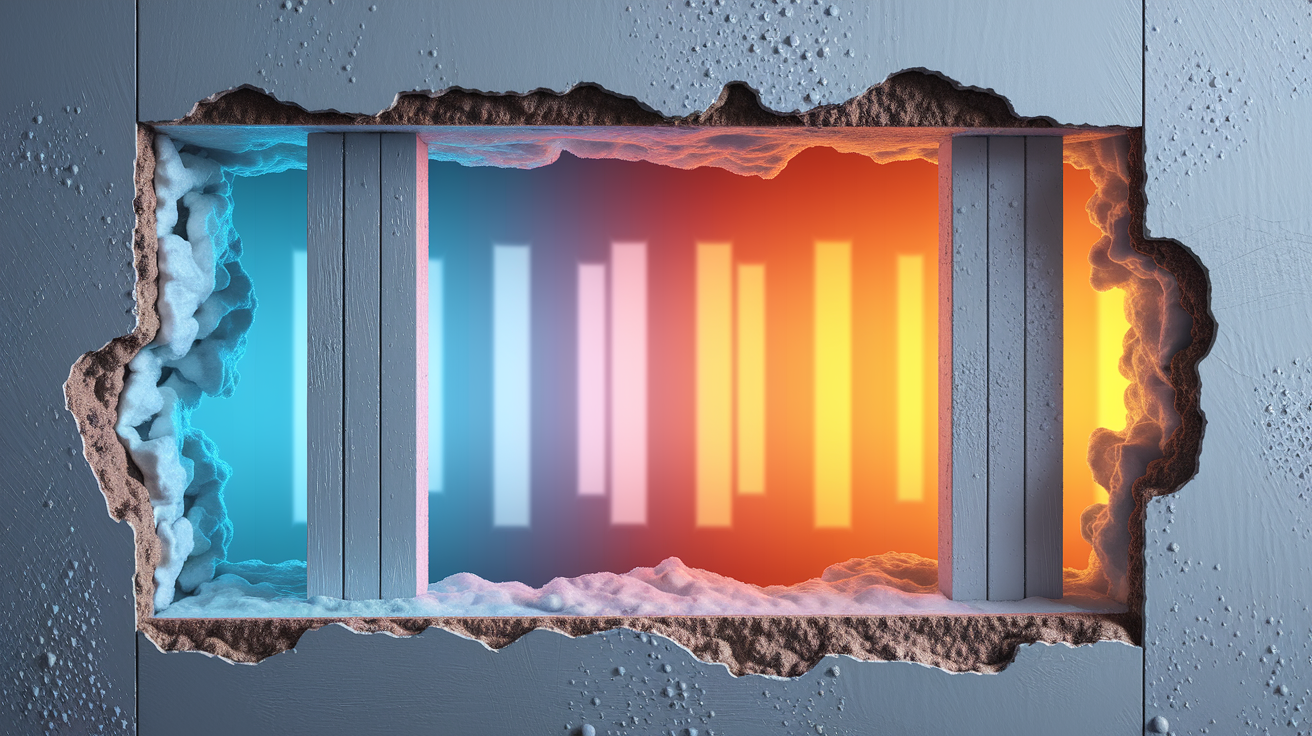
Surface dryness deceives homeowners into thinking the job is complete while internal moisture content remains dangerously high. Drywall might feel dry to your hand while the gypsum core still holds moisture at 20 percent, well above the 12 percent target that prevents mold growth.
Water migrates through capillary action, wicking upward through drywall and penetrating insulation in wall cavities where air circulation can’t reach. Floodwater on a basement floor doesn’t just sit there. It soaks into the drywall two feet up the wall, saturates the bottom plate, and spreads into the stud cavity where no air mover can dry it. This hidden saturation extends timelines because you can’t finish drying until moisture meters confirm every layer has reached safe levels.
Thermal imaging cameras and moisture meters are essential for detecting hidden saturation behind walls and under floors. A thermal camera shows temperature differentials that indicate moisture presence, revealing wet insulation inside walls that look and feel dry on the surface. Moisture meters with deep reading pins penetrate materials to measure internal content, not just surface conditions.
Common hidden moisture locations include wall cavity insulation that remains saturated days after surface materials dry, subfloor and underlayment layers beneath vinyl or laminate flooring that trap moisture, ceiling materials above affected rooms where water wicked upward through wall cavities, and wooden structural framing behind finished surfaces that holds moisture longer than gypsum.
Mold Growth Timeline During Flood House Drying
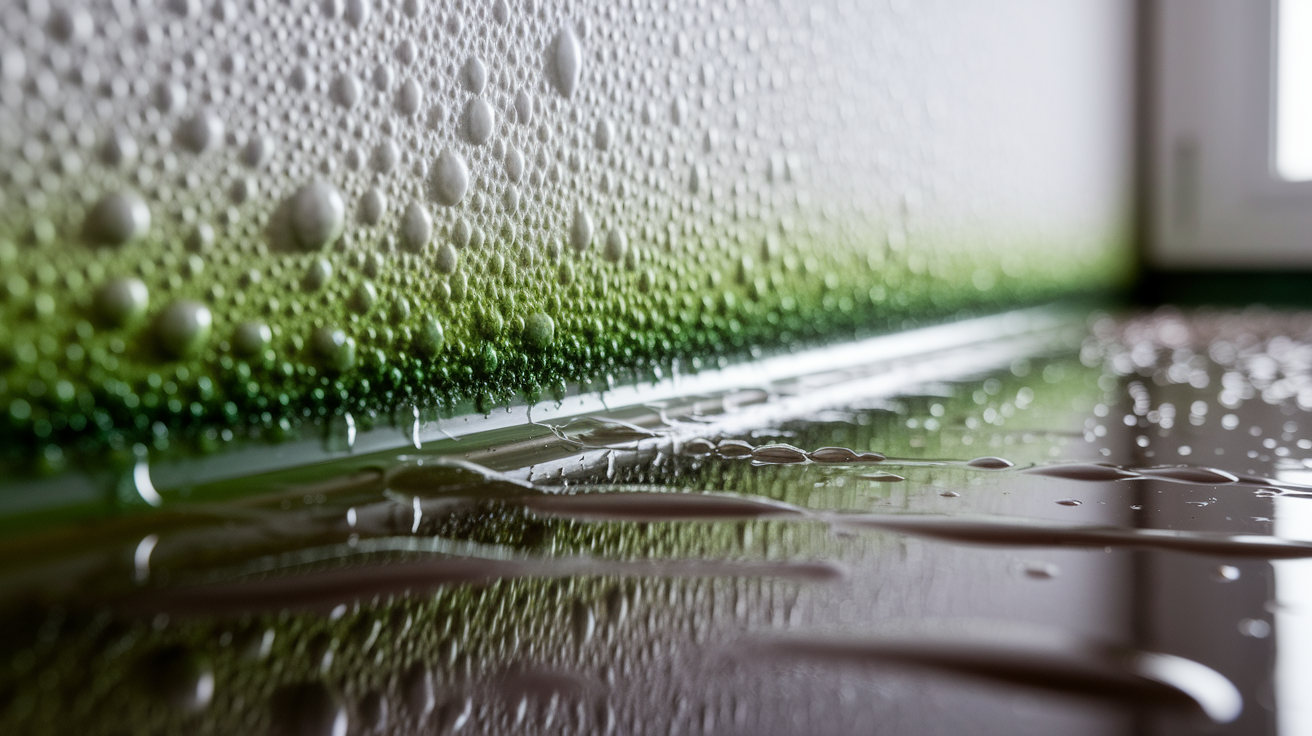
Mold spores activate and begin growing in damp conditions within 24 to 48 hours after water damage occurs. This narrow window makes immediate response critical because once mold establishes colonies, the restoration process expands to include remediation, adding days to the timeline and costs to the bill.
Contaminated water from Category 2 greywater and Category 3 blackwater accelerates bacterial and mold growth beyond the standard 48 hour timeline. The chemicals, bacteria, and organic matter in contaminated water provide nutrients that help colonies establish faster, sometimes within 12 to 18 hours in warm conditions. Sewage backup creates ideal conditions for dangerous mold species and bacteria, which is why these scenarios require antimicrobial treatment even when drying happens quickly.
Antimicrobial treatment adds 1 to 2 days to the overall process when contamination has occurred or delays have allowed mold growth to begin. Technicians apply EPA registered antimicrobial solutions to all affected surfaces, allow proper dwell time for the chemicals to work, then often apply a second treatment after drying completes. If visible mold growth has occurred, the process expands to include containment barriers, HEPA filtration, and removal of heavily contaminated materials. What started as a 5 day drying job becomes a 10 day remediation and drying project when response gets delayed past that critical first 48 hours.
Square Footage and Damage Extent Effects on Drying Time
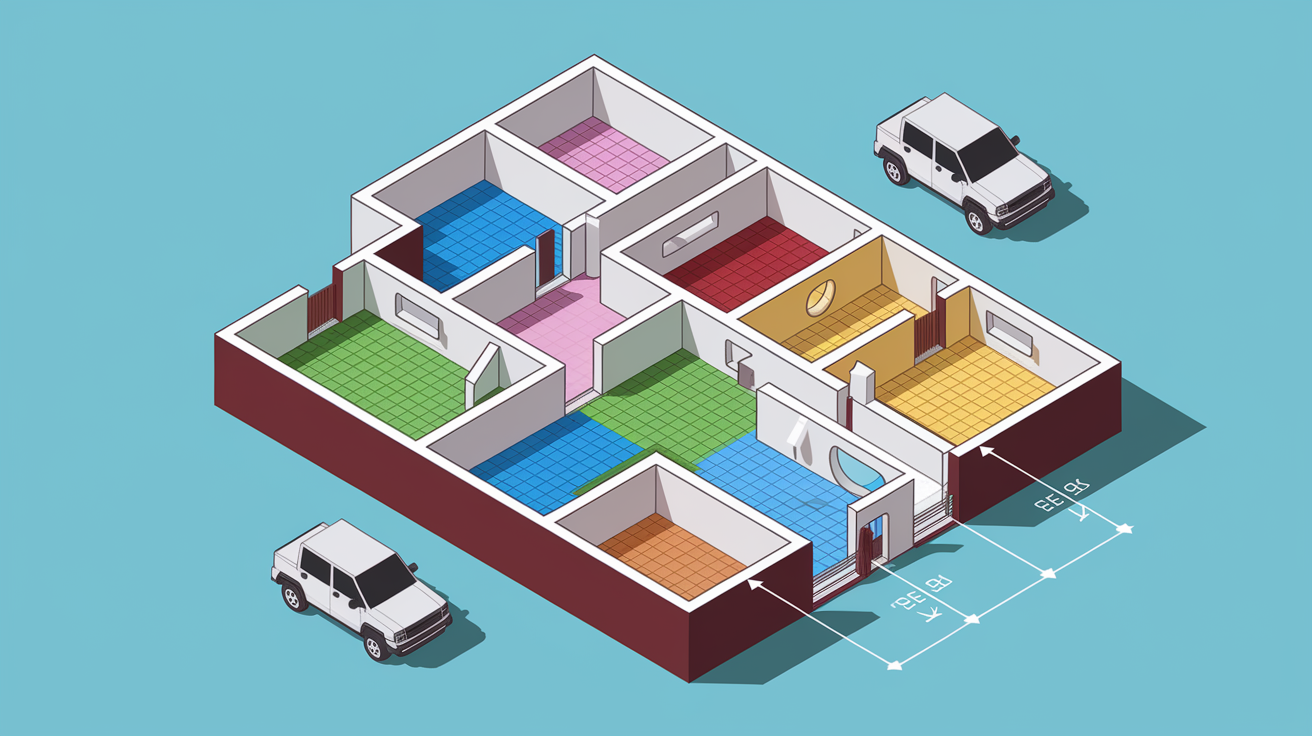
Square footage and water depth determine equipment needs and timeline because larger areas require more air movers, bigger dehumidifiers, and longer run times to achieve complete drying.
Scope-based timeline examples show how size affects duration. A single room with surface water dries in 2 to 3 days with two air movers and one dehumidifier. Multiple rooms with standing water require 5 to 7 days with equipment distributed across affected areas. Full basement flooding takes 7 to 10 days even with industrial equipment because concrete and foundation walls absorb significant moisture. Whole house flooding from storm surge requires 10 to 14 days or longer with equipment staged throughout the structure. Crawl space saturation needs 7 to 12 days because poor ventilation and cool temperatures slow evaporation.
Water spreads through porous materials every hour, expanding the affected area and increasing the work scope if not addressed immediately. A burst pipe that floods 200 square feet initially might affect 400 square feet after 6 hours as water soaks into adjacent rooms through flooring and wall bases.
Delayed response transforms a manageable 3 day project into a 10 day project requiring demolition. The water that could have been extracted in the first 24 hours instead penetrates into wall cavities, saturates insulation, and compromises materials beyond salvage. What started as drying and saving materials becomes demo, disposal, and replacement because moisture had time to spread and contaminate areas that were initially dry.
Day-by-Day Flood Drying and Restoration Checklist
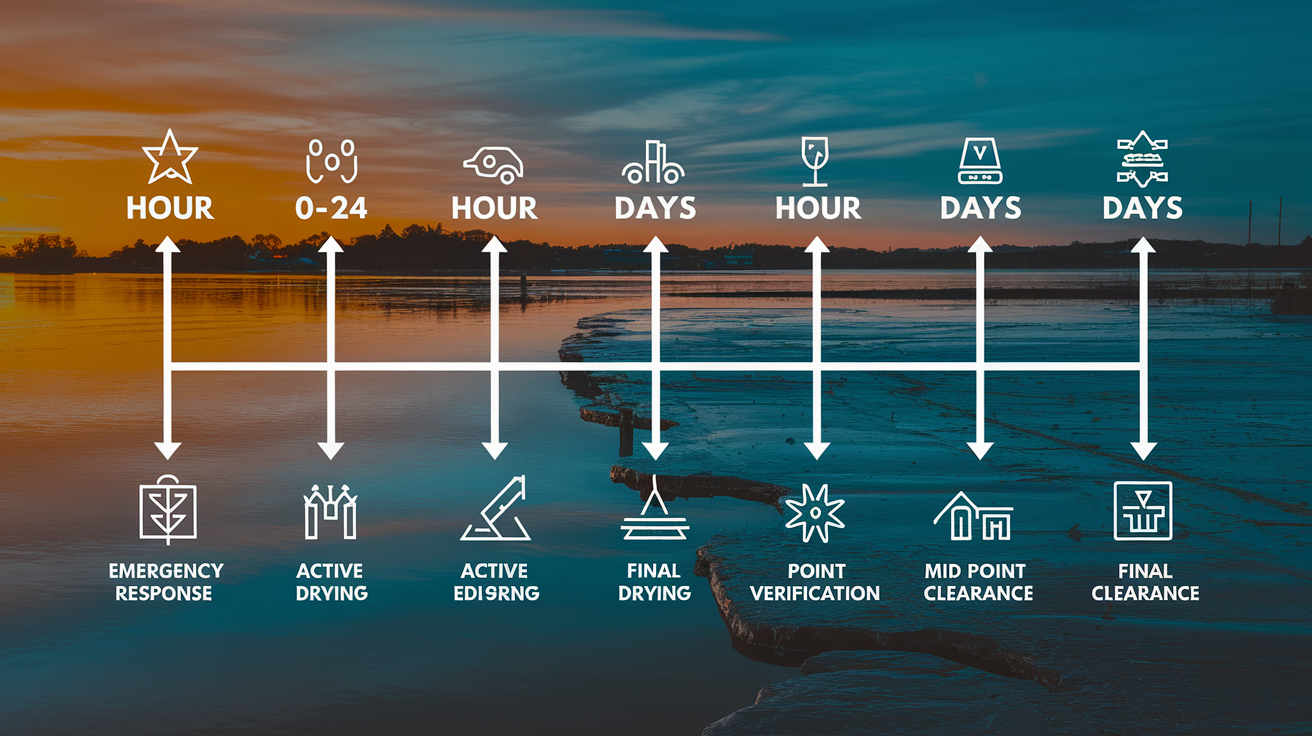
Understanding what happens each day during the drying process helps you verify proper progress and identify problems before they extend the timeline.
Hours 0 to 24: Emergency Response and Extraction
Professional response times average 30 to 60 minutes for emergency water damage calls. Technicians arrive, assess safety hazards like electrical issues or structural damage, then immediately begin extracting standing water with industrial pumps and truck mounted extraction units. Baseline moisture readings document the initial severity, with meters testing flooring, walls, and adjacent materials to map the full extent of damage. Equipment setup begins before extraction completes, with air movers positioned to maximize airflow and dehumidifiers sized for the affected cubic footage. The initial assessment documents all wet materials for insurance purposes and creates the monitoring plan for the coming days.
Days 2 to 4: Active Drying Phase
Air movers and dehumidifiers run continuously during this phase, creating the warm, dry conditions that pull moisture from materials. Technicians visit daily to take moisture readings at multiple points in each material type, comparing new readings to baseline measurements to verify progress. Dehumidifier collection tanks are emptied, sometimes twice daily in severe cases, and the volume of water removed indicates drying effectiveness. Equipment gets repositioned based on readings, with additional air movers directed at stubborn pockets that aren’t drying as quickly as surrounding areas. Surface materials like flooring and lower wall sections show significant improvement during this phase, with moisture content dropping 40 to 60 percent from baseline levels.
Days 5 to 7: Mid Point Verification
Moisture content testing verifies that materials are approaching target levels, with wood below 15 percent and drywall below 12 percent. Technicians remove equipment from areas that have reached safe moisture levels, concentrating power and airflow on remaining wet spots. Thermal imaging during this phase identifies any hidden moisture that wasn’t evident in initial assessment, particularly in wall cavities and subfloor areas. This mid point check determines whether the project stays on the standard 7 day timeline or extends into the 10 to 14 day range for severe cases. Equipment repositioning focuses on stubborn pockets that resist drying, often areas with poor airflow or particularly absorbent materials.
Days 8 to 14: Final Drying and Clearance (If Needed)
Extended monitoring continues for severe flooding cases or situations where materials aren’t reaching target moisture levels on the standard timeline. Final moisture verification happens before any equipment removal, with readings taken at multiple depths to confirm the deepest areas have dried. Antimicrobial treatment gets applied if contaminated water was involved, with proper dwell time before surfaces are cleared for reconstruction. The clearance for reconstruction to begin requires documented proof that all materials have reached safe moisture content, establishing a clear endpoint where the drying contractor’s work is complete and rebuild contractors can safely proceed without risk of trapping moisture behind new finishes.
Cost and Insurance Considerations for Flood House Drying

Rapid professional response costs more upfront but prevents extensive demolition costs that result from delayed drying. A 5 day professional drying project costing $3,000 to $5,000 prevents a 10 day project costing $8,000 to $12,000 plus demolition and reconstruction expenses when moisture spreads unchecked. Water continues spreading through porous materials every hour, expanding both the affected area and the final bill.
Typical cost drivers include square footage affected, water category requiring decontamination procedures, equipment needs based on severity, and duration of service with daily monitoring visits. A small bathroom leak might cost $1,500 to $2,500 for equipment and monitoring over 3 days. A finished basement flood affecting 1,000 square feet with Category 2 water typically runs $4,000 to $7,000 for 7 days of service. Whole house flooding from storm surge can exceed $15,000 for extended drying, demolition, and antimicrobial treatment.
Insurance documentation requirements make professional assessment valuable even when considering DIY drying. Most policies require itemized documentation of affected materials, baseline moisture readings, daily progress reports, and final clearance verification before paying reconstruction claims. Professional restoration companies provide this documentation as part of their service, working directly with insurance adjusters to document damage severity and appropriate scope of work. The documentation from professionals carries more weight with adjusters than homeowner photos and estimates, often resulting in faster claim approval and higher settlement amounts that offset the drying service cost.
Preventing Extended Drying Time in Future Flooding Events
Preparation reduces both the likelihood of flooding and the severity of damage when water intrusion occurs. The difference between a 3 day drying project and a 10 day project often comes down to how quickly you respond and what systems you have in place.
Prevention measures that reduce drying time include installing sump pumps with battery backup in flood prone areas like basements and crawl spaces, ensuring water removal continues during power outages. Apply waterproofing to basement walls and floors before flooding occurs, reducing absorption and simplifying extraction. Maintain proper grading and drainage systems around the foundation to direct water away from the structure. Know emergency shut off locations for water supply lines, stopping internal flooding in minutes rather than hours. Keep restoration company contact information accessible and saved in your phone, eliminating research time during emergencies. Understand insurance coverage and claim procedures before incidents occur, avoiding delays while you figure out policy details.
Immediate action within the first hours of water intrusion is the single most important factor in minimizing damage and preventing secondary problems. The house that gets a restoration crew on site within 2 hours dries faster, saves more materials, and costs less than the identical house where the homeowner waits 24 hours to call for help. Mold growth starts in 24 to 48 hours, but material damage and moisture spreading begin immediately.
Final Words
How long does it take to dry out a flooded house depends mostly on your response speed and the severity of the damage.
With professional equipment and immediate action, most homes dry in 3 to 7 days. Severe flooding, contaminated water, or delayed response pushes that timeline to 10 to 14 days or longer.
The 24 to 48 hour window matters. Start drying fast, use the right equipment, and verify moisture levels with meters before closing up walls.
Skip those steps and you’re looking at mold problems, hidden damage, and starting over.
FAQ
How long does it take for a flooded house to dry?
A flooded house typically takes 3 to 7 days to dry completely with professional equipment, though severe flooding can extend the timeline to 10-14 days. Minor water damage from small leaks dries in 1-2 days, while moderate damage from burst pipes requires 3-5 days. Severe flooding with contaminated water or extensive saturation needs 7 or more days for full drying and antimicrobial treatment.
How to dry up a flooded house?
Drying up a flooded house starts with immediate water extraction using pumps, followed by strategic placement of industrial air movers and dehumidifiers throughout affected areas. Professionals monitor moisture levels daily with moisture meters, adjusting equipment placement until wood reaches below 15% moisture content and drywall below 12%. The process requires removing standing water first, then creating airflow across all wet surfaces while controlling humidity.
How much does it cost to dry a flooded house?
The cost to dry a flooded house depends on square footage, water contamination category, and drying duration, with expenses increasing significantly when delays cause extended timelines and demolition needs. Professional restoration typically costs more upfront but prevents extensive reconstruction expenses that result from incomplete drying or delayed response. Insurance coverage often applies when proper documentation and professional assessment support the claim.
How quickly does mold grow after a flood?
Mold growth begins within 24 to 48 hours after flooding when moisture levels remain high, making immediate drying action critical to prevent contamination. Category 2 greywater and Category 3 blackwater accelerate mold and bacterial growth beyond the standard timeline due to chemical and organic contamination. Starting professional drying within the first 24-48 hours significantly reduces mold risk and prevents the need for antimicrobial treatment that adds days to restoration.