

One bad claim can cost more than you’ll make on your next ten jobs combined. That’s the financial reality contractors face without proper general liability coverage, yet most people don’t understand what their policy actually protects until they’re already facing a lawsuit. General liability insurance handles the legal defense, medical bills, and settlements when someone gets hurt at your site or when your work damages property, but the coverage extends into five distinct areas most contractors never review until a claim gets filed. This guide breaks down exactly what contractor general liability insurance covers, what the policy limits actually mean, and how to make sure you’re protected before a problem turns into a business-ending mistake.
What Is Contractor General Liability Insurance

Contractor general liability insurance is specialized construction coverage that protects you from financial liability when third parties get hurt or when their property gets damaged because of your work. This commercial general liability policy (most people call it a CGL policy) is basically the foundation of protection for anyone working in construction.
Think of it as a financial safety net covering legal costs, medical bills, and settlements when claims pop up from your construction work. When a client, visitor, or someone walking by gets injured at your job site, or when your work accidentally damages someone’s property, the insurance carrier handles the financial mess. Without this coverage, a single claim could drain your business accounts and personal assets in months.
You need this protection because construction work puts others’ property and safety at risk. You’re bringing heavy equipment, power tools, and demolition work into occupied buildings and active neighborhoods. One distracted moment (a ladder left in a walkway, a tarp that doesn’t hold, a subcontractor who gets a load bearing wall wrong) can result in injury or damage. Your exposure starts at project kickoff and extends years beyond when you hand over the keys.
Most project owners, clients, and government contracts require proof of coverage before they’ll award contracts or let you start work. You’ll need to provide a certificate of insurance before you can bid on larger projects or work with commercial property owners. General contractors won’t hire subcontractors who can’t show adequate liability protection.
The policy gives you five main coverage areas working together to protect your business: bodily injury, property damage, personal and advertising injury, products and completed operations, and contractual liability.
Core Coverage Components of Contractor General Liability Insurance

Contractor CGL policies provide five distinct coverage areas. Bodily injury and property damage form the foundation, addressing the most common risks you’ll face on job sites and in daily operations.
Bodily injury coverage pays for medical expenses, legal fees, and compensation when third parties like pedestrians, clients, or delivery drivers get injured on job sites. If a homeowner trips over your extension cords and breaks an ankle, the policy covers their medical bills and potential lawsuit. When a pedestrian walking past your site gets hit by falling materials, your coverage handles it. If a delivery driver navigates your work area and gets burned by equipment you’re operating, the medical costs and legal defense don’t come from your bank account. Same goes when a client’s family member visiting the renovation gets hurt by debris.
Property damage coverage handles repairs or replacements when your work damages client property, including costs like debris removal. If your plumbing work causes water damage to a client’s finished basement, the policy pays for restoration. When your equipment accidentally crushes the homeowner’s landscaping during a foundation repair, coverage takes care of replacement. If demolition work sends vibrations that crack the neighbor’s driveway, you’re protected. The policy even covers things like paint overspray on a client’s car or drywall dust that ruins their furniture.
Coverage extends beyond these two core areas to three additional protections detailed in the next section, each addressing specific liability risks you’ll run into during projects and business operations.
Extended Protection Areas Within Contractor Liability Policies

Your contractor liability policy provides three additional critical protection areas beyond basic injury and property damage coverage. These extended protections address less obvious risks that can still result in expensive claims.
Personal and Advertising Injury Protection
Personal and advertising injury protection covers non-physical harm claims including libel, slander, false advertising, and copyright infringement. If a competitor accuses you of making false statements about their work quality in your marketing materials, this coverage pays for your legal defense. When a client claims you damaged their reputation by publicly discussing project issues, the policy responds. If you unknowingly use copyrighted images in your website or social media posts and the owner files an infringement claim, your coverage handles the settlement. This protection also applies if you’re accused of wrongful eviction after a renovation project or if someone claims your advertising violated their privacy rights.
Products and Completed Operations Coverage
Products and completed operations coverage protects against claims that pop up after you finish a project, whether from faulty workmanship or defective materials. When you finish a deck installation and hand it over, your exposure doesn’t end. If the deck collapses six months later because of improper fastening, this coverage responds. If the bathroom tile you installed develops cracks because of substrate issues you missed, and the homeowner sues for repair costs plus water damage, the policy covers your defense and the settlement. This protection applies when electrical work you completed causes a fire months after final inspection, or when roofing materials you installed fail early and allow water intrusion.
Contractual Liability Protection
Contractual liability coverage makes sure the policy covers indemnification agreements outlined in your construction contracts. Most construction contracts include hold harmless or indemnification clauses requiring you to assume liability for certain incidents. Without this coverage component, your CGL policy might not respond when a client invokes these contract provisions. If your contract states you’ll indemnify the property owner for any claims arising from your work, and someone gets injured visiting the completed project because of your installation error, contractual liability coverage makes sure your policy pays the claim rather than leaving you personally exposed.
Legal Defense and Financial Protection for Contractors

Defense costs (attorney fees, court expenses, investigation charges) are covered beyond policy limits. This provides an additional financial buffer separate from your coverage amount. If your policy has a $1 million per occurrence limit and you face a $900,000 claim, your legal defense might cost another $150,000. That defense cost doesn’t eat into your coverage limit, so you still have the full $1 million available for the settlement.
Even groundless claims can result in substantial legal costs that the policy covers. You might face a lawsuit from a client claiming your work caused damage when you know the real cause was pre-existing conditions or another contractor’s error. Fighting that claim in court can easily cost $50,000 to $100,000 even if you win.
This protection preserves business assets you’ve spent years building and lets you focus on your work rather than financial worry from potential litigation. A single uninsured claim could force you to liquidate equipment, drain retirement accounts, or shut down operations. When your insurance carrier handles both the defense and the settlement, you can keep running jobs and growing your business instead of spending months in depositions and court appearances. The policy also covers claim investigation costs, expert witness fees, and post settlement monitoring expenses that most contractors never think about until they’re facing a lawsuit.
Understanding Policy Limits and Coverage Amounts for Contractors

CGL policies include two main limit types: per occurrence limit and aggregate limit. The per occurrence limit is the maximum the policy pays for a single claim. The aggregate limit is the maximum paid for all claims during the policy period, typically one year.
Most project owners and clients require $2 million aggregate limits before awarding contracts. This has become the construction industry standard because it provides adequate protection for most projects while remaining affordable. Clients want assurance that if multiple claims arise during your policy period, enough coverage remains to protect their interests. A single $1 million occurrence limit policy might satisfy one claim, but if you face a second claim that same year, the coverage could be exhausted.
Upgrading from $1 million to $2 million aggregate typically costs less than $100 more annually. The price difference is minimal because the statistical likelihood of multiple large claims in a single policy period is relatively low from the insurance carrier’s perspective. Rare instances can see over $500 difference for significant aggregate limit increases, usually when your claims history, work type, or business size suggests higher risk.
State of California contracts require minimum limits of $1,000,000 per occurrence and $2,000,000 aggregate for bodily injury and property damage liability. This represents one of the more stringent state requirements. Other jurisdictions have different thresholds, with some requiring lower minimums and others mandating higher limits for specific project types. Federal government contracts often require even higher limits depending on project scope and contract value.
Verify your specific state requirements and contractual obligations before selecting policy limits. Some states legally mandate certain liability insurance levels for contractors, while others leave requirements to individual contracts. Municipal projects, school district work, and commercial developments typically specify required limits in bid documents.
Common contractual limit requirements you’ll encounter:
- $1,000,000 per occurrence / $2,000,000 aggregate for residential projects
- $2,000,000 per occurrence / $4,000,000 aggregate for commercial construction
- $5,000,000 aggregate for large scale developments and multi-unit residential
- $1,000,000 per occurrence minimum for subcontractor agreements
- Additional umbrella coverage requirements for projects exceeding $5,000,000 in value
What Contractor General Liability Insurance Does Not Cover
Understanding exclusions is critical for proper risk management and avoiding coverage gaps that could leave your business exposed when claims occur. Assuming your CGL policy covers everything is one of the fastest ways to end up personally liable for expenses you thought were insured.
Several common contractor risks require separate, specialized insurance policies because they fall outside the scope of general liability coverage. Mixing up which policy responds to which claim type can delay your protection when you need it most. In some cases, you might discover no coverage exists at all.
| Excluded Risk | Required Separate Coverage |
|---|---|
| Employee injuries or illnesses | Workers Compensation Insurance |
| Damage to your own business property and equipment | Inland Marine or Business Property Insurance |
| Pollution or environmental hazards like chemical spills | Pollution Liability Insurance |
| Professional errors in design, engineering, or consulting | Professional Liability (Errors & Omissions) Insurance |
| Employment practices like wrongful termination or discrimination | Employment Practices Liability Insurance (EPLI) |
| Asbestos exposure claims | Asbestos Liability Insurance |
| Vehicle accidents involving owned or leased vehicles | Commercial Auto Insurance |
Who Needs Contractor General Liability Insurance

Virtually all construction professionals need general liability coverage regardless of business size, from sole proprietors working alone to large firms managing multiple crews. If you perform work that could potentially injure someone or damage property, you need this protection.
Both those doing hands-on work and those overseeing projects require protection because liability can attach at multiple points in the construction process. Even if you’re supervising rather than swinging a hammer, you can still be named in lawsuits arising from job site incidents.
Specific contractor types who need coverage:
- General contractors coordinating all phases of construction projects
- Subcontractors performing specialized work under general contractor supervision
- Electricians installing and repairing electrical systems
- Plumbers handling water supply, drainage, and gas line work
- Carpenters building structures, installing cabinetry, and finish work
- Renovation specialists gutting and rebuilding existing spaces
- Installation services for flooring, roofing, siding, and windows
- Residential contractors working primarily on single family homes
Project owners and clients typically require proof of coverage before contract signing or project commencement. You’ll be asked to provide a certificate of insurance showing your coverage limits, policy period, and additional insured endorsements before receiving a purchase order or being allowed on site. Government contracts typically require proof of liability insurance as part of the bid submission process, and many won’t even consider bids from contractors who can’t demonstrate adequate coverage. Private clients have learned from costly experiences that hiring uninsured contractors creates liability exposure for property owners themselves.
Contractual Insurance Requirements and Additional Insured Status

Construction contracts typically include specific insurance requirements beyond basic coverage. Understanding these provisions before you sign is essential for contract compliance and avoiding disputes.
Additional insured status extends your policy protection to project owners and other stakeholders, protecting them under your coverage when claims arise from your work. When you add a client as an additional insured through a policy endorsement, they gain the right to file claims against your policy and receive defense coverage if they’re named in a lawsuit stemming from your operations. This protects them from having to use their own insurance first, and it satisfies the risk transfer provisions most construction contracts require.
Certificate of insurance documents provide proof of coverage to clients and project owners before project commencement. This one page document shows your policy number, coverage types, limits, effective dates, and any additional insureds or special provisions. The certificate doesn’t alter your policy terms, but it serves as verified evidence that coverage exists. Clients typically request certificates before releasing payments, issuing work orders, or allowing site access. Your insurance agent can usually issue certificates within 24 hours of request.
Verify your policies include the required endorsements before signing contracts or submitting bids. Read the insurance section of your contract carefully and compare the requirements against your actual policy terms. If the contract requires primary and non-contributory coverage for the additional insured, but your policy doesn’t include that endorsement, you’re not in compliance. If they require a waiver of subrogation, make sure your policy includes that provision.
Most external parties require $2 million aggregate coverage limit for project involvement, making adequate limits essential for contract compliance. Submitting a bid or signing a contract with insufficient limits puts you in immediate breach, and the client can terminate the agreement or require you to purchase additional coverage at your expense.
Real World Claim Examples Contractors Face
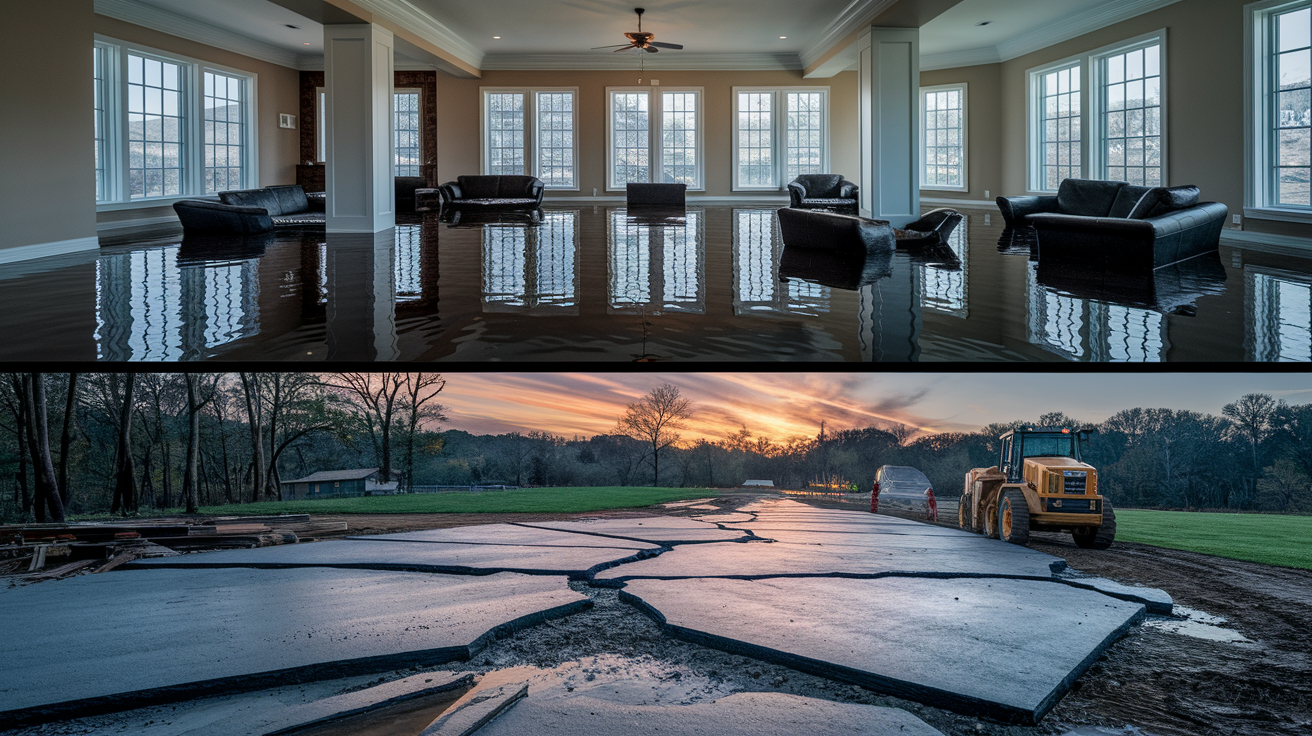
Understanding real claim scenarios helps you recognize your exposure before incidents occur and appreciate why adequate liability protection matters. These aren’t theoretical risks. They’re situations contractors encounter on regular projects.
Bodily injury claims happen when third parties suffer physical harm connected to your operations. A homeowner trips over construction materials you left in the walkway while carrying laundry to the basement and fractures her wrist. Your policy covers her medical bills, lost wages, and pain and suffering settlement. A pedestrian walking past your exterior renovation gets struck by a piece of siding blown off by wind before you secured it, resulting in a head injury requiring hospitalization. A delivery driver navigating your cluttered job site to drop off materials steps on a nail protruding from scrap lumber and requires emergency surgery. A potential buyer touring a home you’re renovating gets burned when she brushes against piping you were soldering moments earlier.
Property damage claims arise when your work or equipment damages client property or neighboring structures. Your plumbing rough-in work fails pressure testing overnight, and water floods through two floors of finished space before anyone discovers the leak, causing $40,000 in restoration costs. During demolition, you miscalculate a load path and remove a support beam that causes ceiling cracks throughout the home, requiring structural repairs. Your excavator operator misjudges clearance while digging a foundation and severs the neighbor’s gas line, requiring emergency utility response and temporary relocation costs. Paint overspray from your airless sprayer drifts onto three parked cars, and the owners demand full repainting.
Cost Factors and Getting Insurance Quotes for Contractors

Contractor insurance costs vary significantly based on multiple business specific factors. There’s no single price applying to all construction professionals. Your premium reflects your individual risk profile as assessed by the insurance carrier during underwriting.
General contractors pay an average of $142 monthly for general liability insurance coverage, providing a baseline expectation for budgeting purposes. This translates to roughly $1,700 annually. But your actual cost could range from $75 to $300+ monthly depending on the variables affecting your premium calculation.
Key cost variables include industry class code (which categorizes your primary type of work), the specific construction activities you perform, total annual payroll, subcontractor expenses you report, gross receipts, claims history from previous years, geographical location and its associated risk factors, and the policy coverage limits you select. Roofing contractors typically pay more than finish carpenters because the work involves higher injury risk. Operating in major metropolitan areas usually costs more than rural locations because of higher claim frequency and settlement amounts. A contractor with two prior claims will pay significantly more than one with a clean five year loss history.
When you’re ready to get quotes, gather information carriers need for accurate pricing: your business classification and detailed description of services, projected annual revenue, total payroll broken down by job classification, estimated subcontractor costs for the policy period, claims history for the past five years, desired coverage limits based on contractual requirements, and your business location and primary service area. Having this information organized before contacting insurance agents speeds the quote process and makes sure you receive accurate premium estimates rather than ballpark figures that change after underwriting review.
Work with an insurance agent experienced in the construction industry who understands contractor specific needs and can recommend appropriate coverage levels. Not all insurance agents understand the nuances of contractor insurance, and working with one who primarily handles personal auto and homeowner policies can result in coverage gaps or unnecessarily expensive policies. A construction focused agent knows which carriers offer the most competitive rates for your work type and can explain how policy terms differ between carriers.
Tips for comparing quotes and reducing costs:
- Compare equivalent coverage limits and deductibles across quotes, not just the premium
- Check carrier financial ratings to make sure they can pay claims when needed
- Ask about discounts for bundling multiple policies with one carrier
- Understand payment options, as annual premiums are typically 8 to 10% less than monthly installment plans
- Review exclusions carefully, as a lower premium might mean more restricted coverage
- Confirm all contractual requirements are met before accepting the lowest quote
- Consider paying annually upfront to capture savings versus monthly billing
Filing a Claim and the Insurance Process for Contractors
Knowing the claims process reduces stress when incidents occur and helps you meet your policy obligations for prompt notification. The faster you report, the faster your carrier can protect your interests.
Your immediate responsibilities when an incident happens include preserving evidence at the scene, documenting conditions with photos and notes, collecting contact information from injured parties and witnesses, and notifying your insurance carrier or agent as soon as possible (ideally within 24 hours). Don’t admit fault or discuss settlement amounts with claimants. Stick to factual information about what happened.
Step by step claims process from incident through resolution:
- Contact your insurance agent or carrier’s claims department to report the incident and receive a claim number
- Complete the initial claim report form with detailed information about what occurred, who was involved, and the extent of damage or injury
- Carrier assigns a claims adjuster who contacts you to gather additional information, review documentation, and potentially inspect the incident location
- Adjuster investigates by interviewing witnesses, reviewing contracts, examining physical evidence, and assessing liability
- If the claim is covered, the carrier handles settlement negotiations, legal defense if a lawsuit is filed, and payment of approved amounts up to policy limits
The insurance carrier handles investigation, legal defense, and settlement negotiations on your behalf, removing the burden from your daily operations. You’ll be kept informed of major developments, but you won’t need to hire attorneys, negotiate with claimants, or handle payment arrangements yourself. If litigation occurs, the carrier appoints defense counsel experienced in construction liability cases.
How Contractor Liability Insurance Differs From Other Business Policies
General liability is one component of complete contractor insurance protection, addressing third party claims but leaving other exposures unprotected. Understanding these distinctions prevents gaps that could prove financially catastrophic.
Contractors typically need multiple policies to cover all business risks, though some can be bundled into a Business Owner Policy (BOP insurance) for cost savings and simplified administration. Each policy type responds to different categories of risk, and no single coverage handles everything.
| Insurance Type | What It Covers | Why Contractors Need It |
|---|---|---|
| General Liability | Third party bodily injury and property damage claims from business operations | Protects against client and public injury or damage claims, required by most contracts |
| Workers Compensation | Employee medical expenses and lost wages from job related injuries or illnesses | Legally required in most states when you have employees, covers your crew’s on the job injuries |
| Professional Liability | Errors, omissions, or negligence in professional services like design or consulting | Essential for design build contractors or those providing professional advice beyond basic construction |
| Commercial Auto | Vehicle accidents, theft, and damage involving business owned or leased vehicles | Covers work trucks, vans, and trailers used for transporting crews, tools, and materials |
| Inland Marine (Tools/Equipment) | Theft, damage, or loss of tools, equipment, and materials at job sites or in transit | Protects expensive tools and equipment that aren’t covered by general liability |
| Umbrella Policy | Additional liability limits that sit above primary policies | Provides extra protection for catastrophic claims exceeding primary policy limits |
How Liability Insurance Protects Contractor Business Growth
Proof of insurance opens doors to larger projects and more lucrative clients who require coverage before considering your bid. Commercial property owners, developers, and general contractors won’t hire subcontractors who can’t demonstrate adequate liability protection. Government contracts absolutely require it. Without coverage, you’re effectively locked out of any project above basic handyman work.
Adequate coverage enhances your professional reputation and builds client confidence in your operation. When you can immediately provide a certificate of insurance showing $2 million aggregate limits, additional insured endorsements, and proper policy effective dates, you signal that you’re a legitimate business operation. Clients interpret insurance as evidence of stability, professionalism, and long term viability.
The policy protects accumulated business assets from a single catastrophic claim that could otherwise wipe out years of profit. If you’ve spent a decade building a $200,000 equipment fleet, maintaining a positive business bank balance, and establishing trade credit, one uninsured $500,000 injury claim could force liquidation of everything you’ve built. Your personal assets (home equity, retirement accounts, personal vehicles) could be targeted in judgment collection if business assets prove insufficient.
Coverage provides peace of mind allowing you to focus on quality work and business expansion rather than litigation fears. When you know your policy responds to covered claims, you can bid on projects confidently, hire additional crew members without constant liability worry, and invest in business growth rather than maintaining excessive cash reserves for potential lawsuits.
Final Words
General liability insurance for contractors explained comes down to protection that keeps your business operational when third-party claims hit.
The policy covers bodily injury, property damage, legal defense, and the contractual requirements most clients demand before you start work.
Without it, a single claim can drain business assets and block access to better projects.
With the right coverage in place, you’re free to focus on the work instead of worst-case scenarios. Get quotes, compare limits, and make sure your policy matches what your contracts require.
FAQ
How much does $1,000,000 general liability insurance cost for contractors?
General liability insurance with $1,000,000 coverage costs contractors an average of $142 monthly, though actual premiums vary based on your specific business factors. Your final cost depends on your industry class code, type of construction work, annual revenue, payroll size, claims history, and location. Getting quotes from multiple carriers helps you find competitive rates.
What does general liability insurance cover for contractors?
General liability insurance covers contractors for five main protection areas: bodily injury to third parties, property damage from your work, personal and advertising injury claims, products and completed operations issues, and contractual liability from client agreements. The policy pays legal defense costs, medical expenses, settlements, and judgments when covered claims arise from your construction operations.
What does $100k/$300k/$100k mean in liability insurance?
The numbers $100k/$300k/$100k refer to auto insurance liability limits, not contractor general liability coverage. Contractor general liability uses different limit structures with per occurrence limits (maximum paid for one claim) and aggregate limits (maximum paid for all claims during the policy period). Most contractors need $1,000,000 per occurrence and $2,000,000 aggregate to meet contract requirements.
How is general liability insurance calculated for contractors?
General liability insurance for contractors is calculated based on your business classification, annual payroll, subcontractor expenses, gross receipts, claims history, coverage limits, and geographical location. Insurance carriers assign you an industry class code matching your construction specialty, then apply rates to your payroll and revenue figures. Your individual claims history and requested coverage amounts also directly impact your premium calculation.
Does general liability insurance cover my employees?
General liability insurance does not cover injuries or illnesses to your own employees. You need workers compensation insurance for employee injuries, which is legally required in most states once you hire staff. General liability only protects you from third-party claims when people outside your business get hurt or their property gets damaged.
What’s the difference between per occurrence and aggregate limits?
The per occurrence limit is the maximum your insurance pays for a single claim or incident during your policy period. The aggregate limit is the total maximum your insurance pays for all claims combined during the entire policy year. Once you hit the aggregate limit, you have no coverage remaining until the policy renews.
Do I need general liability insurance as a sole proprietor contractor?
Sole proprietor contractors need general liability insurance because you face the same risks as larger companies when third parties get injured or property gets damaged. Most clients and project owners require proof of coverage before awarding contracts, regardless of your business size. Without coverage, your personal assets are exposed to claims.
Can I add my client as an additional insured?
You can add clients as additional insureds through policy endorsements, which most construction contracts require. Additional insured status extends your policy protection to project owners and stakeholders, covering them under your liability policy for work you perform. Verify your policy includes this endorsement before signing contracts.
Does general liability cover work after I finish the job?
General liability insurance includes completed operations coverage, which protects you from claims arising after you finish a project. If defects, faulty workmanship, or material failures appear after project completion, this coverage handles the resulting claims. Protection typically extends for several years after you complete the work.
Will my rates go up if I file a claim?
Filing a claim can increase your general liability rates at renewal because carriers consider claims history when calculating premiums. Your rates depend on claim frequency, severity, and your overall loss history. Some carriers offer claim-free discounts, which you lose after filing, while serious or multiple claims result in higher rate increases.