
You probably think wet carpet equals replacement, end of story. That’s true most of the time, but not always. If clean water soaked your carpet for less than 24 hours, you have a narrow window to save it with fast action and the right equipment. Miss that window or deal with contaminated water, and you’re looking at disposal. The decision comes down to three things: water type, how long it stayed wet, and whether you can actually dry it completely before mold takes hold.
Immediate Assessment: Can Your Flooded Carpet Be Saved?
Yes, carpet can sometimes be saved after flooding, but only under specific conditions involving water type, exposure time, and damage extent. Most flooded carpets end up in the dumpster. That’s the right call in the majority of cases. The difference between salvageable and trash comes down to three factors: what kind of water hit it, how long it stayed wet, and whether you can actually get it dry and clean.
| Water Type | Hours Wet | Decision |
|---|---|---|
| Clean water | Under 24 hours | Save possible |
| Clean water | 24-48 hours | Save with professional help |
| Clean water | Over 48 hours | Replace |
| Contaminated water | Under 24 hours | Professional assessment needed |
| Contaminated water | 24-48 hours | Likely replace |
| Sewage/Black water | Any duration | Replace immediately |
This decision matrix represents EPA, FEMA, and CDC standards for water damage remediation. These aren’t arbitrary guidelines. They’re based on health risks, mold growth timelines, and what’s actually achievable with professional equipment. When government agencies that study building health all agree on the same thresholds, pay attention.
The following sections provide detailed information about assessment, restoration processes, and cost considerations for implementing this decision framework. You’ll see why water source matters more than how much water you’re dealing with, why the 48 hour mark is a hard cutoff, and when throwing money at restoration just delays the inevitable replacement.
Water Source Classification: Clean, Gray, or Black Water Flooding
Water contamination level determines whether your carpet has any chance of being saved, regardless of how quickly you act. The restoration industry uses three categories, and each one changes the salvage decision completely.
Category One: Clean Water
Clean water comes from sources that haven’t contacted contaminants: burst supply pipes, broken water heater tanks, rain that hasn’t run across ground surfaces, and appliance supply line failures. This is the only water type that gives carpet a realistic survival chance. If you catch it within 24 hours and can dry everything completely, restoration is possible. The carpet hasn’t been exposed to bacteria, sewage, or chemicals. Just H2O. That said, clean water becomes gray water after sitting for 48 hours as bacteria from the carpet backing and padding start multiplying.
Category Two: Gray Water
Gray water has moderate contamination and comes from washing machine overflows, dishwasher leaks, toilet bowl water without feces, and sump pump backups. It contains bacteria, detergents, and biological matter that make restoration more difficult. Carpet exposed to gray water needs professional antimicrobial treatment, not just drying. Depending on exposure time and carpet condition, professionals can sometimes salvage it with hot water extraction and EPA approved sanitizers, but the success rate drops significantly compared to clean water.
Category Three: Black Water
Black water is heavily contaminated and comes from sewage backups, toilet overflows with feces, and any floodwater that contacted ground surfaces or storm drains. Outside stormwater almost always qualifies as black water because it picks up oil, pesticides, bacteria, and whatever else is on the ground. The IICRC S500 Standard recommends carpet disposal for black water exposure, period. The health risks from pathogens and toxins make restoration unsafe, and no amount of cleaning can reliably eliminate these contaminants from carpet fibers and backing.
| Water Category | Common Sources | Carpet Salvage Potential |
|---|---|---|
| Category 1: Clean Water | Burst pipes, broken water heaters, rain, appliance supply lines | Good if dried within 24-48 hours |
| Category 2: Gray Water | Washing machines, dishwashers, sump pumps, toilet bowls (no feces) | Possible with professional treatment within 24 hours |
| Category 3: Black Water | Sewage backups, toilet overflows with feces, outside stormwater | Replace—not salvageable |
The 24-48 Hour Rule for Carpet Drying and Mold Prevention
Mold spores are everywhere, just waiting for the right conditions to grow: moisture, organic material, and warm temperatures. Wet carpet provides all three. According to EPA guidelines, mold can start growing on wet carpet within 24 to 48 hours. That’s the window you’re racing against.
Carpet wet for less than 24 hours has the best chance of being saved if the water was clean and you act fast. Between 24 and 48 hours, your odds drop significantly, and professional equipment becomes essential rather than optional. After 48 hours, experts recommend disposal regardless of water type because mold has likely started, even if you can’t see it yet. The carpet might look salvageable, but microscopic growth is already happening in the backing and padding.
Several factors affect how quickly your specific carpet dries:
Carpet thickness: Thin commercial carpet dries in hours, thick plush carpet holds water for days
Padding type: Foam padding acts like a sponge and stays wet longer than thin felt padding
Temperature: Warmer air holds more moisture and speeds evaporation
Humidity levels: High humidity slows drying because the air can’t absorb more moisture
Air circulation: Moving air accelerates evaporation, still air leaves moisture trapped
Carpet that remains wet beyond 48 hours should be replaced regardless of water type or how much effort you’ve put into drying it. The mold risk becomes unacceptable. Even if you kill surface mold with treatment, spores and mycotoxins remain embedded in fibers and backing. Insurance adjusters and restoration professionals both use this 48 hour threshold as a decision point, and arguing for an exception rarely works.
Emergency First Response: Critical Actions Within 24 Hours
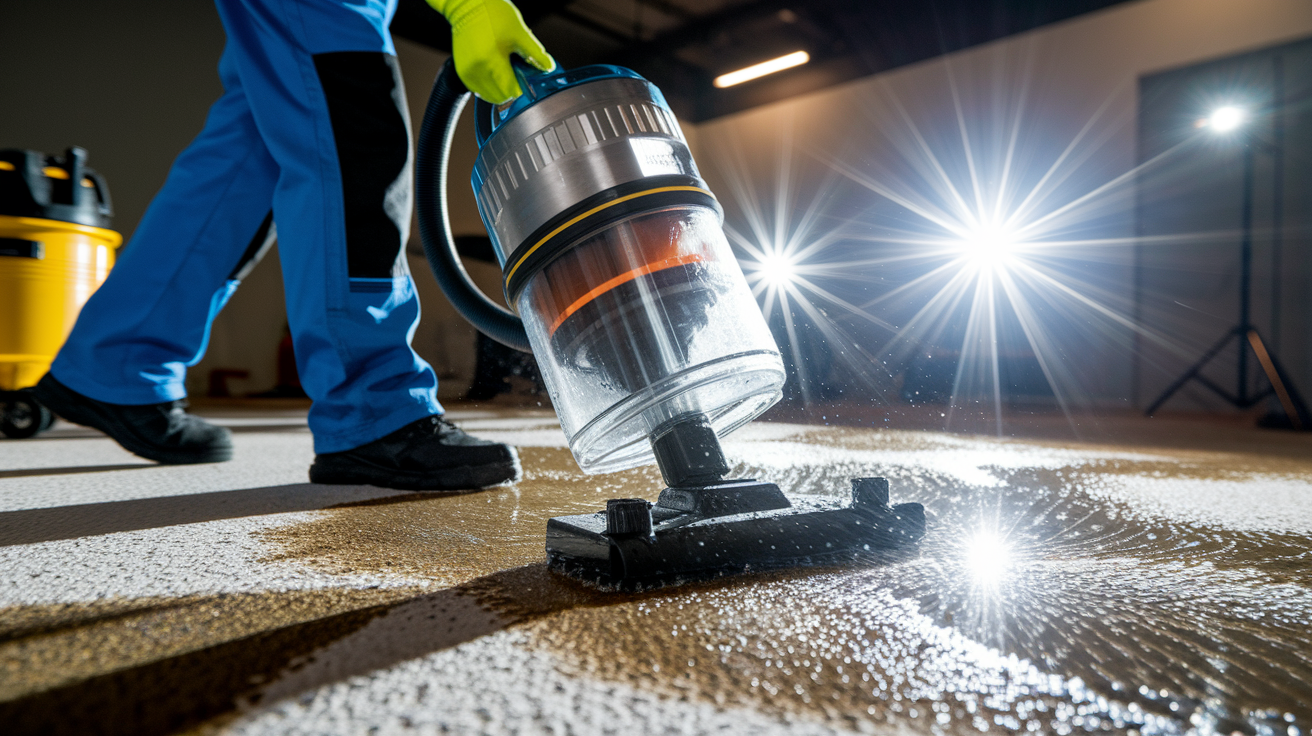
The first 24 hours determine whether your carpet has any chance of being saved. Every hour of delay increases water penetration, contamination, and mold risk. Speed matters more than perfection. Get water out fast, even if the extraction isn’t thorough.
- Ensure safety and shut off electricity to any rooms with standing water to prevent shock hazards
- Stop the water source by closing supply valves, repairing breaks, or setting up temporary barriers
- Put on safety equipment including rubber gloves, eye protection, and a respirator if you’re dealing with contaminated water
- Call your insurance company and document everything with photos showing water extent and damage before you start cleanup
- Remove standing water with a wet/dry vacuum, working from the edges toward the center to avoid pushing water into dry areas
- Lift carpet edges without walking on wet areas. Walking pushes water deeper into padding
- Assess subfloor condition by checking for soft spots, discoloration, and moisture with a moisture meter if available
- Point fans at exposed areas and open windows to increase air circulation and start evaporation
- Call for professional assessment even if you plan DIY work. Professionals have detection equipment that reveals hidden moisture
- Begin moving furniture off wet areas onto blocks or remove it completely to prevent furniture staining and further carpet damage
Professional water extraction equipment pulls significantly more water than consumer wet/dry vacuums. A typical shop vacuum removes surface water, but industrial truck mounted extractors create powerful suction that pulls water from deep in carpet backing and padding. Restoration companies can extract 10 to 20 times more water than homeowner equipment in the same timeframe.
If professional help cannot arrive within 24 hours, continue aggressive DIY extraction and drying while you wait. Rent the largest commercial dehumidifier available from equipment rental stores. Set up as many fans as your electrical circuits can handle. Pull carpet back from walls if you can do it without walking on wet areas. Every gallon of water you remove and every hour of drying time you gain improves salvage odds, but understand that without professional equipment, complete drying within the critical window becomes increasingly unlikely with each passing hour.
For comprehensive guidance on handling the critical first hours after water intrusion, see our detailed resource on emergency water damage response.
Carpet Padding Replacement: Why It Must Always Be Discarded
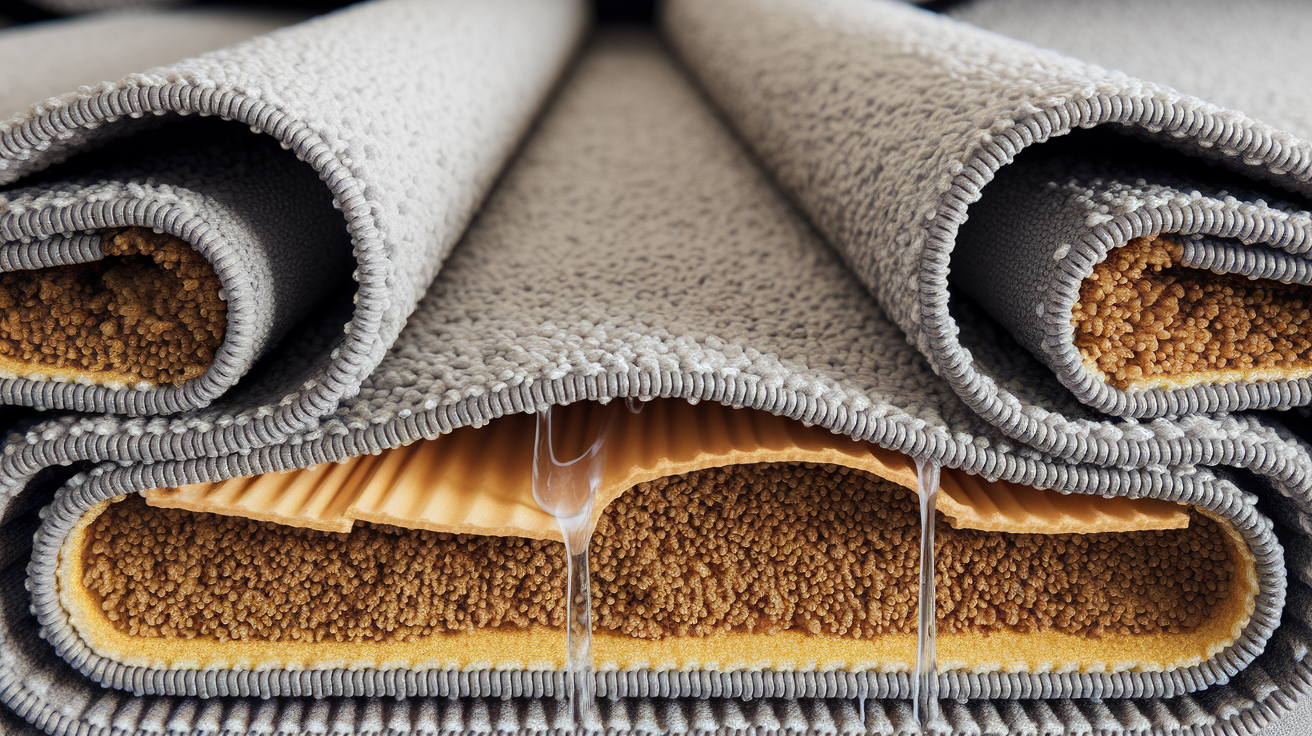
Carpet padding soaks up water like a sponge and holds moisture longer than carpet fibers. Even when the carpet surface feels dry, padding underneath can remain wet for days or weeks, creating perfect conditions for mold growth and bacteria. The foam or felt material breaks down when saturated, losing its cushioning properties and structural integrity.
Carpet padding underneath almost always needs replacement even when carpet fibers can be saved. This isn’t optional or a judgment call. It’s a fundamental requirement for any legitimate restoration attempt. The padding is nearly impossible to clean because antimicrobial solutions can’t penetrate deeply enough to reach all contaminated areas.
Problems with keeping wet padding include:
Bacterial growth: Warm, damp organic material provides ideal conditions for bacteria multiplication
Odor retention: Musty smells get trapped in padding and migrate back into carpet fibers even after cleaning
Structural breakdown: Wet foam padding crumbles and compresses, creating uneven carpet surfaces
Mold harbor: Hidden mold grows between padding and subfloor where air circulation can’t reach
Padding replacement costs factor significantly into restoration versus replacement decisions. Budget padding runs 50 cents to 1 dollar per square foot, while upgraded moisture resistant padding costs 1 to 2 dollars per square foot. Installation labor adds another 50 cents per square foot. For a 200 square foot room, padding replacement alone runs 200 to 500 dollars before addressing the carpet itself. When you add padding replacement to carpet cleaning, antimicrobial treatment, and drying costs, total restoration expenses sometimes exceed the cost of new carpet installation, especially for older or lower quality carpet that wasn’t worth much to begin with.
Professional Restoration Services: Process, Equipment, and When to Hire
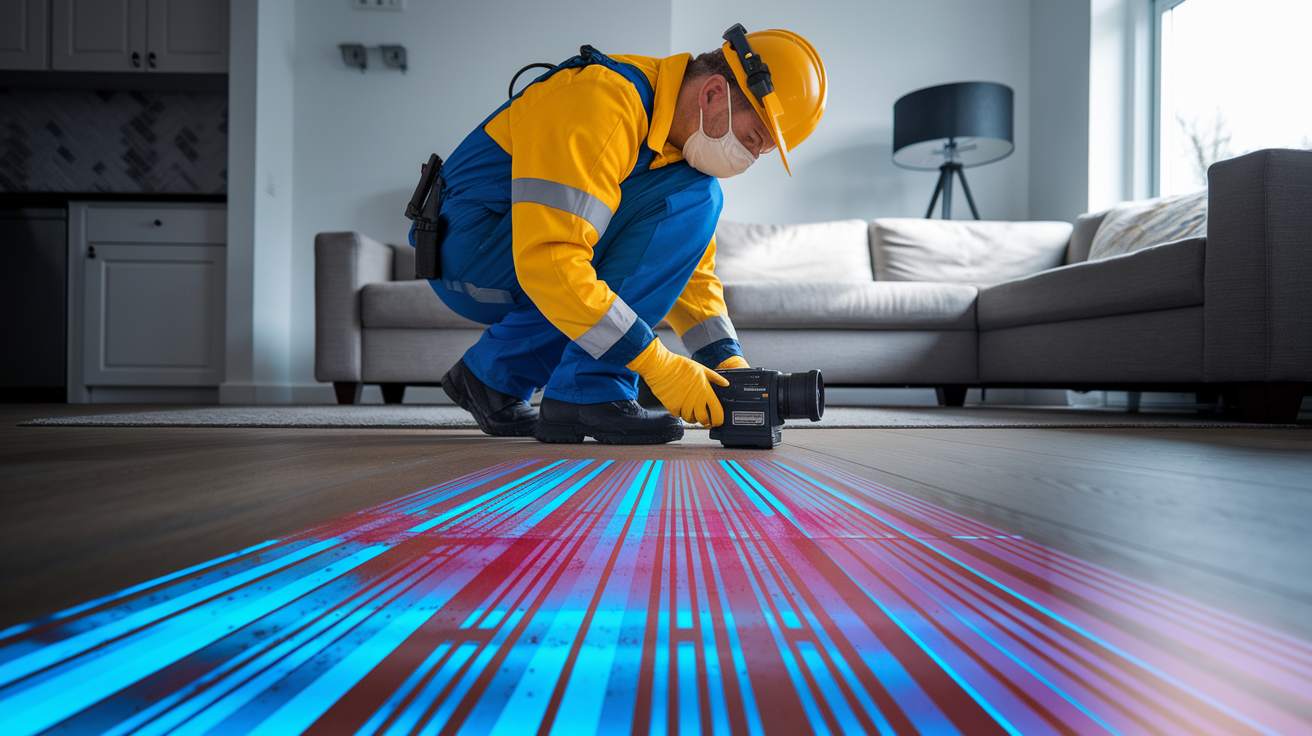
IICRC certification and adherence to industry standards like the S500 guidelines differentiate legitimate restoration companies from operations that just rent equipment and hope for the best. Professional assessment provides value even if you’re considering DIY work because certified technicians can identify hidden moisture and contamination that leads to failed restoration attempts and recurring problems.
Professionals evaluate these assessment factors:
Moisture meter readings in both carpet and subfloor to quantify saturation levels and track drying progress
Infrared camera inspection for hidden moisture in walls, under baseboards, and in adjacent rooms
Water category classification to determine contamination level and appropriate treatment protocols
Contamination extent including how far water wicked beyond visible wet areas
Structural integrity evaluation checking for delamination, seam separation, and backing deterioration
Mold presence through visual inspection and sometimes air quality testing
The complete professional restoration process follows these steps:
- Initial assessment with detection equipment to map all affected areas and establish moisture baselines
- Complete water extraction using truck mounted or portable extractors that remove 95% of water in carpet and padding
- Carpet lifting and padding removal by detaching carpet from tack strips, rolling it back, and disposing of all padding
- Subfloor drying with commercial dehumidifiers (150+ pints per day capacity) and high velocity air movers
- Antimicrobial treatment application to all carpet surfaces, backing, and subfloor using EPA registered products
- Hot water extraction cleaning once carpet is dry, using truck mounted systems at 200+ degrees with cleaning agents
- Reinstallation with new padding after confirming all materials meet moisture content standards
Industrial equipment capabilities dwarf consumer rental options. Professional extractors generate 400 to 600 inches of water lift compared to 80 to 100 inches for shop vacuums. Commercial dehumidifiers remove 150 to 200 pints of water daily versus 50 to 70 pints for residential units. Air movers push 2,000 to 3,000 cubic feet per minute compared to 200 to 400 CFM for box fans. This equipment difference translates to drying times measured in days instead of weeks.
Typical restoration timelines run 3 to 5 days for most residential projects: one day for extraction and setup, two to three days for drying with equipment running 24/7, and one day for cleaning and reinstallation. Professionals determine restoration feasibility versus replacement recommendation based on contamination level, time elapsed since flooding, carpet condition, and cost comparison. If drying can’t be completed within the 48 hour mold prevention window, or if costs exceed 70% of replacement value, most restoration companies will recommend replacement instead of attempting restoration that’s likely to fail.
For more information about professional capabilities and when to hire certified technicians, visit our guide on water damage restoration services.
DIY Carpet Drying Methods and Their Limitations
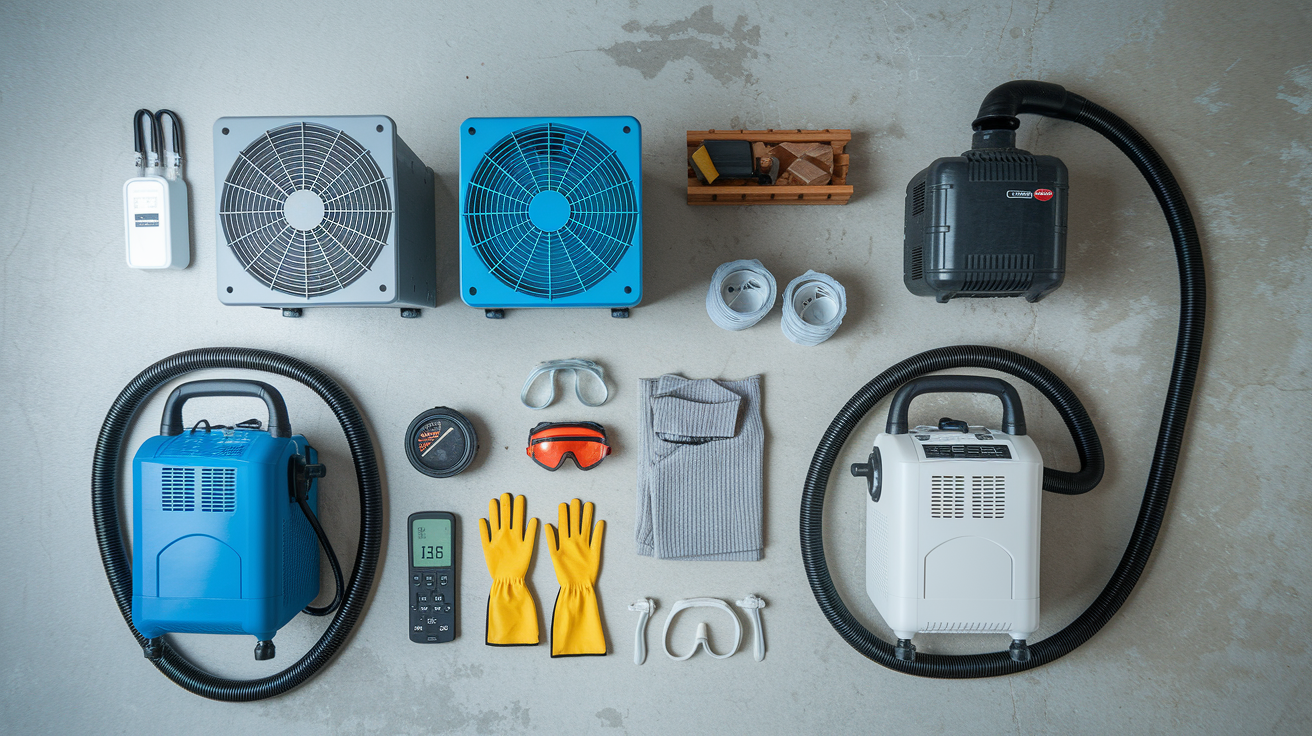
DIY drying makes sense for small areas affected by clean water when you can act within hours, not days. A bathroom carpet soaked from an overflowing tub or a hallway affected by a broken supply line might be manageable with homeowner equipment and fast action. Large areas, contaminated water, or delayed response require professional equipment.
DIY drying equipment and methods include:
Wet/dry vacuum: Extract surface water every few hours, overlapping passes to pull maximum water before it soaks deeper
Box fans: Position three to four fans per room creating cross ventilation and pointing at lifted carpet edges
Rental dehumidifiers: Get the largest unit available (70 pint minimum) and empty the collection bucket frequently
Opening windows: Increase air exchange only when outside humidity is lower than inside humidity
Running HVAC: Use air conditioning to reduce humidity, but change filters frequently as they collect moisture
Lifting carpet corners: Pull carpet back from walls carefully without walking on wet areas to expose padding and subfloor
Monitor progress with moisture meters that cost 30 to 50 dollars at home improvement stores. Carpet is dry enough for cleaning when readings drop below 20% moisture content. Check the subfloor too. If wood subfloor stays above 15% moisture or concrete above 4%, drying isn’t complete regardless of how the carpet surface feels.
Incomplete drying risks and hidden moisture problems that only professionals can detect become the main DIY failure points. Surface carpet might feel dry while padding and subfloor remain wet. Mold grows out of sight between layers, and musty odors develop weeks later. Infrared cameras and professional grade meters detect these hidden problems. If you’re attempting DIY drying beyond 24 hours or for areas larger than 100 square feet, professional assessment becomes essential to verify complete drying before reinstalling carpet and padding.
Health Risks from Flooded Carpet: Mold, Bacteria, and Contaminants

Mold spores, bacteria, and chemical contaminants in flooded carpet create serious health hazards, especially with prolonged exposure. Clean looking carpet can harbor dangerous pathogens if it was soaked with contaminated water or remained wet long enough for microbial growth to start.
People with asthma, allergies, or compromised immune systems face especially high health risks from flood damaged carpet. Young children who play on floors and elderly individuals are also vulnerable populations who shouldn’t be exposed to potentially contaminated materials.
Specific health threats include:
Mold spores causing respiratory problems, allergic reactions, headaches, and in severe cases mycotoxin exposure
Bacteria from sewage including E. coli, salmonella, and other pathogens that cause gastrointestinal illness
Chemical contaminants like pesticides, oil, and industrial pollutants in stormwater
Allergen amplification as damp conditions encourage dust mite populations and increase existing allergens
Long term exposure effects including chronic respiratory conditions that develop from living with hidden mold
Carpet with strong musty odors usually cannot be saved because the smell indicates deep mold or bacteria growth that cleaning cannot fully eliminate. If the odor persists after initial cleaning attempts, or if it returns within days, the contamination has penetrated backing and padding beyond what surface treatment can address. Professional antimicrobial treatment might reduce odors temporarily, but they typically return as residual moisture evaporates and brings more contaminants to the surface.
Anyone handling or assessing flood damaged carpet should wear proper safety equipment: nitrile or rubber gloves to prevent skin contact, eye protection against splashing, and an N95 respirator at minimum when working with moldy or contaminated materials. Upgrade to a full face respirator with P100 filters if you’re dealing with visible mold growth or sewage backup. Don’t rely on dust masks. They don’t filter mold spores or bacteria effectively.
For detailed information about mold growth risks and professional remediation needs, review our comprehensive guide on mold removal after water damage.
Carpet Material Types and Their Flood Survival Rates
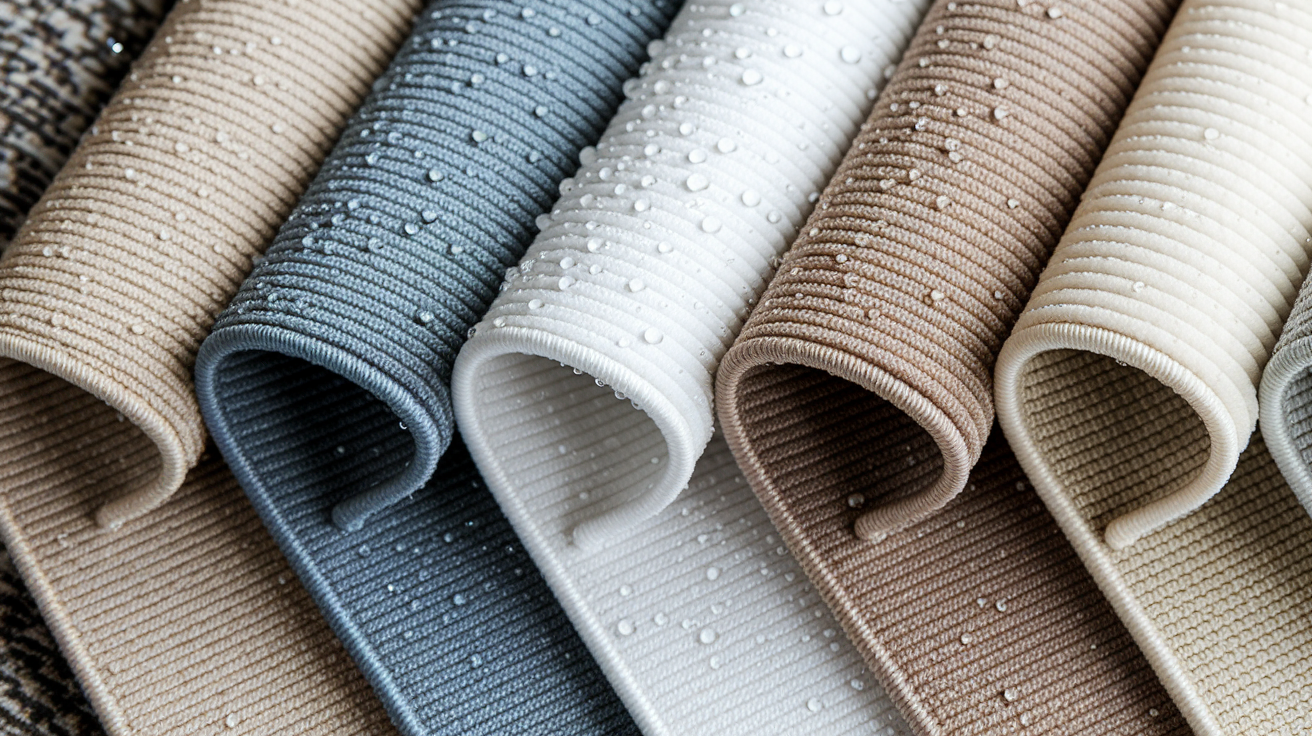
Material composition affects how much water carpet absorbs, how quickly it dries, and whether restoration is economically sensible. Synthetic fibers generally handle water better than natural materials, and construction style matters as much as fiber type.
| Carpet Type | Water Retention | Salvage Difficulty | Drying Time |
|---|---|---|---|
| Synthetic loop pile (Berber) | Low to moderate | Easiest | 1-2 days with equipment |
| Synthetic cut pile | Moderate to high | Moderate | 2-3 days with equipment |
| Wool | Very high | Difficult | 4-7 days, often fails |
| Berber (tight loop) | Low | Easiest | 1-2 days with equipment |
| Plush/Shag (dense cut pile) | Very high | Most difficult | 3-5 days, high failure rate |
Loop pile carpets like Berber survive floods better than cut pile carpets because they hold less water between fibers. The tight loop construction doesn’t create the deep pile spaces where water accumulates. Thin commercial carpet with low pile height dries faster than residential plush carpet, sometimes within 24 hours with aggressive air movement.
Very old or low quality carpet often costs more to restore than replace when you factor in professional cleaning, padding replacement, and antimicrobial treatment. Carpet approaching 10 years old or showing wear before flooding has limited remaining lifespan anyway. Restoration might extend its life by one to three years, but replacement provides a 10 to 15 year solution for similar or lower total cost.
Backing types respond differently to flooding. Rubber backed area rugs and bath mats should be discarded after flooding because the rubber deteriorates when soaked, releasing an unpleasant odor and breaking down into a sticky residue. Jute backed carpet handles water better but takes longer to dry because natural fibers retain moisture. Synthetic action back carpet (the dimpled backing on most wall to wall carpet) dries relatively quickly but can delaminate if the adhesive fails, causing the backing to separate from the carpet fibers.
Area Rugs Versus Wall-to-Wall Carpet: Different Salvage Approaches
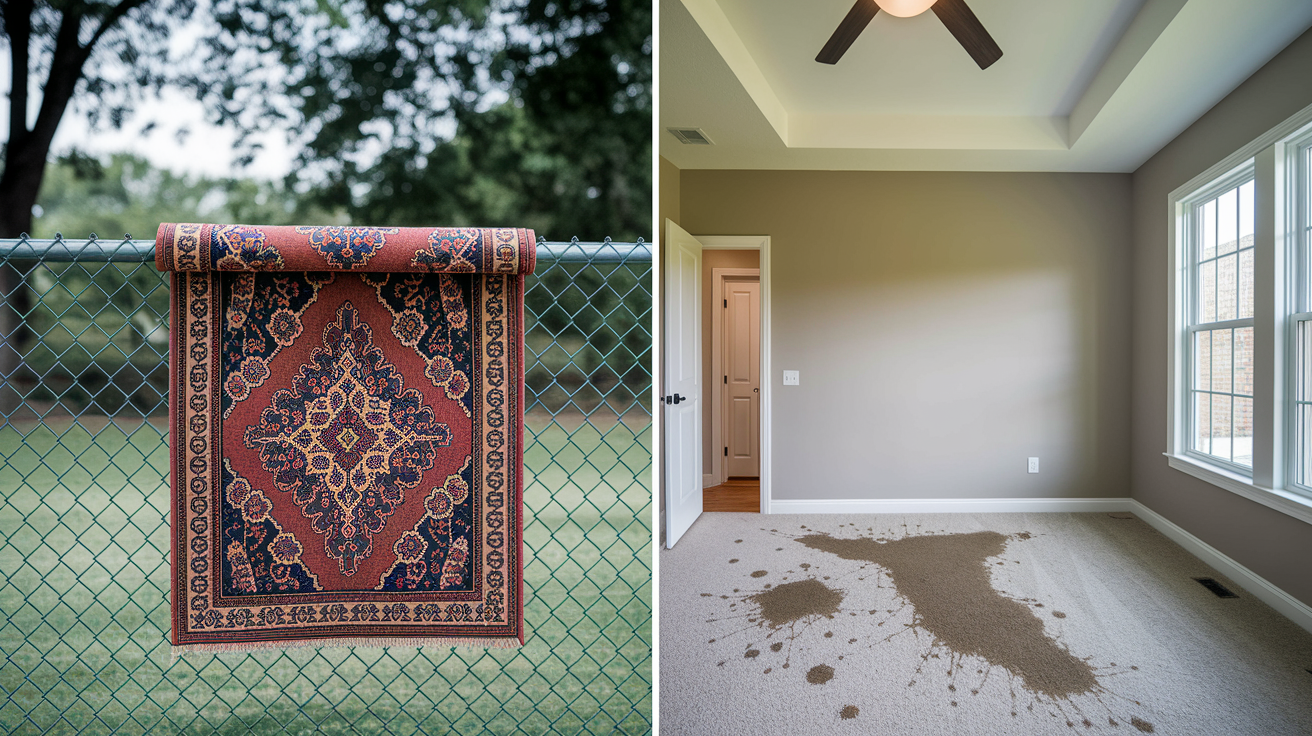
Area rugs are easier to salvage than wall to wall carpet because you can remove them completely, clean all sides, and dry them thoroughly in controlled conditions. Wall to wall installations remain attached to the subfloor during most drying attempts, creating trapped moisture problems.
Area Rug Salvage Criteria
Area rugs without foam backing soaked with clean water and dried within 48 hours can usually be cleaned and disinfected. Remove the rug immediately, extract as much water as possible, then hang it over a fence or railing where air can circulate on both sides. Hosing it down outdoors with fresh water after extraction can dilute any remaining contaminants before drying.
Professional rug cleaning facilities can handle more contaminated rugs by submersing them in cleaning solutions, extracting water with industrial equipment, and hanging them in climate controlled drying rooms. This costs 3 to 8 dollars per square foot depending on rug value and contamination level. High value Persian or Oriental rugs justify this expense, while machine made area rugs often aren’t worth professional restoration costs.
Area rugs with foam backing should always be discarded after flooding. The foam absorbs water like a sponge, breaks down when saturated, and develops permanent odors. No practical cleaning method can fully restore foam backed rugs.
Wall-to-Wall Carpet Challenges
Wall to wall carpet is extremely difficult to thoroughly dry or effectively clean while installed. Water gets trapped between carpet, padding, and subfloor, creating layers of wet material with limited air exposure. Tack strips around the perimeter complicate pulling carpet back for drying.
Wall to wall carpet can only be saved if soaked with clean water and completely dried within 48 hours, including both carpet and flooring underneath. This requires professional equipment in most cases. Attempting to dry wall to wall carpet without pulling it back from tack strips rarely succeeds because moisture remains trapped under the carpet edges and in the padding.
The installation method matters. Glued down carpet can’t be lifted for drying without destroying it. Stretch in carpet over tack strips can be detached and pulled back, but reinstallation requires re stretching with professional tools to prevent wrinkles and buckling. Factor in 2 to 3 dollars per square foot for reinstallation labor when calculating restoration costs.
Subfloor and Foundation Considerations After Carpet Flooding
The surface beneath carpet determines whether restoration makes sense even if the carpet itself appears salvageable. A good carpet over a damaged subfloor creates ongoing problems: moisture wicking back into carpet, musty odors returning, and eventual flooring failure.
Professional moisture detection in subfloors uses pin type or pinless moisture meters to check wood moisture content and relative humidity sensors to measure moisture in concrete. Infrared cameras reveal temperature differences that indicate wet areas hidden under carpet. These tools find moisture problems that touch and visual inspection miss.
Different subfloor types present specific issues:
Concrete moisture retention: Concrete holds water for weeks after flooding, slowly releasing moisture that keeps carpet damp even after surface drying
Wooden subfloor warping and rot: Plywood or OSB subfloor swells when wet, causing buckling, and can develop rot if not dried within days
Particle board deterioration: Particle board subfloor swells dramatically when wet and loses structural integrity permanently
Moisture barrier failure: Vapor barriers between subfloor and concrete can trap water, preventing drying
Adhesive breakdown: Glued down flooring adhesive fails when saturated, requiring complete removal and replacement
When subfloor damage makes carpet replacement the only practical option, you’re looking at the cost of both new carpet and subfloor repair. Plywood subfloor replacement runs 2 to 4 dollars per square foot for materials and labor. If flooding damaged floor joists beneath the subfloor, structural repairs escalate quickly into several thousand dollars. At that point, most homeowners choose upgraded flooring options like luxury vinyl plank or tile that handle future moisture better than carpet.
Cost Analysis: Carpet Restoration Versus Complete Replacement
Restoration costs vary depending on damage severity, carpet size, and water contamination level. Replacement costs depend on carpet quality and whether subfloor repairs are needed. The break even point typically falls around 70% of replacement cost. Beyond that, replacement makes more financial sense.
| Service | Cost Per Square Foot | Timeline | Includes |
|---|---|---|---|
| Professional restoration | $3-7 | 3-5 days | Extraction, drying, antimicrobial treatment, cleaning, padding replacement, reinstallation |
| Budget carpet replacement | $2-4 | 1-2 days | Removal, disposal, new padding, carpet, installation |
| Mid-grade carpet replacement | $4-8 | 1-2 days | Removal, disposal, upgraded padding, better carpet, installation, warranty |
Hidden costs in restoration include padding replacement at 1 to 2 dollars per square foot, antimicrobial treatment adding 50 cents to 1 dollar per square foot, and potential repeat treatments if the first attempt doesn’t eliminate odors. Some restoration jobs require two or three treatment cycles before odors resolve, adding days to the timeline and hundreds of dollars to the total cost.
Replacement becomes more cost effective than restoration when carpet age exceeds 7 to 10 years, when contamination is severe, when restoration costs approach 70% of replacement cost, or when the carpet was low quality to begin with. A 200 square foot room with restoration costs of 1,200 dollars versus replacement at 1,000 dollars makes replacement the obvious choice, especially since you get brand new carpet with a warranty instead of cleaned up old carpet with uncertain longevity.
Factoring in carpet age and remaining lifespan changes the math significantly. If your carpet had 3 to 5 years of life remaining before flooding, restoration might extend that by only 1 to 2 years due to backing damage and fiber stress from saturation. You’ve spent 5 to 7 dollars per square foot on restoration for a short term fix, whereas spending 4 to 8 dollars per square foot for replacement provides 10 to 15 years of new carpet life.
Insurance Coverage for Flooded Carpet: What Policies Actually Pay
Most homeowner insurance covers sudden water damage like burst pipes, water heater failures, or appliance malfunctions. This falls under standard water damage coverage. Your policy typically pays for water extraction, drying, carpet cleaning or replacement, and related repairs minus your deductible.
Flood insurance requires separate coverage through the National Flood Insurance Program or private flood insurers. Standard homeowner policies specifically exclude flooding from outside sources like rivers, storm surge, or heavy rain that overwhelms drainage systems. If you don’t have flood insurance when outside water enters your home, you’re paying for all damage out of pocket.
Documentation steps for insurance claims include:
Immediate photo evidence of water extent, damage to carpet and other materials, and water source before cleanup begins
Water source identification with photos of broken pipes, appliance failures, or outside flooding to prove coverage applies
Damage extent recording by measuring affected areas and listing all damaged items and materials
Professional assessment reports from restoration companies detailing water category, recommended actions, and cost estimates
Receipt retention for all expenses including emergency services, equipment rental, cleaning, and repairs
Timeline documentation showing when flooding occurred, when you discovered it, and when mitigation began
FEMA assistance through disaster declarations may help with structural repairs like subfloor replacement but typically excludes floor coverings like carpet. FEMA grants average 3,000 to 10,000 dollars and focus on making homes safe and habitable, not restoring them to pre flood condition. Don’t count on FEMA covering carpet. You’ll likely need to replace it at your own expense even with disaster assistance.
Depreciation considerations affect payout amounts. Actual cash value policies pay for carpet’s depreciated value based on age and condition before flooding. A 10 year old carpet might receive 20 to 30% of replacement cost. Replacement cost coverage pays to install new carpet of similar quality without depreciation deduction, but usually requires you to complete the replacement before receiving full payment. Most policies pay actual cash value upfront, then reimburse the depreciation amount after you provide receipts showing the replacement was completed.
Mandatory Disposal Scenarios: When Carpet Cannot Be Saved
Safety first approach to contaminated materials means some flooded carpets must be discarded regardless of their pre flood condition or your emotional attachment to keeping them. Trying to save carpet that should be replaced creates health hazards and wastes money on restoration attempts that will fail.
Mandatory carpet disposal situations include:
- Category 3 black water exposure from sewage, toilet overflow with feces, or outside floodwater contaminated with sewage
- Wet duration exceeding 48 hours regardless of water type because mold growth has likely started
- Strong persistent odors that remain after initial cleaning attempts indicating deep contamination
- Visible mold growth on carpet surface, backing, or padding that extends beyond small isolated spots
- Backing delamination where the secondary backing separates from primary backing, creating loose, unstable carpet
- Seam separation where carpet seams have pulled apart from water saturation and can’t be re seamed
- Compromised structural integrity with matted fibers that won’t return to normal appearance or texture after cleaning
Proper disposal methods vary by location, but most municipal waste services accept carpet in regular trash if cut into manageable sections. Roll it tightly, secure with rope or tape, and limit pieces to 4 feet by 4 feet. Some areas require special bulk waste pickup or landfill dropoff. Check local regulations before placing carpet at the curb.
Attempting to save unsalvageable carpet creates health hazards from continued mold and bacteria exposure. You’re breathing contaminated air, children and pets contact contaminated surfaces, and the moisture creates ongoing damage to subfloors and wall framing. The financial waste compounds the health risk. Spending hundreds or thousands on restoration attempts that fail because the contamination or damage was too severe from the start. When multiple indicators point to disposal, accept that outcome quickly instead of delaying the inevitable while risks and costs increase.
Antimicrobial Treatment and Sanitization for Salvaged Carpet
Cleaning alone is insufficient for flood damaged carpet because pathogens and spores remain embedded in fibers and backing after water extraction. Even visibly clean carpet can harbor bacteria, mold spores, and contaminants that create health risks.
Antimicrobial treatment necessity applies to any carpet exposed to water for more than a few hours, even clean water. Bacteria from carpet backing and the environment multiply rapidly in damp conditions. Treatment with EPA approved antimicrobial products kills existing pathogens and provides residual protection against regrowth during the drying period.
The sanitization process follows these steps:
- Initial extraction removes as much water as possible using professional truck mounted or portable extractors
- Antimicrobial application sprays EPA registered disinfectant throughout carpet fibers, backing, and exposed subfloor surfaces
- Hot water extraction cleaning uses truck mounted systems at 180 to 220 degrees to deep clean with detergent while extracting remaining contaminants
- Deodorization treatment applies enzymatic cleaners that break down organic odor sources and neutralize smells
- Final inspection confirms moisture readings are acceptable, no visible contamination remains, and odors are eliminated
EPA approved antimicrobial products like quaternary ammonium compounds are effective against a broad spectrum of bacteria, fungi, and viruses when used at proper dilution rates with adequate contact time. Professional products contain higher active ingredient concentrations than consumer versions and include surfactants that help solutions penetrate carpet backing.
Limitations of consumer products versus professional grade treatments include lower concentrations requiring multiple applications, lack of proper application equipment for even coverage, and no residual protection after drying. Consumer carpet cleaners you buy at the store are designed for routine maintenance, not pathogen elimination after flooding. You might kill surface bacteria, but contamination deeper in the backing remains. Professional restoration companies use commercial antimicrobials that aren’t available at retail stores, applied with proper equipment and training to ensure complete treatment.
Basement Flooding and Below-Grade Carpet Special Considerations
Basement carpet is more problematic than upper floor flooding because below grade conditions favor mold growth and make complete drying extremely difficult. Concrete foundation walls and floors wick moisture from surrounding soil, keeping humidity levels elevated even after water is removed.
Basement specific issues include:
Concrete moisture retention: Foundation walls and floors stay damp for weeks after flooding, continuously adding moisture to the air
Limited air circulation: Below grade spaces have fewer windows and less natural airflow than upper floors
Higher humidity levels: Basements typically run 60 to 70% relative humidity versus 40 to 50% on upper floors
Recurring moisture problems: Many basements have ongoing seepage or humidity issues that caused the flooding in the first place
Mold favorable conditions: Cool temperatures and high humidity create ideal conditions for mold growth
Most flooded basement carpet should be replaced rather than restored because the conditions that caused flooding often persist. If groundwater seepage, foundation cracks, or poor drainage caused the flood, carpet will likely get wet again. Spending money on restoration makes little sense when
Final Words
So, can you save carpet after a flood? Sometimes, but the window is tight and the conditions matter.
Clean water, quick action within 24 hours, and professional-grade drying give you the best shot. Past 48 hours or any sewage contact, you’re looking at replacement.
The padding always goes, the subfloor needs checking, and hidden moisture will come back to haunt you if you skip steps.
Make the call based on water type, time wet, and real costs, not wishful thinking. When in doubt, get a pro assessment before you commit to a restoration that won’t hold.
FAQ
Do you have to replace carpet after a flood?
You have to replace carpet after a flood in most cases, especially if the water was contaminated, if the carpet stayed wet for more than 48 hours, or if you see visible mold or smell strong odors. Clean water floods caught within 24 hours sometimes allow carpet restoration with professional help.
Is my carpet ruined if it gets wet?
Your carpet is ruined if it gets wet depending on the water source, how long it stayed wet, and whether padding and subfloor also got soaked. Clean water with immediate drying within 24 hours gives the best chance of saving it, but contaminated water or delays beyond 48 hours mean replacement.
How long does it take for mold to grow under wet carpet?
Mold takes 24 to 48 hours to start growing under wet carpet according to EPA guidelines, which is why the first 24 hours are critical for restoration success. After 48 hours of continuous moisture, mold growth becomes likely and carpet should be replaced regardless of water type.
What to do if water floods your carpet?
If water floods your carpet, first shut off electricity and stop the water source, then put on safety gear and remove standing water with a wet/dry vacuum within the first 24 hours. Document damage with photos, assess the subfloor, and call a professional restoration company for evaluation before mold develops.
Can area rugs be saved after flooding better than wall-to-wall carpet?
Area rugs can be saved after flooding better than wall-to-wall carpet because they’re easier to remove, hang, and dry completely without trapping moisture underneath. Wall-to-wall installations keep moisture between carpet and subfloor, making thorough drying nearly impossible without professional lifting and equipment.
When is professional carpet restoration worth the cost versus replacement?
Professional carpet restoration is worth the cost versus replacement when clean water flooded newer, high-quality carpet that was dried within 24 hours, and the subfloor isn’t damaged. Old or budget carpet, contaminated water exposure, or restoration costs exceeding 50% of replacement cost usually favor new installation.
Why must carpet padding always be replaced after flooding?
Carpet padding must always be replaced after flooding because it absorbs water like a sponge, holds moisture longer than carpet fibers, and cannot be effectively cleaned or sanitized. Even when carpet fibers can be saved, contaminated padding harbors bacteria, mold, and odors that compromise health and restoration success.
Does homeowners insurance cover carpet damaged by flooding?
Homeowners insurance covers carpet damaged by flooding only if the water source is internal, like burst pipes or appliance leaks, not external flood events. Outside flooding requires separate flood insurance through the National Flood Insurance Program, which may cover structure but often excludes floor coverings.
What water source makes carpet unsalvageable regardless of drying time?
Black water from sewage backups or toilets makes carpet unsalvageable regardless of drying time because the contamination contains pathogens, bacteria, and toxins that cannot be safely removed. IICRC standards recommend immediate disposal of any carpet exposed to category 3 black water without attempting restoration.
How do you know if subfloor damage prevents carpet restoration?
You know subfloor damage prevents carpet restoration when moisture meter readings show saturation, wooden subfloors feel soft or show warping, or concrete stays damp after carpet removal. Professional infrared cameras detect hidden moisture that causes mold growth even if carpet surface appears dry.